
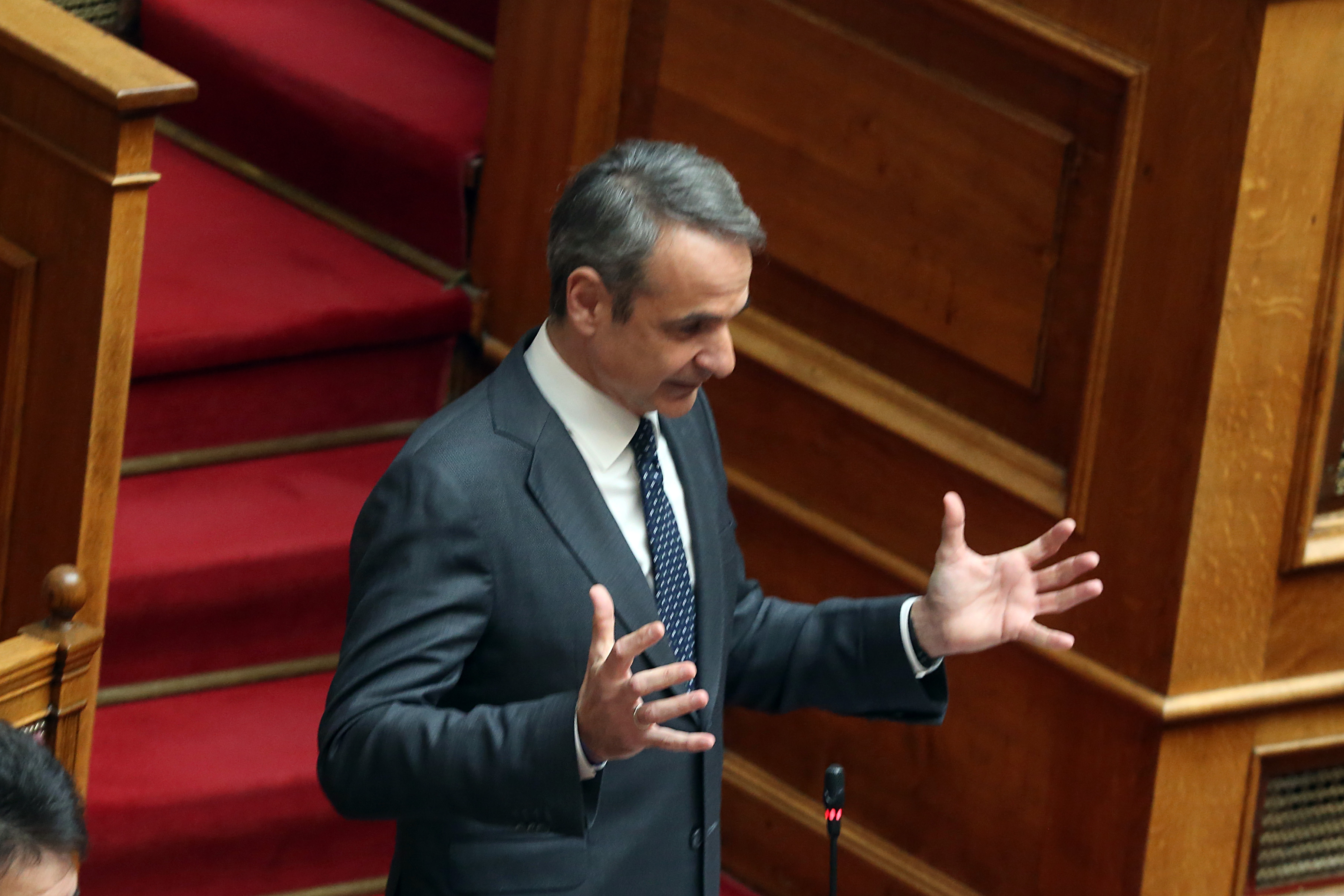
The “pride of the Greek fleet” has been sent to defend Cyprus, Greek Prime Minister Kyriakos Mitsotakis told his country’s parliament on Wednesday, while speaking about the frigate Kimon which arrived in Limassol shortly after midday.
“Our attention is on Cyprus, which is much closer to the warzone than Greece. Greece sent the pride of the Greek fleet, the frigate Kimon, to Cyprus. Greece is present with strength where national duty calls for it, and places the upgraded armed forces at the service of universal Hellenism,” he said.
He added that Greece’s “mission” is both “defensive and peaceful”, and that “the aim is to prevent threatening actions against the independent state of Cyprus”.
On Greece’s position regarding the wider conflict, he said that “we support de-escalation of conflicts and the return of diplomacy, with respect for international law and maintaining the safety of international navigation”.
Later on Wednesday, Cypriot President Nikos Christodoulides later thanked Mitsotakis for what he described as “the immediate and decisive response” to the incident.
“In this difficult juncture in our region, Greece has declared its presence and confirmed in practice that it stands firmly alongside the Republic of Cyprus, with a sense of responsibility and strategic composure,” he said.
Alongside Kimon, a second frigate, Psara, also docked in Limassol on Wednesday, while four Greek F-16 fighter jets have been stationed in Paphos since Monday.
Two of those four jets were called into action on Wednesday morning after “suspicious objects”, widely believed to be Iranian-made Shahed one-way attack drones, were sighted heading towards Cyprus in the skies above Lebanon.
The objects were intercepted, though not before one inbound passenger flight to Larnaca was turned around and eventually landed in Athens.
Mitsotakis had said on Tuesday that “any threat against the Republic of Cyprus, a member state of the European Union, is unacceptable in principle”, and that “I do not think it is an exaggeration to say that today, our flag and our heart are in Cyprus”.
“From there, we are following developments very carefully. Obviously, we all seek and desire a rapid de-escalation, knowing historically that every time we had widespread conflicts in the Middle East region, we have had very unpleasant geopolitical impacts and humanitarian crises,” he said.
Greek leader of the opposition Nikos Androulakis, meanwhile, stressed that “our country has consistently been a pillar of security, a pillar of respect for international law in the wider region”.
“That is why my position is that our military presence under the current circumstances in the eastern Mediterranean must be linked to the protection of Hellenism, and in particular, Cypriot Hellenism,” he said.



Click here to change your cookie preferences