
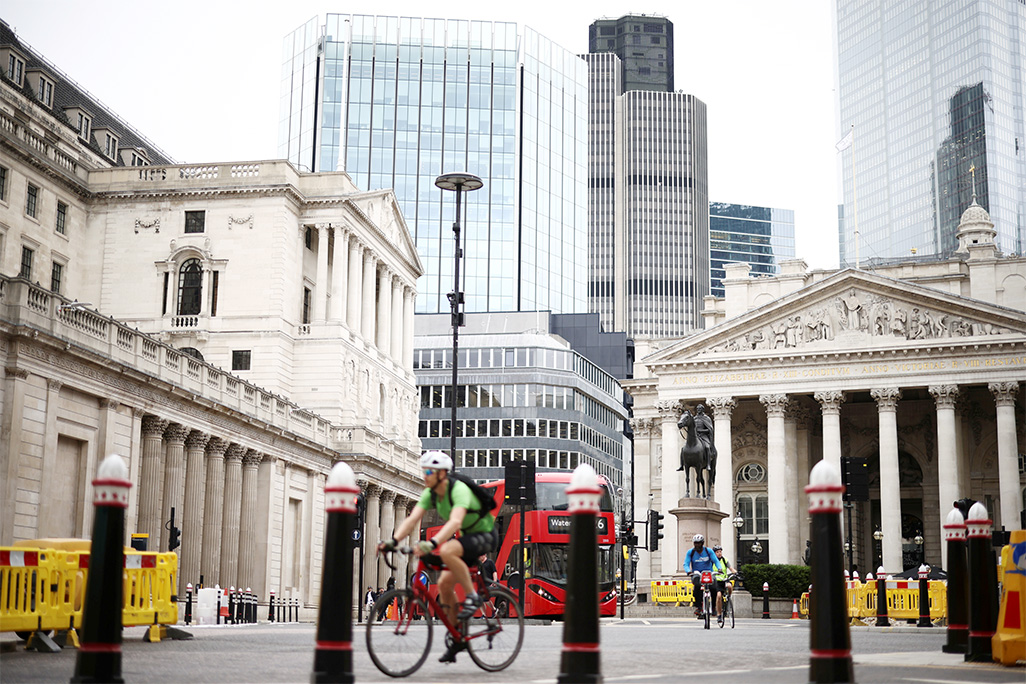
Britain’s economy stagnated unexpectedly in January after weak growth in the preceding months, according to official data, which showed a loss of momentum even before the war in Iran that is likely to be a further drag.
Gross domestic product has been essentially flat since June, the figures from the Office for National Statistics showed on Friday, despite promises by Prime Minister Keir Starmer and finance minister Rachel Reeves to speed up the economy.
GDP showed zero growth in January, dashing the median prediction in a Reuters poll of economists for a 0.2% month-on-month increase.
In the three months to January it rose by 0.2%, the ONS said, against expectations for a 0.3% increase in the Reuters poll.
Sterling slipped against the U.S. dollar after the figures were published.
There was no growth in the dominant services sector in January – at odds with more upbeat business surveys – while manufacturing and construction output rose modestly.
Investors view Britain as more exposed than many other Western countries to an energy price shock due to heavy reliance on imported gas and its stretched public finances, which may limit government support for energy users.
British government bond prices have fallen sharply since the start of the U.S.-Israeli war on Iran.
“This is a worrying start to the quarter, given that the early-year improvement in business confidence is likely to be short-lived,” Fergus Jimenez-England, associate economist at NIESR, said.
The disappointing GDP data would typically spur expectations for Bank of England interest rate cuts but the opposite happened, with investors now pricing in a roughly 86% chance of a BoE rate hike by the end of 2026 due to rising inflation risk.
OIL BACK AT $100
Brent futures for LCOc1 rose early on Friday to over $100 a barrel, heading for about a 9% weekly increase.
“We expect the impact on growth in the first quarter to be limited, but if energy prices remain elevated for the rest of the year it could reduce GDP growth by around 0.2 percentage points in 2026,” added Jimenez-England.
Last month, the Bank of England said it expected the economy to grow 0.3% in the first quarter and 0.9% over 2026 as a whole. That was before the conflict in Iran began.
Finance minister Reeves said this week it was too soon to say how soaring energy prices would affect the economy.
“With the Middle East conflict adding to the challenges facing the private sector, the reliance on the public sector to drive GDP growth this year has increased,” said Andrew Goodwin, chief UK economist at consultancy Oxford Economics.
“The longer that oil and gas prices stay high, the more pressure will build on the chancellor to offer fiscal support.”




Click here to change your cookie preferences