
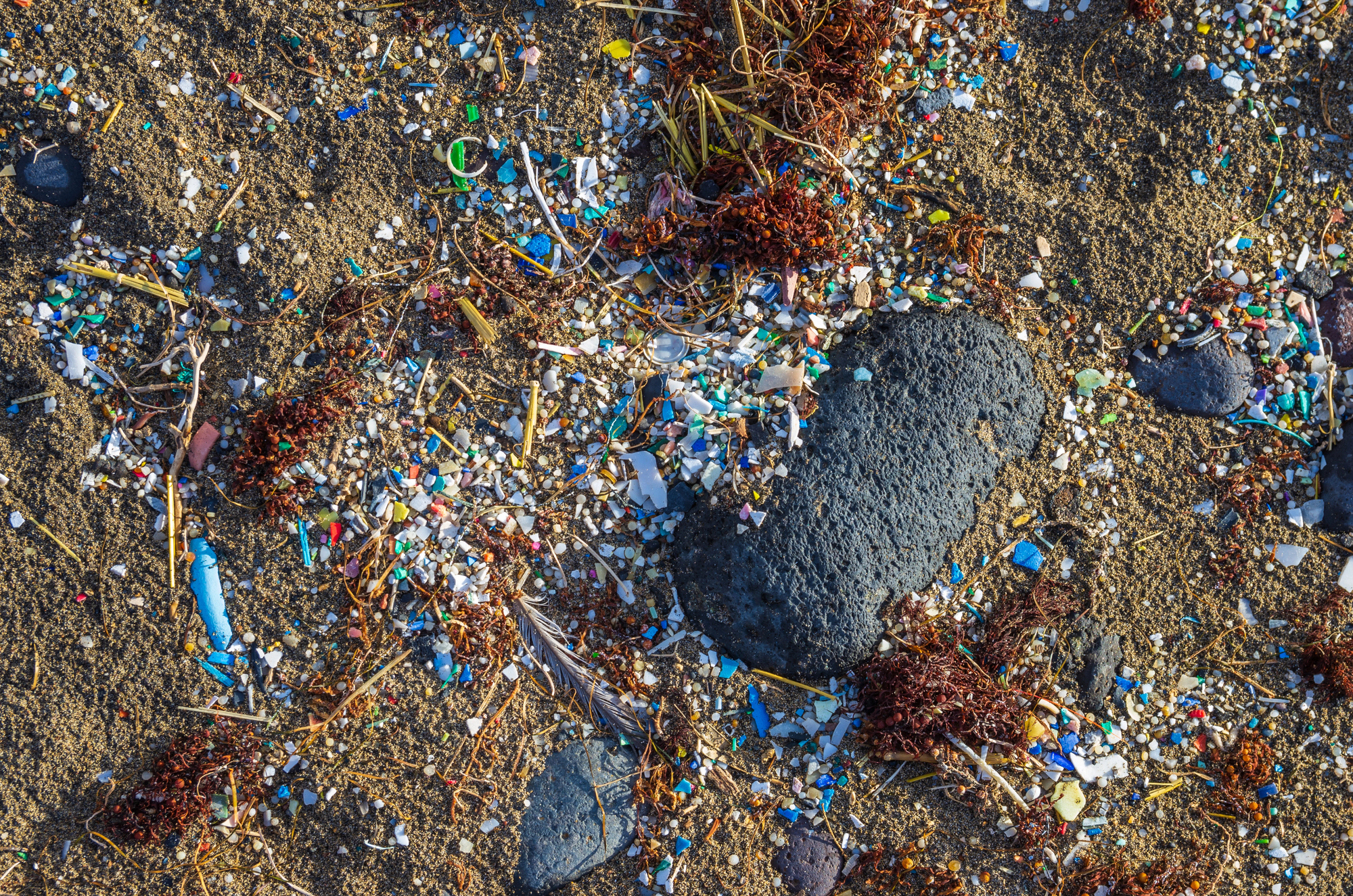
Many broken pieces of plastics have been drifting all around the Eastern Mediterranean
Our food, the environment and even in our bodies – microplastics can be found almost everywhere. Here in Cyprus, many beaches have already become colourful mosaics created by plastic debris in all shapes and sizes.
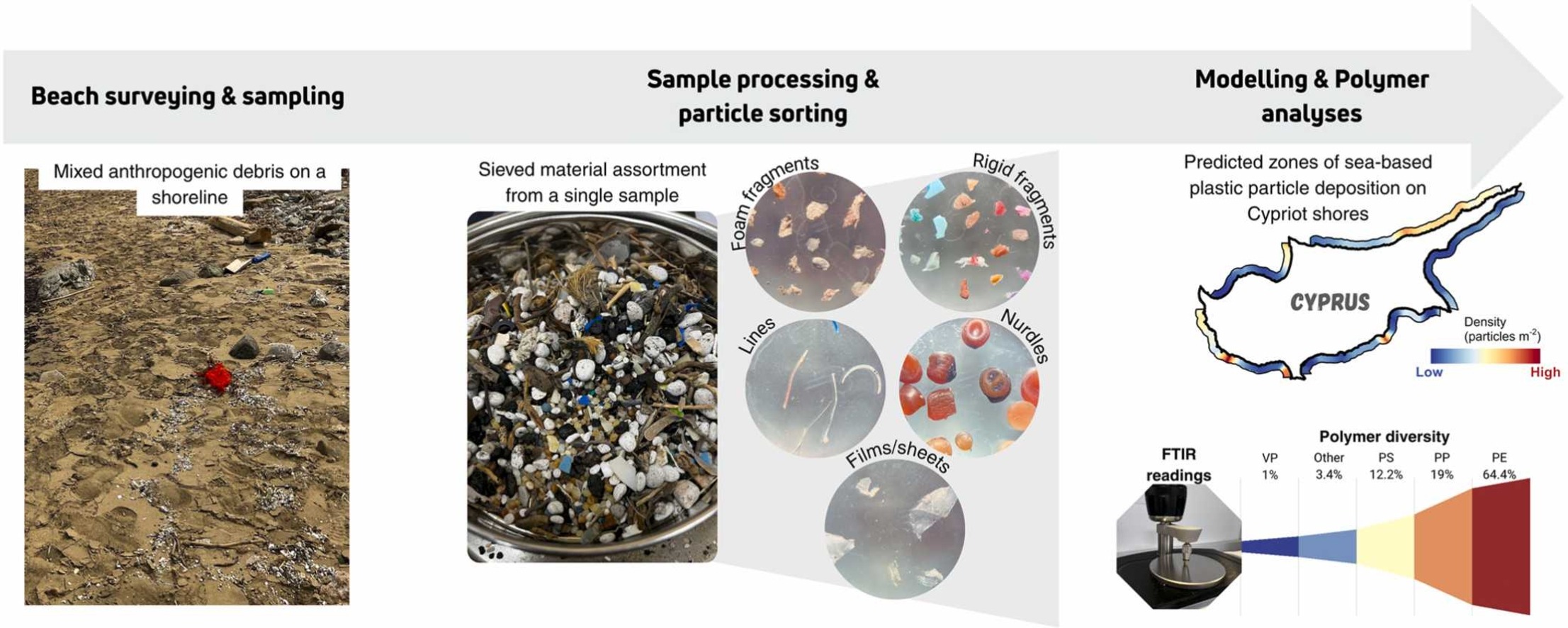
The density of microplastics averages 337 particles per square metre on Cyprus beaches, a new study found, bringing into focus the problems caused by the accumulation of these tiny pieces of plastic.
Up to 2422 microplastic particles per square metre
“Generally, most of the plastics come from land but then once they enter the marine environment they can drift away and go back to the shore where they break down from weathering processes and then head back to the sea in broken pieces,” says Ioannis Savva, lead author of the study, recently published in the Journal of Environmental Chemical Engineering.
Savvas’ study investigates microplastics ranging from one to five millimetres, as well as mesoplastics ranging from five to up to 25 millimetres.
According to the study, most of the fragmented plastics found offshore on Cyprus’ beaches were already circulating in the marine environment, rather than stemming directly from local coastal runoff, pointing to offshore contamination as its main driver.
“So all these plastic fragments we saw here in Cyprus, they are all broken pieces of plastics that have been drifting all around the Mediterranean region,” Savva explains.
The study, conducted with samples from 16 beaches all over the island, each consisting of four individual samples, found one beach reaching an average of 2422 microplastic particles per square metre, with individual samples of up to 4020 particles in the same ratio.
Even higher levels have been recorded in a follow-up study currently being prepared, with individual samples reaching up to 20,600 plastic particles per square metre.
Microplastic pollution levels on the island vary significantly
Savva’s study marks the first comprehensive scientific study investigating micro- and mesoplastic pollution on the shores of the island.
“Basically, our study represents the baseline levels of microplastics and mesoplastics,” Savva says, “this sort of differentiation just indicates the different size ranges of the plastics we’re dealing with (…) that are pretty harmful to the environment.”
Although a similar study was conducted in the north, it utilised an alternative measurement system, rendering it unsuitable for comparison.
“There was one study in the north where they sampled in a different methodology so we couldn’t really compare, even though we really wanted to,” he says.
The findings of the study, however, reveal that microplastic pollution levels vary significantly depending on the location, depending on the hydrodynamic exposure – the strength of tides and other influences.
One example of such varying exposure is Dune beach in the western part of Akrotiri. There, pollution levels were particularly high as the site is highly exposed to hydrodynamic forces, hence receives a lot of debris and plastic.
“It looks like a colourful beach,” he says.
But that is not the only difference revealed by Savva’s research. In fact, the measurements revealed substantial discrepancies in pollution levels depending on the time they were carried out, whether in spring or autumn.
“We had two sites, where in our spring sampling we went to the site and due to erosion half of the beach was gone and the plastics with it,” Savva says.
In his study, he refers to shorelines as “temporary reservoirs for microplastic”, as rain, sunshine and forceful waves can significantly impact the amount of plastic waste accumulated on beaches.
“Winds change, as do surface currents, which can alter the path of plastics,” he explains.
What are the dangers posed by microplastics?
“All plastic derived chemicals can disrupt the endocrine system and plastics have this very special feature where they attract organic chemicals from the background environment especially in the sea,” Savva says.
These organic chemicals are usually human-produced and synthetic, such as fertiliser, to which the plastics then attach in high concentrations.
Marine life then feeds on them, having the plastics travel all the way through the food chain, eventually ending up on our plates.
The overall health implications that plastics have are rather new and still undergoing a lot of research.
And while these are not an actual part of the study, the broader implications give an idea of the significance of Savva’s research, which primarily focuses on the environmental impacts of microplastics.
Lack of standardised procedures to measure microplastic pollution
“The baseline levels are rather important because that’s where you have a line where you can compare it in the future,” Savva explains.
According to Savva, there are currently no other studies that have analysed microplastic pollution in Cyprus, however, he adds that the fisheries department has recently launched a study that is still ongoing.
“We did not find any other studies in the published literature,” he says.
The lack of research leads to a lack of knowledge, making efforts to combat or prevent pollution even more difficult.
“Through the study we developed an allocation scheme that helps authorities to identify these kinds of shorelines that are heavily affected by marine based inputs and not directly from land based activities,” Savva says.
This is crucial information for authorities that wish to allocate resources and implement strategies to manage offshore contamination
But if most of the plastic debris actually comes from floating around in the Eastern Mediterranean, can local intervention actually help?
“The best-case scenario would be to get grants to have a multinational sort of dealing with plastic pollution in the Eastern Mediterranean, a sort of regional hub,” Savva says. “Meanwhile, our approach can support more targeted and effective coastal management, helping authorities prioritise clean-up and prevention efforts.”





Click here to change your cookie preferences