
Cyprus is not involved in any negotiations with the Iranian government aimed at opening the Strait of Hormuz to Cypriot-flagged commercial vessels, Shipping Deputy Minister Marina Hadjimanolis said on Tuesday, after it was reported that the French and Italian governments have entered talks to secure passage through the strait.
“We are not involved in any such talks regarding the Strait of Hormuz. Instead, given our position as the holder of the presidency of the Council of the European Union, and as a member state of the EU, we are closely monitoring the developments and we are working to find avenues for common actions with our partners in the EU,” she told the Cyprus Mail.
She added that the Cypriot government has not yet received any “official information” from either France or Italy regarding any negotiations with the Iranian government related to the Strait of Hormuz.
Nonetheless, Cyprus chamber of commerce and industry (Keve) secretary-general Philokypros Rousounides told the Cyprus Mail that despite the fact that the island’s merchant fleet is large in relation to the size of the country, and is the ninth-largest in the world, the proportion of Cypriot-flagged ships which pass through the Strait of Hormuz is “not so great”.
Reports of negotiations involving France, Italy and Iran first surfaced last week, with British newspaper the Financial Times reporting that France and Italy had “opened talks” with Iran, “seeking to guarantee safe passage for their ships”.
The newspaper added that “European capitals have opened the tentative discussions in an attempt to restart oil and gas exports without expanding the conflict”.
Following the publication of those reports, Indian Foreign Minister Subrahmanyam Jaishankar hailed the prospect of direct negotiations with the Iranian government as the most effective way to restart shipping through the Strait of Hormuz.
“Certainly, from India’s perspective, it is better that we reason and we coordinate and we get a solution than we don’t,” he told the Financial Times.
Later, Reuters quoted two French officials as having said that France is “pushing on with efforts to put together a coalition to secure the Strait of Hormuz once the security situation stabilises”.
However, the same agency quoted a source from the Italian foreign ministry as having denied the report, saying, “Italian leaders want to favour the conditions for a general military de-escalation, but there is no under-the-table negotiation aimed at preserving only some merchant ships at the expense of others”.
Since then, French President Emmanuel Macron has held a direct telephone conversation with Iranian President Masoud Pezeshkian, with Macron saying after the call that he had “reminded [Pezeshkian] that France acts strictly in a defensive capacity to protect its interests and those of its regional partners”.
However, he stressed on Tuesday that his efforts to open the strait to maritime traffic will not extend to the use of military force.
“We are not party to the conflict and therefore France will never take part in operations to open or liberate the Strait of Hormuz in the current context,” he said ahead of a cabinet meeting,
He did, however, note that “once the situation has calmed down, that is to say, once the main bombing has ceased, we are ready, along with other nations, to assume responsibility for the escort system”.
Meanwhile, the EU’s foreign affairs chief Kaja Kallas said on Monday that she had spoken to Jaishankar and United Nations Secretary-General Antonio Guterres about the strait, stressing at the same time that “Europe has no interest in an open-ended war”.
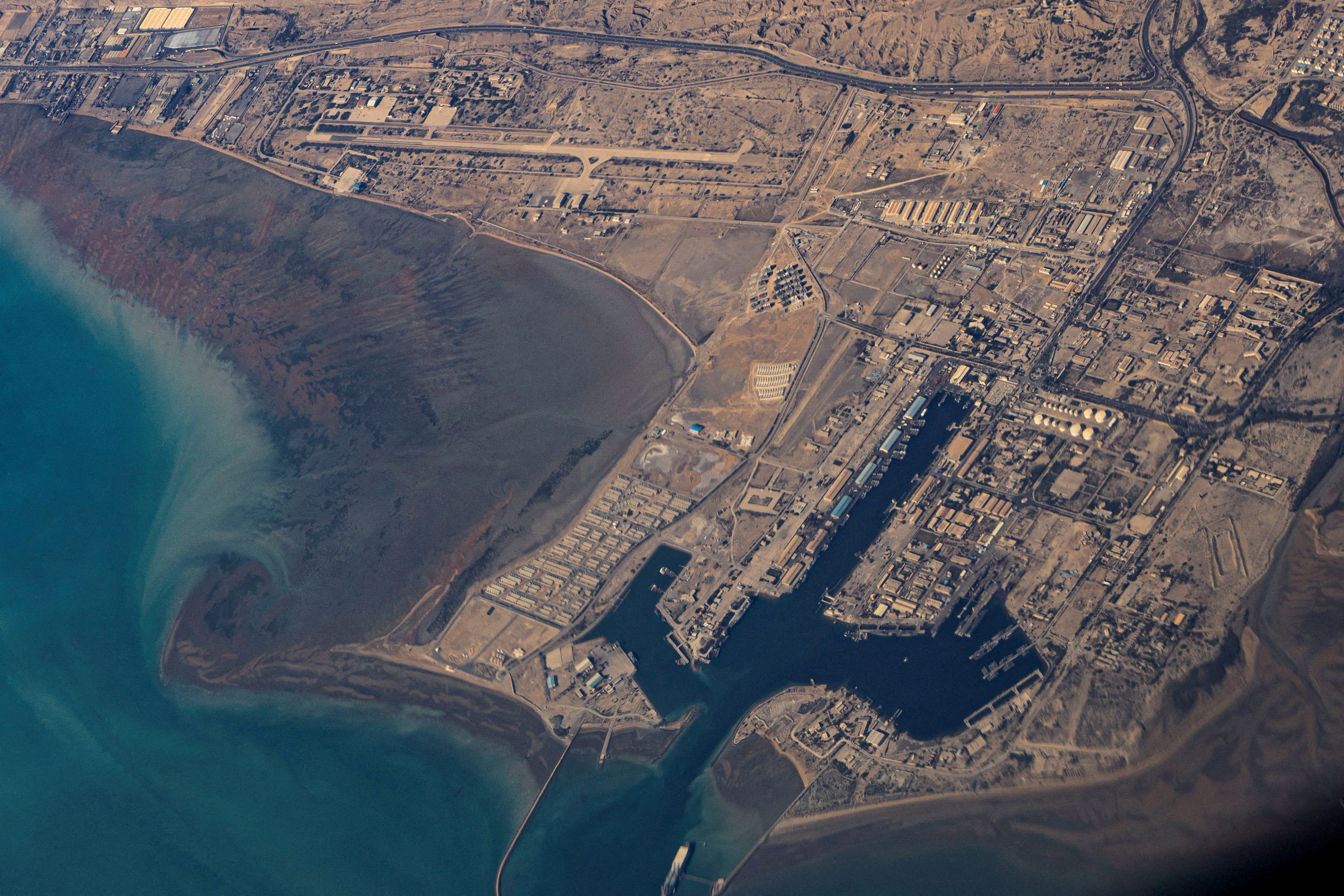
The Strait of Hormuz is a chokepoint between the most northerly point of Oman and Iran’s southern coast, which provides the only seaborne access between the Persian Gulf and the open ocean.
Typically, around 20 per cent of global oil passes through the strait, including European imports from Saudi Arabia, Qatar and the United Arab Emirates.
As such, its current closure could, in the worst-case scenario, predicate spikes in energy prices and even energy shortages.




Click here to change your cookie preferences