
The Centre of Visual Arts Research has now become the go-to place for anyone interested in Caterina Cornaro
Caterina Cornaro, the last queen of Cyprus, will be the subject of a lecture taking place at the Centre of Visual Arts Research (CVAR) – Costas & Rita Severis Foundation in Nicosia on March 19.
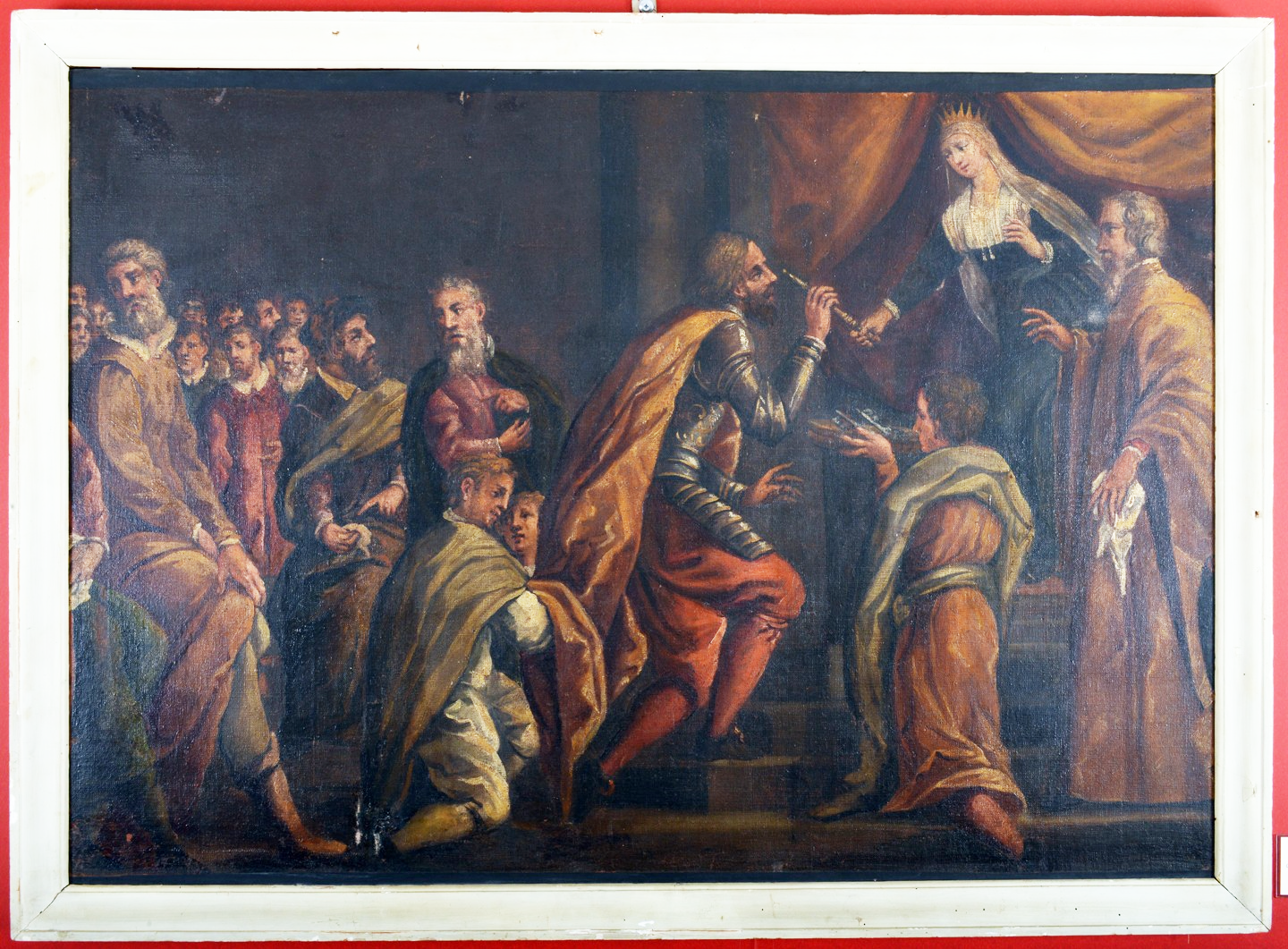
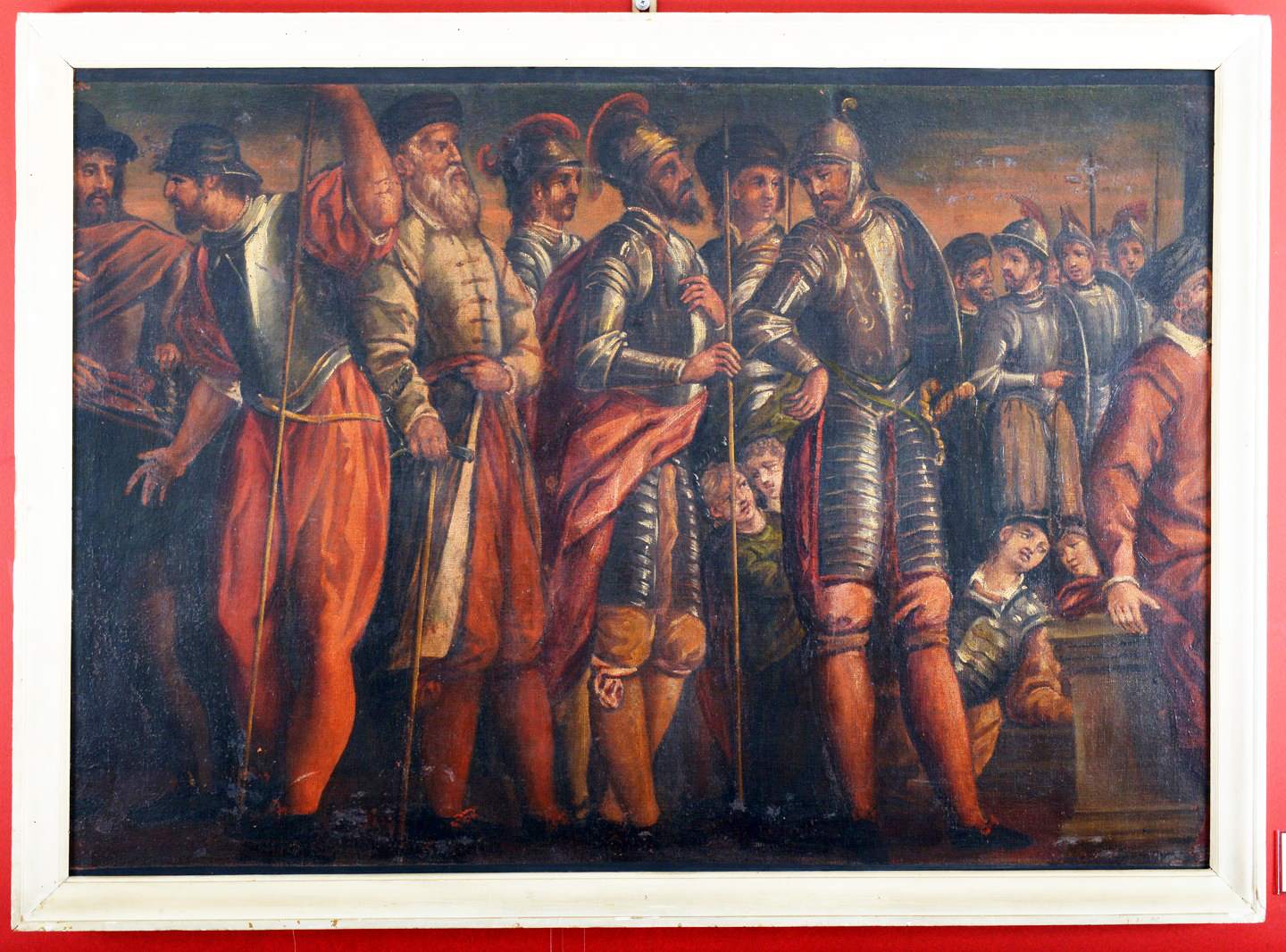
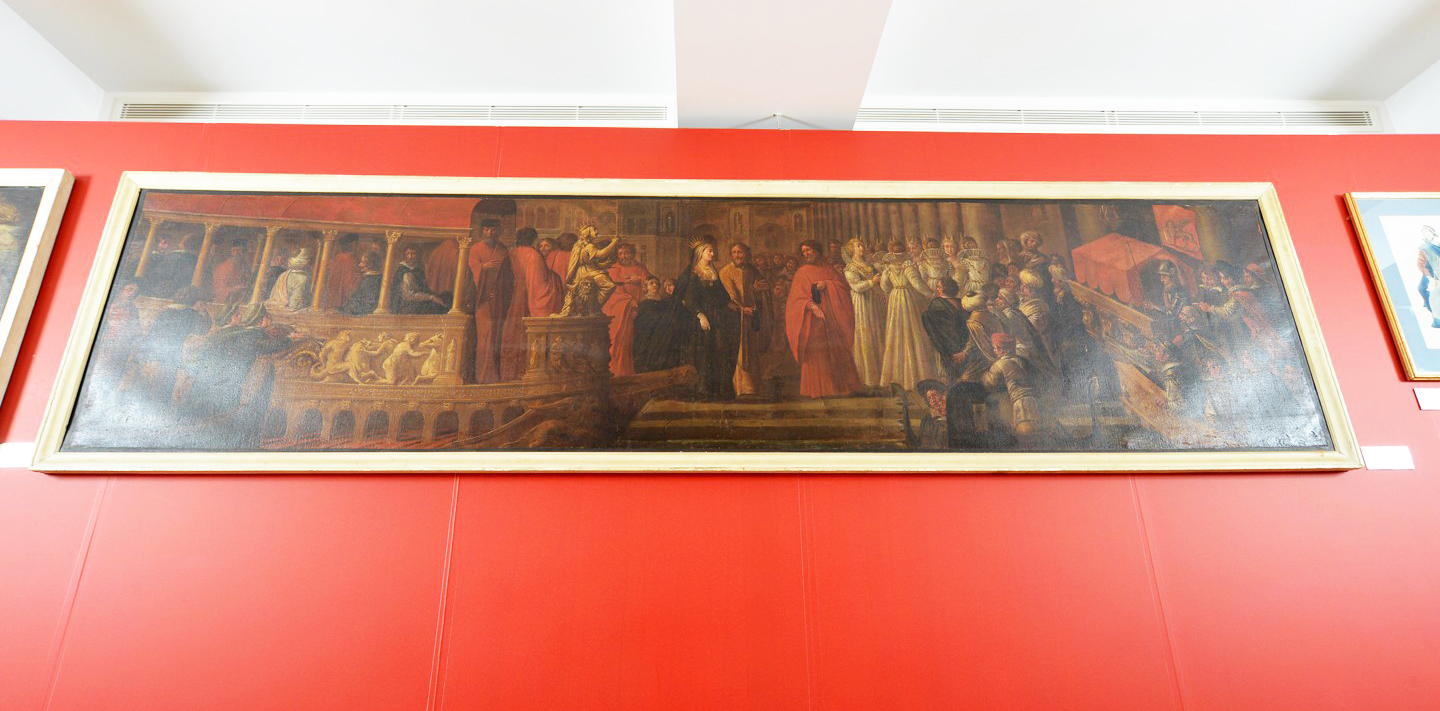
The lecture, delivered by Dr Giorgos Markou, the island’s leading expert on the cultural and artisitic links between Cyprus and Venice, will focus on a group of five late 16th century paintings narrating the life of Caterina, which were acquired recently by the Severis Foundation at auction in Genoa. It will be the first time that these paintings, of considerable historical and artistic importance, will be presented to the Cypriot public.
Dr Rita Severis, art historian and co-founder of the Severis Foundation, is accustomed to receiving a barrage of emails from all over the world whenever anything related to the history of the island comes up for sale.
“Most of the time they’re not that interesting,” she tells me, perched on a little bench in the CVAR’s second floor section devoted to the last queen of Cyprus. Located in Nicosia old town’s Ermou Street, the centre is a fitting home for the CVAR’s latest acquisition.
Rita’s sense of pride and satisfaction is palpable as she points to the five large canvasses now displayed on the walls.
“When I got an email from Italy about these paintings being sold I jumped at it. I knew that our collection must have them. So I bid for them and we got them.”
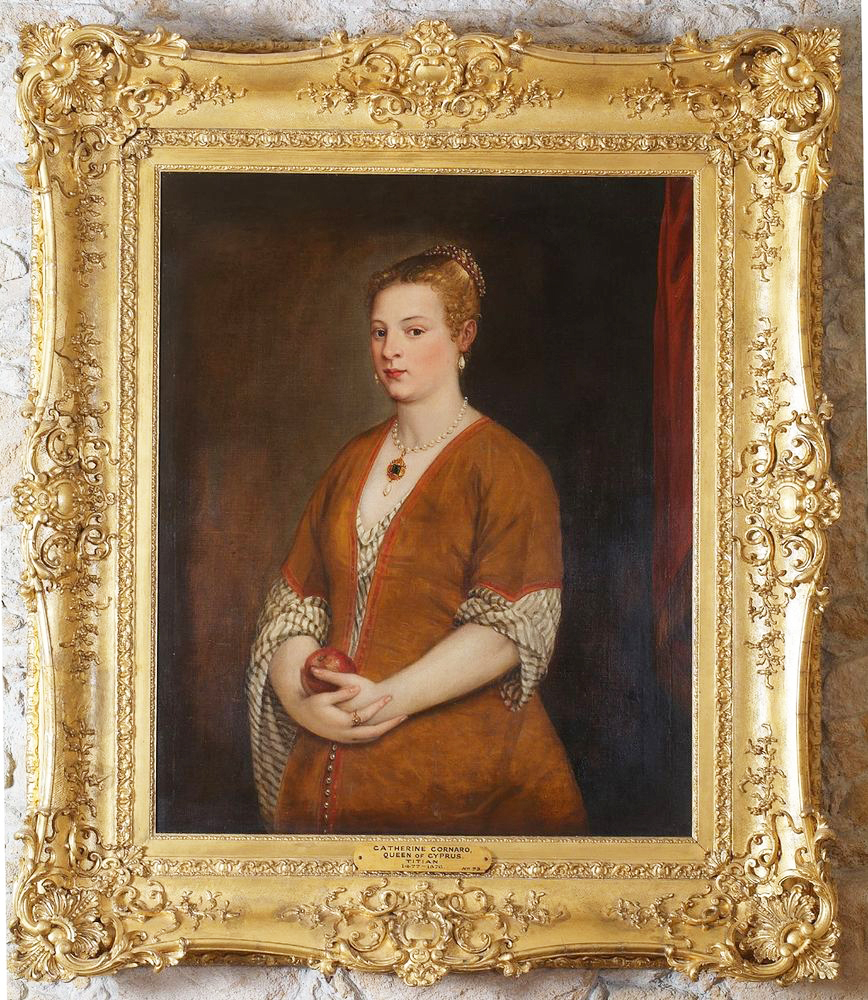
Caterina, a daughter of the prominent Venetian family of Cornaro was only 14 when she was married off to James I, the king of Cyprus, Jerusalem and Armenia.
Initially, the marriage took place by proxy in Venice, with Philip Mistachiel representing James. Four years passed before Caterina arrived in Cyprus in 1472 and the marriage was duly solemnised in the cathedral of St Nicholas in Famagusta. James, 15 years older than his bride, had already fathered several illegitimate children. The chroniclers wrote about him as handsome and well built. And Caterina was reported to be an outstanding beauty, a real “bella donna” as described by Sanudo, the Venetian scribe.
“One wonders what the first impressions of the sheltered, aristocratic Venetian girl were of the man chosen to be her husband, this handsome stranger who had started his stormy career at the age of seventeen by murdering his father’s Chamberlain; who had scaled walls and ridden through the night at the head of a posse of desperadoes, who had outwitted his rivals and killed his enemies in his headlong, rutheless guest for power,” the Cypriot historian Dr Joachim G. Joachim exclaimed in an essay featured in Caterina Cornaro, Queen of Cyprus, the biography edited by David and Iro Hunt.
“What is clear from Caterina’s recorded words and from her actions after her husband’s death, is that the Queen of Cyprus came to admire and love James. What had started wholly as a marriage of state seems to have developed into a love match.”
Marcou concurs. The marriage was happy and soon after her arrival in Cyprus Caterina got pregnant. However, he also shifts the focus back to the politcal aspect of the union.
“This marriage was actually a very interesting story and one that cannot be fully understood even today. Before Caterina was sent to Cyprus, Venice named her the daughter of St Marco, basically adopting her, which meant she was not longer a member of the Coronaro family. Thanks to this, a legal situation was created that in the event of James dying without a legitimate heir, his widow could pass the island to Venice without any need of a military expedition.”
James did pass away – in suspicious circumstances, let it be said – mere months after their wedding and his infant son, born a few months after his death, soon followed him. So it was that Caterina was left to rule alone but clearly with the backing of Venice, which was to suppress an attempted coup in late 1473 that sought to transfer power to Naples.
Alerted to the attempt, Venice unhesitatingly despatched its commander Pietro Moncenigo to Cyprus, who, having succesfully quashed the coup, promptly offered the kingdom to Caterina.
“And the first of the paintings bought in Genoa shows exactly that – Moncenigo arriving on the island and offering Venice’s support to Caterina,” says Markou. “Because the five paintings show not only the story of Caterina, they also represent the story of Venice and Caterina’s brother Zorzi (Giorgio) Cornaro, the man who Venice named ‘Padre della Patria’ i.e. the father of the country. Therefore it is significant that we can spot Zorzi alongside Caterina in all of these paintings.”
In all five paintings, Caterina wears black clothes, a detail that underlines her widowhood. Markou explains the significance: “This is very important because it legitimises her offering Cyprus to Venice. And Zorzi? In all the paintings, Zorzi is wearing a toga of the same cut as worn by other Venetian patricians, just that in his case it is not red but gold. That signifies his importance in the story because it was Zorzi who was pushing Caterina to donate the island to Venice. She herself wasn’t so keen on going back to Venice. She insisted on ruling on her own for 14 years after the death of her husband. So Venice kept on sending members of her family – her mother, her father, and her brother – all the time to nag her… until finally she agreed… So this is also why this cycle is important because it shows all this dynamics,” he explains.
The paintings are of different sizes – the largest, almost four metres long, another, three and a half metres long, the third, two metres. Two are vertical.
The auction house which sold offered no explanation about their provenance. However, according to Markou’s research, Italian ar. biographer Carlo Ridolfi’s 1648 biography of the Venetian painters mentions a cycle of paintings in the workshops of followers of the great Venetian masters, Paolo Veronese and Jacobo Tintoretto, depicting the life of Caterina Cornaro, that were created for the Palazzo Corner della Ca’ Grande, the Cornaro family’s main residence.
“So there is a possibility that this cycle is a series of paintings that were meant for the portego of the palazzo. Now, what was the portego? We have to imagine it as the heart of the Venetian palace.This was a long corridor that connected all the rooms – the most public space of the house. And because these families wanted to project their wealth and their fine taste there they used to decorate it with paintings as well as antiquities, arms and armour, And the paintings that they chose, besides their own portraits, and the family portraits, usually had something to do with the history of the family. So it was important for the Cornaros to showcase that their family brought up a queen who not only ruled a faraway island but who also offered it to Venice as its own territory when she abdicated in 1489,” says Marcou.
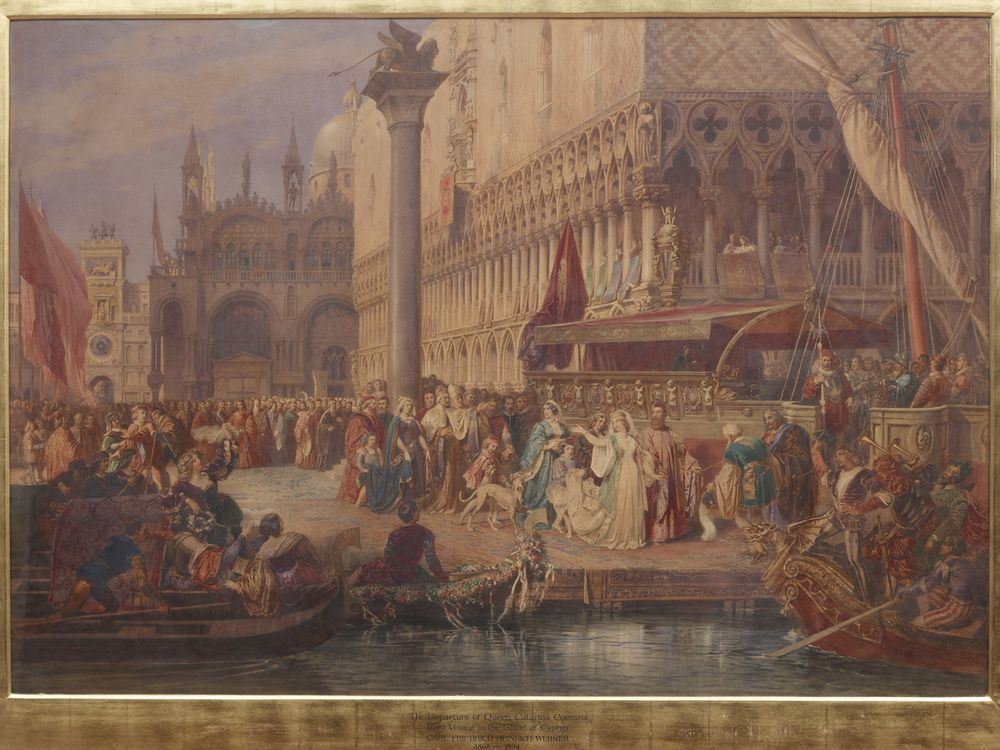
This hypothesis seems to be confirmed by the themes of the remaining paintings. All four show important events from Caterina’s life: her arrival in Venice; the ceremonial handing over of the crown of Cyprus to Venice’s chief magistrate, the Doge Agostino Barbarigo; plus two smaller canvases featuring a group of soldiers and a gathering of women, most likely bidding farewell to Caterina when she was leaving Famagusta.
“Of course, we need to do much more research to be able to confirm such a theory,” Markou says. “The Cornaro family owned many palaces around Venice so it still might be possible that this is not the case because Ridolfi sometimes had a problem with his provenance. But hopefully this might be resolved after looking more closely at the iconography of the paintings and their technical examination as well as detailed documentary research in the Venetian archives.”
What is certain for now is that the five paintings formed a part of the frieze in one of the palazzos and in the past most likely were part of the bigger body of work.
“They were probably removed from their original setting at the beginning of the 19th century during the Austrian invasion of Venice. At that time, these houses were no longer in use and people started looting them, often cutting down the bigger paintings into smaller scenes that would have been much easier to sell. So it is likely that we are missing some stuff from this cycle, pressumably depicting Caterina’s departure from the island but right now it is all very tentative. It is like a puzzle, a hypothetical sort of narrative progression,” Markou explains.
Rita Severis is also looking forward to finding out more about her aquisition. Meanwhile, she notes that along with the paintings she previous bought of Caterina Cornaro, the CVAR now houses the world’s biggest collection of art focusing on the life of the last queen of Cyprus.
“I don’t think there’s any other place in the world that has so many paintings of Caterina. We have about 20 which means anybody who would be interested in studying her life has to come here,” she says proudly.
And after Markou’s lecture this Thursday, the next step for her is to start collecting money to be able to have the paintings cleaned because “they need it desperately and once they are clean, they will be really brought to life”.
CVAR, created in 2014 by Rita and her husband Costas, is home to their vast collection of paintings, antique costumes and memorabilia related to Cyprus, and its neighbours. It also houses a library and research centre
Lecture “Caterina Reclaimed: A Monumental Frieze from the Cornaro Family Palace to the CVAR – Costas & Rita Severis Foundation” by Dr Georgios E. Markou. In English. Admission free. CVAR, Ermou Street, March 19, 6.30pm.



Click here to change your cookie preferences