
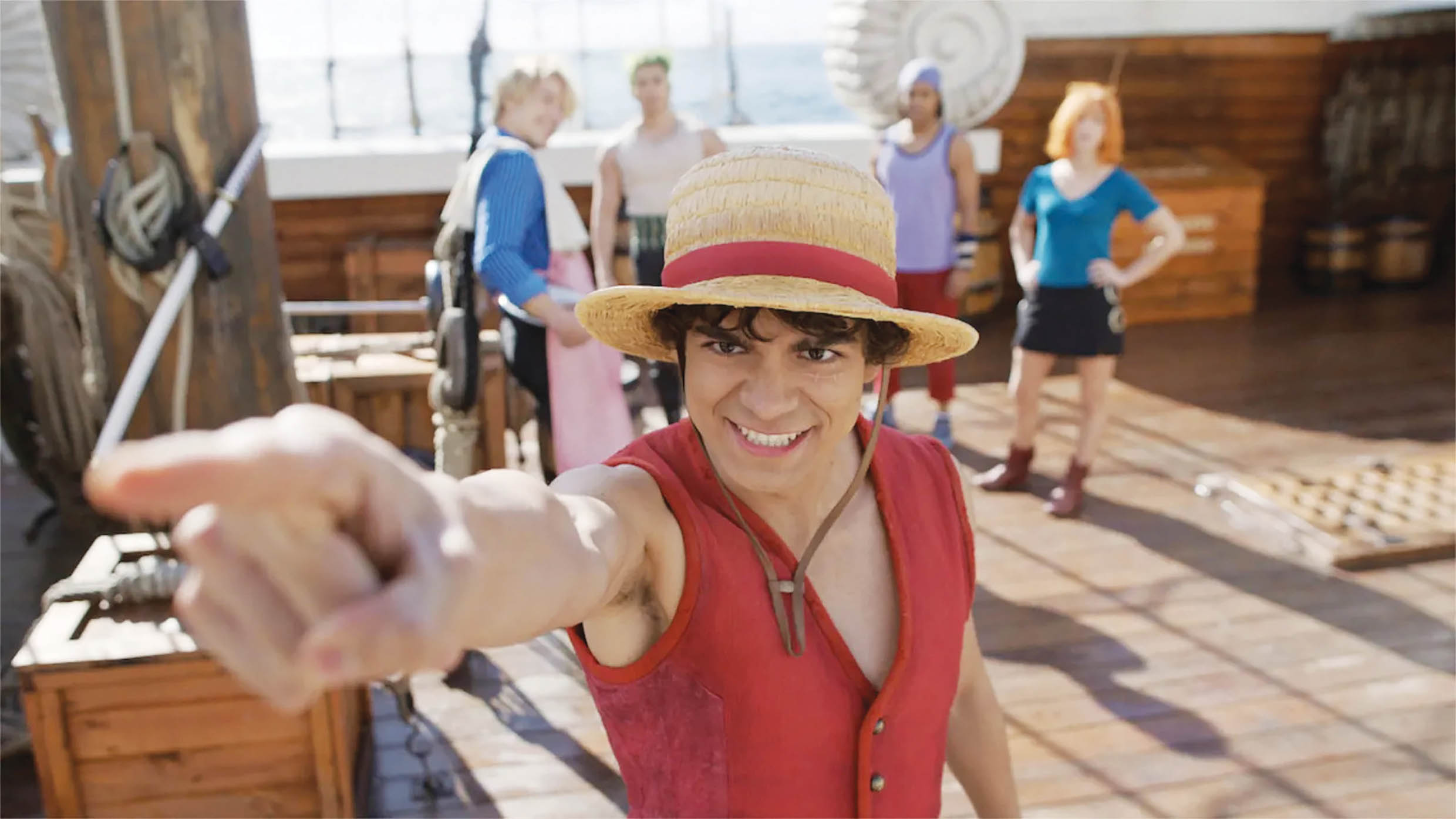
One thing is clear with Netflix hit: it has no intention of being normal
Netflix’s live adaptation of the global manga phenomenon One Piece is, somehow, still winning. In its first season, it pulled in around 19 million viewers and managed the impossible: pleasing both critics and the kind of fans who would riot if Luffy’s sandal colour was slightly off.
Season 2 dropped two weeks ago and again refused to follow the laws of streaming. Viewership held at around 17 million, which in the streaming behemoth’s terms is basically a miracle. Most shows fall off a cliff between seasons. One Piece? Minor turbulence. Seatbelt sign still on, but we’re cruising.
Season 3 is already greenlit, with long-term plans mapped out. And here’s the weird part: One Piece has cracked the code that every other live adaptation keeps fumbling. It found the balance between fan service and accessibility for non-fans and casuals.
That balance being: newcomers are welcome… but also, good luck, as this show absolutely refuses to explain itself.
Most adaptations underplay the weird stuff. They simplify lore, tone down the absurdity, maybe throw in a “previously on” for safety. One Piece does the opposite.
Its world is chaotic, cartoonish and proudly nonsensical. Fruits give you superpowers, but not the same ones for everyone. A reindeer-human hybrid becomes a doctor. A guy made of smoke is named Smoker. Somewhere out there, an otter in a onesie is riding a weaponised vulture like it’s just another Tuesday.
This is fan service in its purest form. Not nostalgic, not subtle, just fully committed. You either buy in, or you don’t. There is no middle ground.
And since the showrunners have made it very clear they are not here to water anything down, let’s talk about the arcs that could define the next seasons.
Spoilers ahead.
Alabasta Arc – Season 3
This is where things escalate fast.
What starts as an escort mission turns into a full-blown political collapse. The Straw Hats arrive in Alabasta with Princess Vivi, expecting to stop a rebellion. Instead, they walk into a country already on the brink and tension so high it’s basically waiting for a spark.
The twist? The war is manufactured.
Warlord Crocodile – of whom we got glimpses in season 2 – is running the entire operation from the shadows. He engineers the drought, spreads misinformation and pits both sides against each other to seize power once everything falls apart.
Luffy? Luffy prefers to keep things simple and solves his problems the only way he knows how: by punching them repeatedly in the face.
Sky Island Arc – Season 4
Naturally, the next step for a pirate series is going to the sky. Because why not?
The crew follows a legend, rides a vertical sea explosion, and lands in Skypiea – a floating civilisation where clouds are solid, technology runs on dials, and religion doubles as law enforcement.
At the centre of it all is Eneru, a self-proclaimed god with lightning powers and absolute authority. He doesn’t rule, he judges. And his judgment tends to be of the fatal kind.
This story arc resolves the way every story arc in all literature should resolve: by punching God in the face.
Water 7 Arc – Season 5
And then the tone shifts completely.
Water 7 is where One Piece stops being just fun chaos and starts hitting emotionally.
The crew arrives in a city of shipwrights to repair the Going Merry. Instead, they’re told the truth: the ship is done. No fixes, no miracles, no last-minute save. Usopp refuses to accept it.
What follows is one of the most brutal moments in the series – not because of a villain, but because of what it does to the crew. Usopp challenges Luffy, loses and leaves. The crew fractures.
At the same time, Nico Robin disappears after being linked to an assassination attempt on Iceburg, the city’s mayor. The truth is worse: she’s been taken by CP9, a group of undercover government agents posing as shipwrights.
By the end of the arc, Luffy isn’t just fighting enemies. He’s declaring war on the World Government. And once again, solving the problem the only way he knows how: with a lot of punching.
After this, things get complicated. The story eventually reaches a timeskip that effectively splits the narrative into two eras. For a live-action series, that might be the natural endpoint, a clean break where characters evolve and reality starts to catch up. But knowing One Piece? Stopping there would almost feel too normal.
And this show has made it very clear: it has no interest in being normal.



Click here to change your cookie preferences