
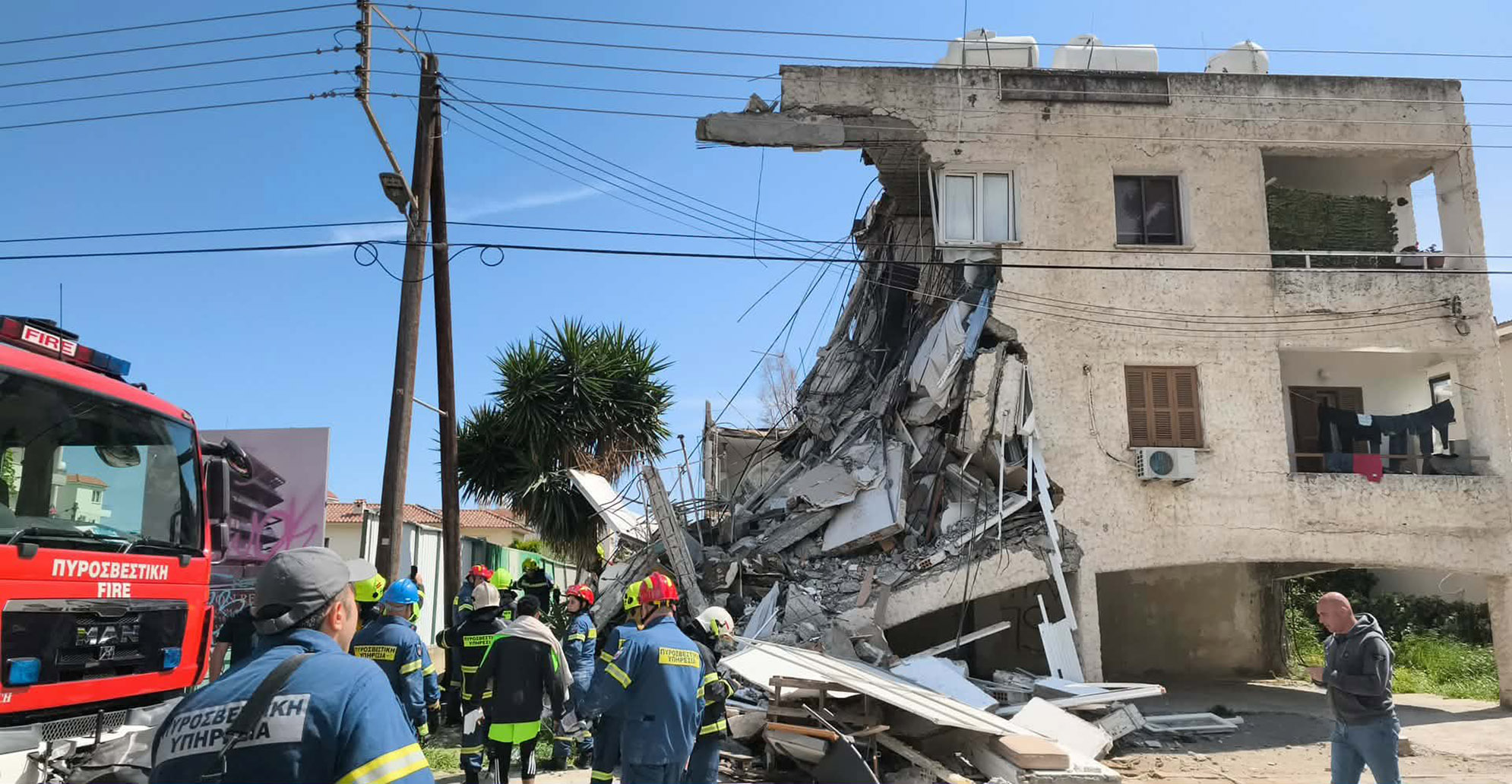
It seems that tragedy must strike before the authorities recognise the existence of a problem and decide that dealing with it cannot be put off any longer. In the latest example of this, last Saturday two unfortunate foreign men were killed when the dilapidated building in which they were residing in Limassol collapsed. Another tenant of the slum apartments escaped with injuries.
While the authorities had been aware of the problem since 2017, when Yermasoyia municipality first sent letters to the owners of the building nothing was done. In fact, certain structural changes were made to the building more recently to increase the number of rooms that could be rented (a balcony was converted to a bedroom for example), something that could have hastened its collapse. The changes had been made without any permits from the authorities.
After the reform of local government, the authority for dangerous buildings was given to district administrations – EOAs. The Limassol EOA reportedly visited the building in February and a month later at the end of March wrote to the owners, informing them the building had been classed as ‘dangerous’ and gave them three months to make the repairs that would make it safe. In short, even if the owners received the letter from EOA this month, they had 90 days to make the necessary repairs.
We do not know whether the letter stated that nobody could use the building until it was made safe. Nobody seems to know whether the owner of a ‘dangerous’ building is criminally responsible. They would be if they ignore instructions from the authorities to repair a dangerous building, but if there has been no warning letter, the owners could claim ignorance about the state of the building.
After the building collapse in Limassol, Interior Minister Constantinos Ioannou this week wrote to the presidents of the five EOAs urging them to consider making public the details of 1,300 building that were registered as ‘unsafe’. This information, which had been passed to the EOAs by the technical services of interior ministry, could prove very useful to tenants that were not informed by their landlord that they were living in a dangerous building. It would also act as a warning to people considering renting a dangerous building.
Publicity is the most effective way to protect people, because disaster might strike by the time bureaucratic procedures are set in motion by a local authority as happened in Limassol. The EOA must place big signs on all buildings registered as unsafe making renting them out a criminal offence. It is the only way to stop ruthless landlords who have no qualms about renting out dangerous premises and putting lives at risk. We have seen that relying on bureaucratic procedures, such as correspondence with owners, merely prolongs the dangers.


Click here to change your cookie preferences