
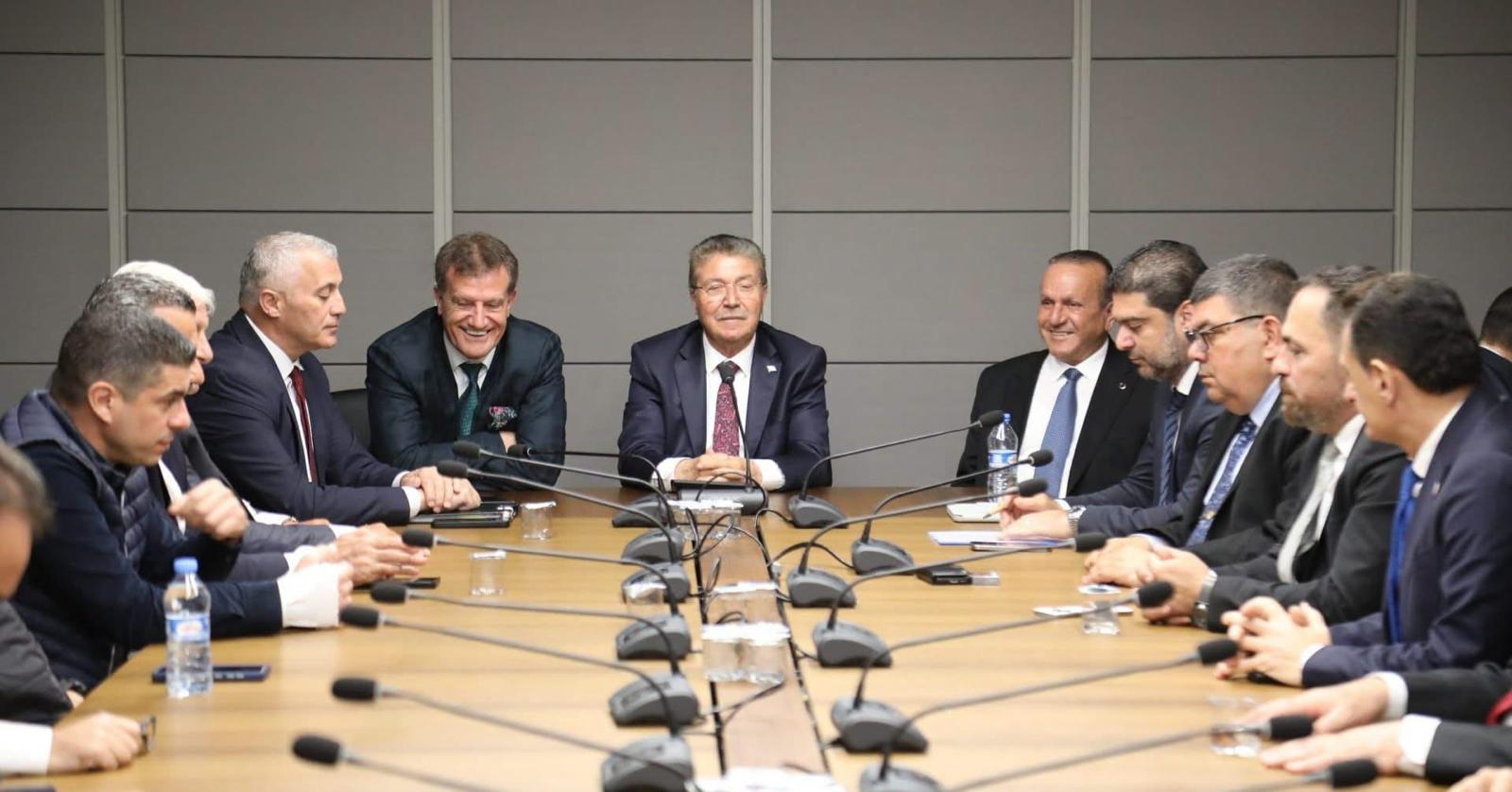
The Turkish Cypriot legislature on Monday voted unanimously to withdraw a bill aiming to cut payments of the cost-of-living allowance to public sector workers which had earlier provoked a general strike and seen thousands of protesters descend on the legislature building on four occasions earlier this month.
Members of the ruling coalition had met trade union leaders on Monday morning to discuss the matter, with ‘prime minister’ Unal Ustel having announced on April 11 that discussions on the matter would be delayed for a week in light of the mass protests and general strike.
With that week having elapsed, Ustel told the union leaders that it was his intention to withdraw the bill in its current iteration, and have it once again sent to the legislature’s finance committee, where elected representatives, union leaders, and other stakeholders alike would be able to discuss the matter.
“Since there are differences from the regulation previously discussed at the committee, it has become necessary to withdraw the current bill and re-evaluate it with all the relevant stakeholders,” he said.
He stressed that his ruling coalition’s decision to not press ahead with the bill as it had initially been devised “should not be seen as a step backwards”.
“On the contrary, it should be considered a step forward which strengthens social harmony, reduces tension, and prioritises common sense,” he said.
He then struck much the same tone when introducing his plans to the legislature later in the day, explaining that “developments around the world have disrupted the balances” of the Turkish Cypriot authorities’ budget for the year.
“The occurrence of undesirable events around the world has led to disruptions, shocks, and stagnation,” he said, before adding that conflicts in the Middle East specifically have “negatively impacted the economy”.
He also pointed out that his ruling coalition has zeroed no fewer than six taxes related to the import and sale of fuel, saying, “we … have started to take measures so as to prevent or people from feeling the effects of our difficulties”.
Looking ahead to the forthcoming committee discussion ns, he promised that “we will create common ground by embracing everyone and by being in contact with the opposition and with the unions”.
He then passed comment on the matter of the next legislative elections, with unions and opposition politicians alike having demanded that he hold an election this year.
Despite this, he has remained unmoved, and said on Monday, “as I previously stated, the normal election date is January”.
![Protesters at the door of the Turkish Cypriot legislature building [Photo: Tom Cleaver]](https://cyprus-mail.com/wp-content/uploads/2026/04/b6846484-dad9-423e-902c-736b49698ff4.jpeg)
Opposition party CTP leader Sila Usar Incirli remained distinctly unimpressed by Ustel’s manoeuvres, however, saying in her address to the legislature that “the country has been paralysed” since March 30, when the general strike began.
“Parliament could not function, legislative activities could not continue, committees could not work, and oversight could not be carried out. Crises began and ended around the world, but for three weeks, we have been frozen like rabbits in headlights,” she said.
She added that in her view, the coalition should have spent the intervening three weeks “taking preventative measures” to shield Turkish Cypriots from the economic fallout of the conflict in the Middle East, but that instead, “the country was put into a coma”.
“The cost of this has been enormous. First and foremost, democracy has suffered,” she said, before adding that while the decision to send the bill back to the committee was “correct”, it was a “belated step”.
She added that while her party would accept the plans for the bill to be sent back to the committee, “this will be a conditional acceptance, because neither we nor the public trust you”.
Later, she poured scorn on Ustel’s insistence on waiting for next January to call an election, saying, “this government is no longer capable of governing this country”, and adding that following the weeks of strikes and protests, “an election date is needed to reduce tensions”.
She then added that plans for a January election are “unrealistic” and said that a legislative election should be held in June instead.
“Elections will be held in June, and a new government will come to power, prepare a budget, and work to get the country out of this crisis. Then, local elections will be held in December,” she said.
The legislature then voted unanimously to withdraw the bill.


Click here to change your cookie preferences