
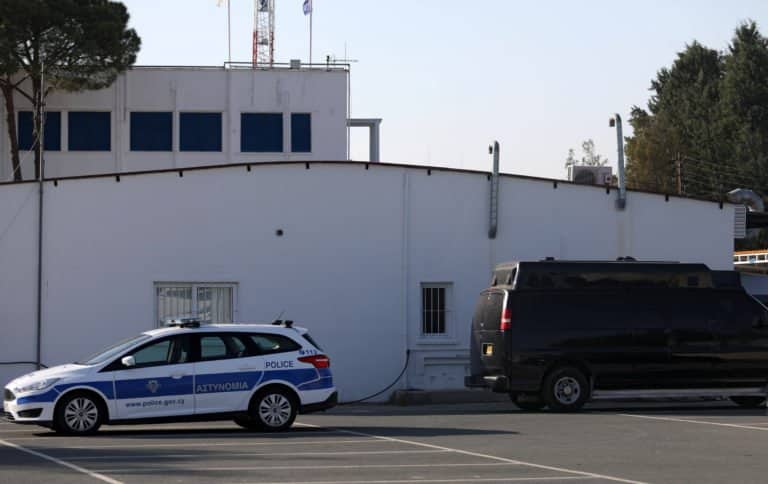
Government spokesman Konstantinos Letymbiotis on Thursday dismissed calls led by Akel the investigation into the “spy van affair” to be reopened, instead insinuating that Akel had raised the matter to boost its polling numbers ahead of the parliamentary election.
“I understand the period through which we are going, and I am sure that in the next few weeks, we will see tension in several positions,” he said, in reference to the electoral campaign, before saying that “we should be characterised by consistency in our public statements and in our reports”.
“On the one hand, political parties or politicians cannot rightly claim and demand respect for the independence of institutions and at the same time, through their interventions, not respect the same independence of institutions,” he said.
He then added that “any investigations” into the matter “have been carried out”, before stressing that those investigations took place before the incumbent government came to power in 2023.
“Wherever and whenever there is any evidence, indications, presumptions, or intention for a new investigation to be conducted, or something which has not been followed with due process, this should be reported to the competent bodies so that they can follow these procedures,” he said.
He added that the government’s stance on the matter is “fixed”, and that “our position is unwavering and … undiminished”.
“While there is any evidence of any case concerning any non-compliance with the procedures provided for or irregularity in those procedures, this evidence should be handed over to the competent authorities so that they can initiate and carry out the appropriate procedures,” he said.
The “spy van affair” had seen it come to light that a private company named WiSpear was offering private surveillance services using state-of-the-art technology which had been installed in the back of a van.
WiSpear’s chief executive officer of the day Tal Dilian was initially arrested in Cyprus, before eventually being released, while the company itself was given a fine worth €76,000.
Calls for the matter to be investigated again were renewed this week after Greece’s prosecutor-general Konstantinos Tzavellas elected on Monday to not order that a case involving Dilian be reopened, after opposition politicians had called for a fresh investigation in light of comments Dilian had made to Reuters.
While no van was used in Greece, it was found that Dilian’s software was used to hack the mobile phones of 87 people, including government ministers, senior military officials, and Nikos Androulakis, who has since become Greece’s leader of the opposition.
Dilian had told Reuters that the technology offered had “only been sold to governments”, with Androulakis insisting that that this statement indicates involvement from the highest levels of the Greek government – something Greek Prime Minister Kyriakos Mitsotakis has denied.
He had told Greek television channel Mega that “it all starts from the Maximos Mansion”, the Greek prime minister’s official residence.
“We know that four chiefs of staff of the armed forces were targeted. Tzavellas says that we do not need to investigate who monitored them and why, or where the material is. This is a matter of national security,” he said.
He added that since then, Dilian has “called Mitsotakis ‘Nixon’”, in reference to former United States president Richard Nixon, who was brought down by the Watergate spying scandal, and “said that his software is only sold to states and state agencies”.
“He photographed the country, the state and the national intelligence service and yet Tzavellas has not called on him to bring any evidence to back up his words,” he said.
He added that as such, “Tzavellas is not interested in the Greek judiciary finding out who set this all up at the expense of the armed forces and who is blackmailing the prime minister”, sarcastically adding that this is “nice” and accusing Mitsotakis of setting up a “gang” in the Maximos Mansion.
“For me, national security and the quality of democracy are not separate. They are at the core of the state’s strength. For an individual to feel secure, he must feel trust in the institutions. Mitsotakis, unfortunately, has discredited the institutions,” he said.
Dilian’s assertion that his technology had “only been sold to governments” was also viewed by some to lend credence to the theory that he was operating in with the full knowledge of those who held the highest offices of the Republic of Cyprus when the van was operational in the late 2010s.
In light of this, Akel leader Stefanos Stefanou had criticised the Cypriot legal service for suspending the criminal prosecution of Dilian, and instead fining WiSpear €76,000, saying that in doing so, the legal service had only cited “generally and vaguely, the public interest”.
He added that “the issue of surveillance and institutional entanglement and corruption is extremely serious, since it concerns the protection of people’s rights, as well as the democratic functioning of institutions”.
“Shadows cannot be cast over such cases, and the credibility of institutions cannot be tarnished by those who should be the first to safeguard it,” he said, adding that the “spy van affair” had “intensified people’s distrust … towards the state and the competent prosecuting authorities”.
In Greece, Dilian was handed a 126-year prison sentence for his part in the country’s surveillance scandal. Eight of those years are to be served behind bars, though Dilian remains out of prison for now, pending an appeal against the ruling, which will be heard in December.




Click here to change your cookie preferences