
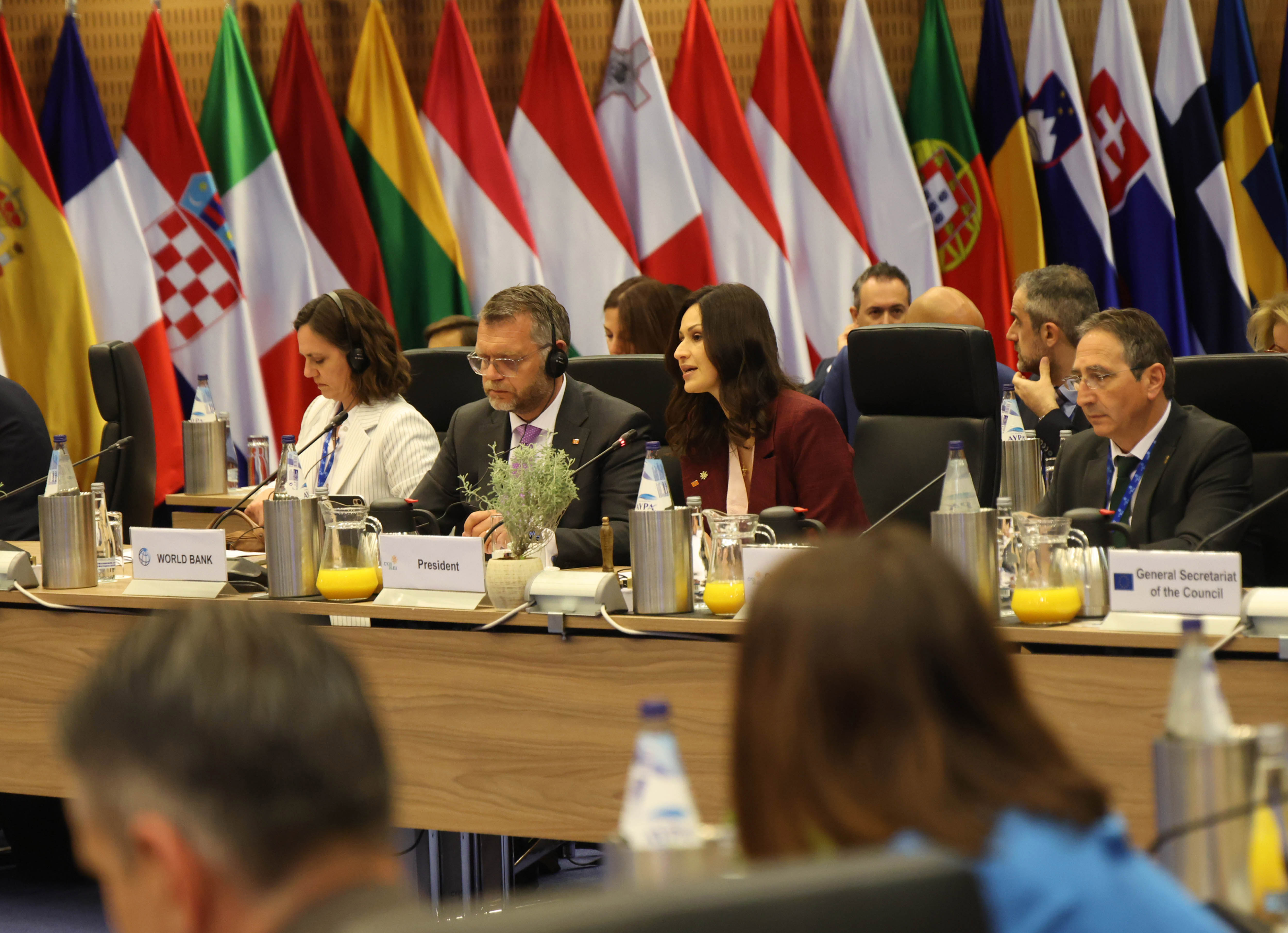
Boosting preventive measures and overall preparedness is a central priority of the common agricultural policy (CAP), Agriculture Minister Maria Panayiotou said on Monday at the informal meeting of EU agriculture ministers in Nicosia.
“The European agri-food sector is currently facing an increasingly complex and intensifying risk environment linked to the climate crisis, animal diseases, market disruptions and geopolitical instability,” she said.
Panayiotou warned that these challenges directly affect agricultural income, as well as the resilience of rural areas and food security in the European Union, stressing the need for a coordinated European response.
“For us, Europe must be autonomous and open to the world, and a key element in ensuring this is food security. This is why today’s discussion plays a crucial role in shaping the crisis management tools we want the new Common Agricultural Policy to include,” she said.
European Commissioner for Agriculture and Food Christoph Hansen highlighted the pressure on the sector stemming from developments in the Middle East, which have driven up fertiliser and fuel prices.
“We are also facing a wide range of animal diseases, including here in Cyprus. It is therefore clear that we need to intensify our efforts in biosecurity and risk management more broadly, as climate change is here to stay and its impacts are becoming increasingly severe,” he said.
Greece’s Minister of Rural Development and Food Margaritis Schinas said resilience strategies and the future of the CAP would be central to discussions.
He added that talks with Panayiotou would also focus on strengthening bilateral coordination in tackling animal diseases affecting both Cyprus and Greece.
France’s Agriculture Minister Annie Genevard pointed to the growing risks posed by climate change, noting that many EU countries have already experienced extreme weather events.
“We must go further and work actively on prevention to build greater resilience to these climate phenomena,” she said.
Spain’s Agriculture Minister Luis Planas said the two main challenges facing the sector are geopolitical instability in the Middle East and climate change.
“Drought, lack of rainfall, floods and extreme weather events are making agri-food production increasingly difficult. For all these reasons, preventive, recovery and risk management measures are essential,” he said.
The statements come during a two-day informal meeting of EU agriculture and fisheries ministers, held as part of Cyprus’ ongoing EU Council presidency.





Click here to change your cookie preferences