
Archaeologists in Italy’s Pompeii have for the first time used artificial intelligence to reconstruct the appearance of one of the victims of the volcanic eruption that destroyed the ancient Roman city nearly 2,000 years ago.
The AI-generated image, released by the Pompeii Archaeological Park on Monday, shows a man ducking for cover while holding a large bowl over his head, with a flaming Mount Vesuvius in the background.
It is based on the recent discovery of the remains of a male adult, just outside one of the southern gates of the city, which were lying next to a terracotta mortar that he presumably used as protection.
Archaeologists believe the man was killed by a shower of volcanic rocks, in the early hours of the second day of the eruption, while trying to escape towards the sea. He was also carrying a lamp and 10 bronze coins, the park said.
“If used well, artificial intelligence can contribute to a renewal of classical studies, illustrating the classical world in a more immersive way,” the head of the archaeological park, Gabriel Zuchtriegel, said in a statement.
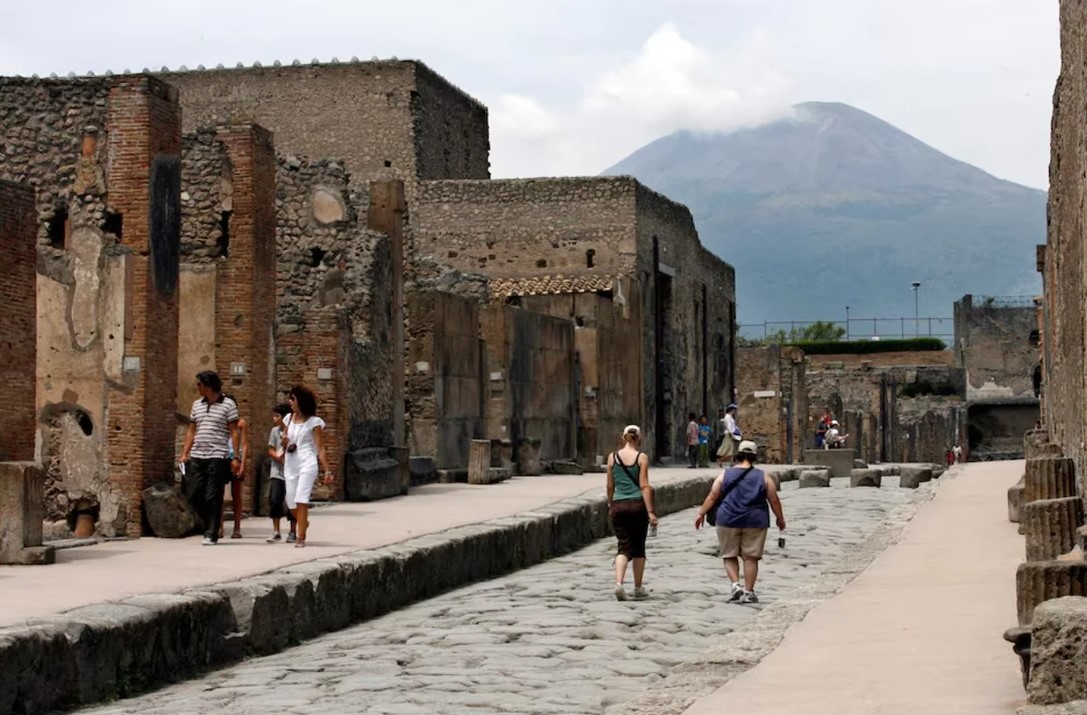
The once-thriving city of Pompeii, about 25 kilometres (15 miles) south-east of Naples, was buried in the eruption of Mount Vesuvius in AD 79, preserving buildings, objects and graffiti under metres of ash.
Rediscovered in the 18th century, it is now one of the world’s most significant archaeological sites, and one of the most popular tourist sites in Italy, with 4.3 million visitors in 2024, according to the latest statistics.





Click here to change your cookie preferences