
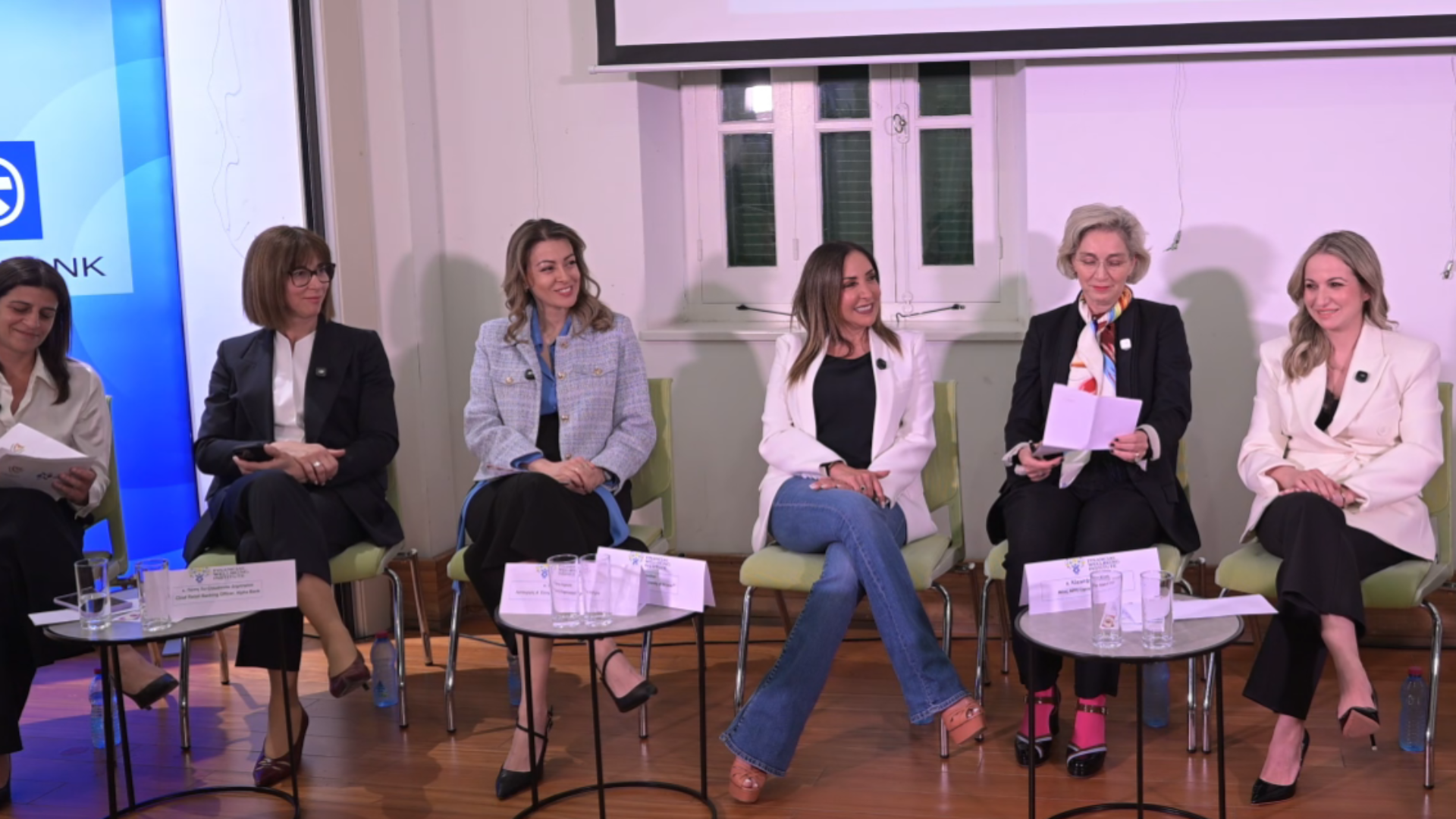
Only four in 10 women in Cyprus have enough money to cover an emergency without borrowing, while just one in four has made additional retirement plans, early findings from the Financial Wellbeing Index 2025 have shown.
The findings were presented during a high-level event organised by the Financial Wellbeing Institute, bringing together government officials, regulators, the private sector and civil society to discuss women’s financial wellbeing.
The message from the event was clear, saying that women’s financial wellbeing is no longer simply a matter of personal finance.
It is a public policy issue, directly linked to social cohesion, economic resilience and the country’s long-term financial security.
The index, implemented by the Financial Wellbeing Institute with Mastercard as key strategic partner, pointed to persistent gaps in women’s financial lives.
According to the early findings, only four in 10 women have money to cover an emergency without borrowing, significantly fewer than men, while fewer than four in 10 can cover basic expenses for three months.
The largest gender gap was recorded in retirement planning, with only one in four women having made additional retirement plans.
The index also showed a significant gap in financial knowledge, particularly on investments, bonds and risk management, with around one in two women showing insufficient knowledge in these areas.
The full results are expected to be announced next month.
Presenting the findings, Financial Wellbeing Institute president Panayiotis Andreou said the gap should not be framed as a question of women’s ability, but as the result of wider structural conditions.
“This is not a matter of ability. It never was. This is a matter of access, information, social norms and historical exclusions,” Andreou said.
He added that the findings on retirement planning were particularly worrying, as most women who have not yet started planning for retirement said they were not even considering doing so in the future.
For Andreou, this points to a double gap, both in action and intention.
Hosting the event, Deputy Minister to the President Irene Piki placed the issue within a broader institutional framework, saying that women’s financial wellbeing is a central matter of social cohesion, economic resilience and sustainable development.
Piki also referred to three areas of government policy, strengthening financial literacy from a young age, integrating the gender dimension into policy design, and supporting the reconciliation of professional and family life.
A different angle was raised by Pany Karamanou, head of the Directorate General Financial Stability and Resolution at the Central Bank of Cyprus (CBC) and head of the secretariat of the Cyprus Financial Literacy and Education Committee, who said the discussion should not focus only on what women appear not to know.
“We should not look for what women do not know, but why they do not answer. Women’s silence is not synonymous with ignorance,” Karamanou said.
She added that international surveys show that when the “don’t know” option is removed, the knowledge gap between men and women narrows significantly.
This, Karamanou said, shifts the debate from knowledge alone to confidence, social expectations and the roles women are encouraged, or discouraged, to take in financial decision-making.
Gender Equality Commissioner Josie Christodoulou focused on the invisible barriers that continue to affect women’s economic participation.
She also said that a bill providing for a 40 – 60 per cent quota on boards of directors and 35 per cent representation in managerial positions is already before the Legal Service for review, before being submitted to parliament.
From the banking sector, Alpha Bank CEO Miltos Michaelas said financial wellbeing is “a prerequisite for autonomy, security and perspective for every individual”, adding that the bank will continue to support financial literacy initiatives.
Meanwhile, Alpha Bank Chief Retail Banking Officer Popi Hadjioannou Demetriou referred to the importance of trust and financial behaviour, while Elena Karkoti, senior officer at the Cyprus Securities and Exchange Commission (CySEC), raised the issue of consumer protection in an increasingly digital and risky environment.
The discussion also moved from knowledge to action, with speakers noting that the challenge is not only whether women understand financial concepts, but whether they are supported in turning that knowledge into decisions.
Christina Kokkalou, managing director of IMR/University of Nicosia and former vice president of the Financial Wellbeing Institute, said the data points to a structural rather than purely cognitive gap.
At the same time, Cleopatra Kitti, a member of AIPFE Cyprus – Women of Europe, proposed the creation of “money clubs” and peer groups, where women could openly discuss money management, savings and wealth creation through real stories and practical knowledge.
Kitti also said there was a need to institutionalise the role of the certified financial adviser.
Maria Miltiadou, deputy executive director of the Youth Board of Cyprus, said the organisation already offers free financial and entrepreneurship counselling across Cyprus, while also inviting women to take part in targeted workshops.
The event was presented by Nicole Kallasides, member of the Financial Wellbeing Institute.
Among the policy recommendations that received broad support were gender-sensitive financial education in schools, mentoring schemes, gender mainstreaming in tax and pension policies, stronger protection from digital fraud and the development of accessible financial guidance.
The Financial Wellbeing Institute thanked Alpha Bank, official supporter of the event, and Mastercard, key strategic partner of the institute and strategic supporter of the Financial Wellbeing Index 2025.
It also thanked the Municipality of Strovolos for hosting the event, its strategic mission partners IMR University of Nicosia and Athlos Capital, its gold empowerment partners EY, Artemis Credit Bureau, Lemissoler, and legal partner Priority Trust Services.


Click here to change your cookie preferences