
The polls predict war within five years, but that is not likely
A Politico opinion poll conducted in the four biggest Nato countries in February revealed almost identical popular expectations about the likelihood of a global war in the next five years. In every one – the US, the UK, France and Germany – they think it is quite likely.
Forty-six per cent of Americans think that, and so do 43 per cent of British and French people. The Germans are the optimists in the group, but even 40 per cent of them think World War III is no more than five years away. Canadians agree about that, but unlike the Europeans, who see the Russians as the biggest threat, Canadians fear an American invasion most.
These expectations and fears are not exactly wrong, but they are certainly premature. A world war is a war that involves all the great powers, and almost certainly involves nuclear weapons use. We haven’t had anything like that for 80 years. The probability that it will happen in the next five years is not zero, but it is very, very small.
Now, if you want to count every conflict where organised groups are using state-of-the-art weapons – let’s say, machine-guns and drones – then there are at least a dozen wars going on. There is the Sudanese civil war, and the heavily armed anarchy of Haiti, and the border skirmishes between Thailand and Cambodia, and quite a few you haven’t even heard of.
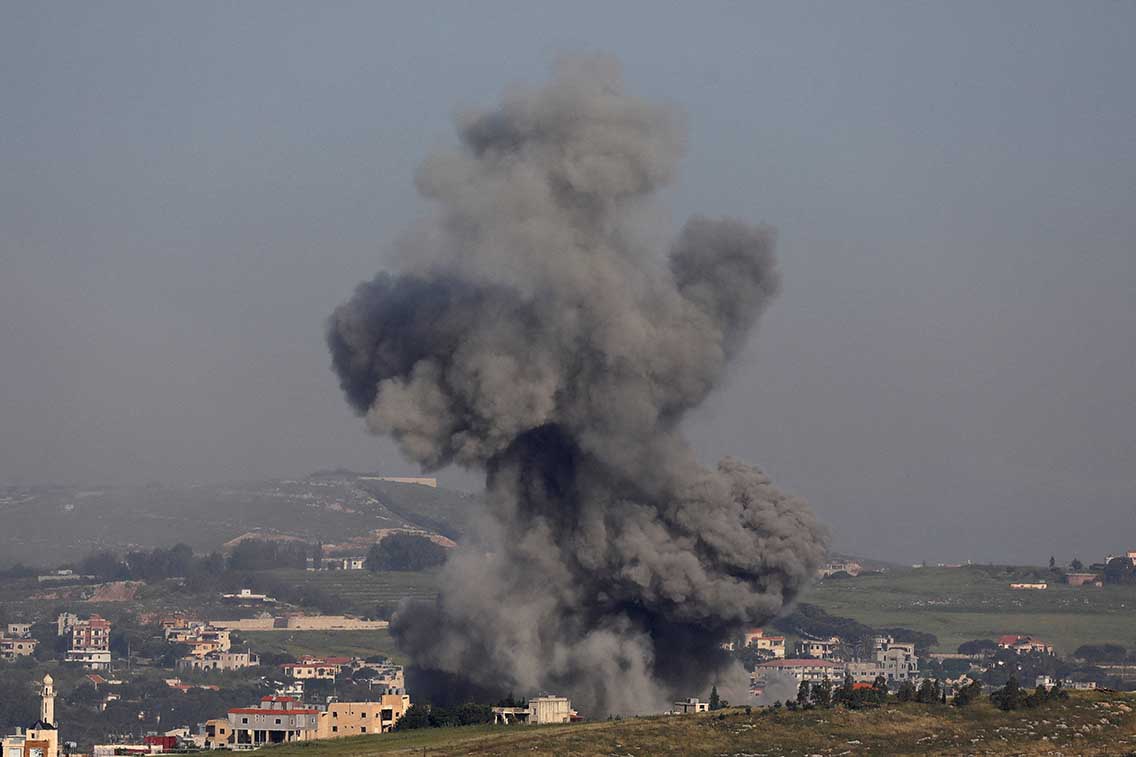
Moving up the scale, there is the befuddled stalemate that Donald Trump has stumbled into with Iran, and Israel’s bloody attempt to sterilise southern Lebanon. (Do those two count as two separate wars, or just two aspects of the same war?) And of course there is the Russian invasion of Ukraine, four years old and still going nowhere.
These are wars where one side has nuclear weapons, but in every case it’s the aggressor’s side – Russia, the United States, Israel – not the victim’s. That means it’s still not time to panic, because the aggressors have lots of other weapons to coerce the victims. They don’t really need to use their nukes; they can inflict massive pain and loss without them.
That fact is being demonstrated in real time right now. About 3,500 Iranians and 2,500 Lebanese have been killed since the beginning of March, compared to 48 Israelis and 15 Americans. The only place experiencing Second World War-scale casualties is Ukraine, where up to one thousand soldiers are killed or injured each day.
But I’m being too analytical here, too much like the military historian with strategic pretensions that I once was. None of these wars resemble the war that people really mean when they worry aloud about “the growing risk of war”. They are thinking about BIG war, war with great powers on both sides, nuclear war – and mercifully that is not yet on the menu.
Vladimir Putin sometimes threatens to go nuclear, but his bluffs are as transparent as Trump’s repeated threats to use violence “like nobody has ever seen before”. Neither of them has seen up close what high explosives do to human flesh, and almost nobody still alive has seen what nuclear weapons do. Not to mention the fall-out, the nuclear winter and the global famine.
Indeed, many people – probably several hundred million – have figured out what the experts really mean when they talk about the collapse of the ‘international rule of law’. They mean the accelerating collapse of the flimsy defences that we built 80 years ago against a future dominated (or terminated) by great-power nuclear wars.
Accelerating, but not yet irreversible. Most older people in Europe, the world capital of wars for the past 150 years, remember that the rules were important even if they can’t quite recall why. The senior generation of diplomats still know why they were important, although the soldiers have shorter careers and generational turnover will soon wipe their memories clean.
The real hope is that the generation now coming to power in what used to be called the ‘Third World’ has a healthy contempt for the old wisdoms about ‘national interest’ that were used to justify their subjugation. They are working on a new paradigm, and it will involve a much bigger role for the ‘middle powers’ (e.g. Brazil, South Africa, Indonesia, Mexico, Canada).
It could also involve a leadership role for China, where the ‘international rule of law’ is still seen as important. Put the Chinese together with the Europeans who remember why we made the rules in the first place and the emerging middle powers who seem to get it, and there’s a fair chance that the principle can be revived for another generation.
Just ignore the Americans and the Russians (old-school thugs), and do it in the next five years.


Click here to change your cookie preferences