
Cyprus was one of 11 European countries which, alongside the European Union, pledged a total of €41.7 million worth of what was described by the European Commission as “new contribution agreements” for the Palestinian authority.
The funds will be channelled through Pegase, the EU’s mechanism through which it offers financial support for the Palestinian people, which was created in 2008, with Cyprus being joined by Belgium, Denmark, France, Greece, Ireland, Italy, the Netherlands, Portugal, Spain, and Switzerland in Monday’s agreement.
According to the commission, the funds will be directed to the Palestinian authority alongside a total of €310m which has been committed by the commission itself for the period covering this year and next year.
It added that a total of €3.8 billion has been donated to the Palestinian authority since Pegase was created, before explaining that Pegase has “high standards of control”, while also contributing to “the considerable reduction of transaction costs for financial support to the Palestinian authority”.
“It also allows for increased transparency and effectiveness of international contributions to the Palestinian authority,” it said.
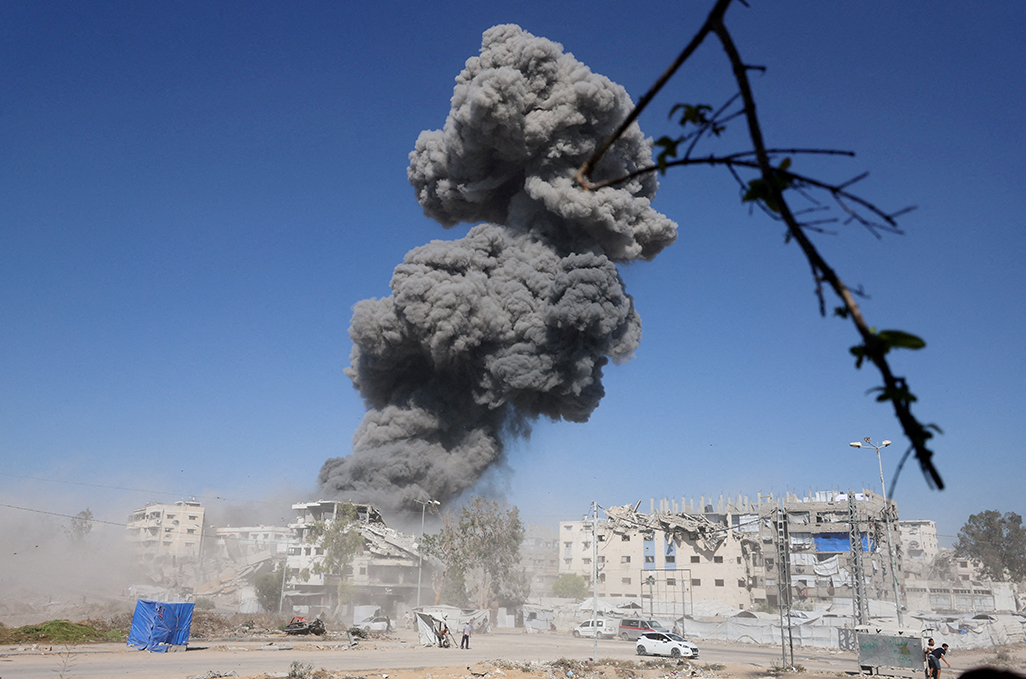
The pledging of funds through Pegase comes alongside the launch of the “Team Gaza initiative”, a plan for the disbursement of almost €900m worth of financial contributions which the commission says will “support early recovery actions in various sectors, to the benefit of civilians in Gaza”.
The initiative’s launch was led by European Mediterranean Commissioner Dubravka Suica, with the launch being attended by Foreign Minister Constantinos Kombos in his capacity as the foreign minister of one of the EU’s 27 member states.
According to the commission, the initiative has been launched by itself, alongside the governments of Belgium, Denmark, Finland, France, Germany, Italy, Japan, the Netherlands, Norway, Spain, Sweden, Switzerland, and the United Kingdom, as well as the European Investment Bank and the World Bank.
In addition, it said, “more countries, including Australia and Canada, have expressed interest and are expected to join”.
It said the initiative is rooted in the joint assessment of the “rapid damage and needs” of Gaza which was released by the EU, the United Nations, and the World Bank in April, with that assessment finding that the reconstruction of Gaza will require US$71.4bn (€62.6bn) over the next decade, of which US$26.3bn (€23.1bn) must be spent by the end of next year.
The initiative, it said, is “intended to coordinate early recovery projects in Gaza to address the restoration of basic services for the population”, including “water and sanitation infrastructure, debris and solid waste management and removal, and restoring health, energy, agriculture and food systems”.
Following the initiative’s launch, Suica said that the EU “has the political commitment, the partnerships and the financial tools to contribute to Gaza’s early recovery”.
“Through the Team Gaza initiative we will launch concrete projects that will restore essential services and improve people’s daily lives. Our objective is clear: to help build hope, resilience and a better future for the Palestinian people,” she said.
Likewise, the EU’s foreign affairs chief Kaja Kallas said that the bloc is “the most reliable and credible partner for the Palestinian people”, as well as being “the largest donor and the strongest supporter of a two-state solution”.
“To turn this into reality, the Palestinian authority must stick with reforms and strengthen its capacity to govern. The people of Gaza need sustained financial support to meet basic needs, recover and rebuild their lives,” she said.
She added that “ultimately, the building of a Palestinian state must be owned and led by the Palestinian people, but they need the backing of the international community”, and that “the many countries gathered in Brussels today show that this support is there”.





Click here to change your cookie preferences