
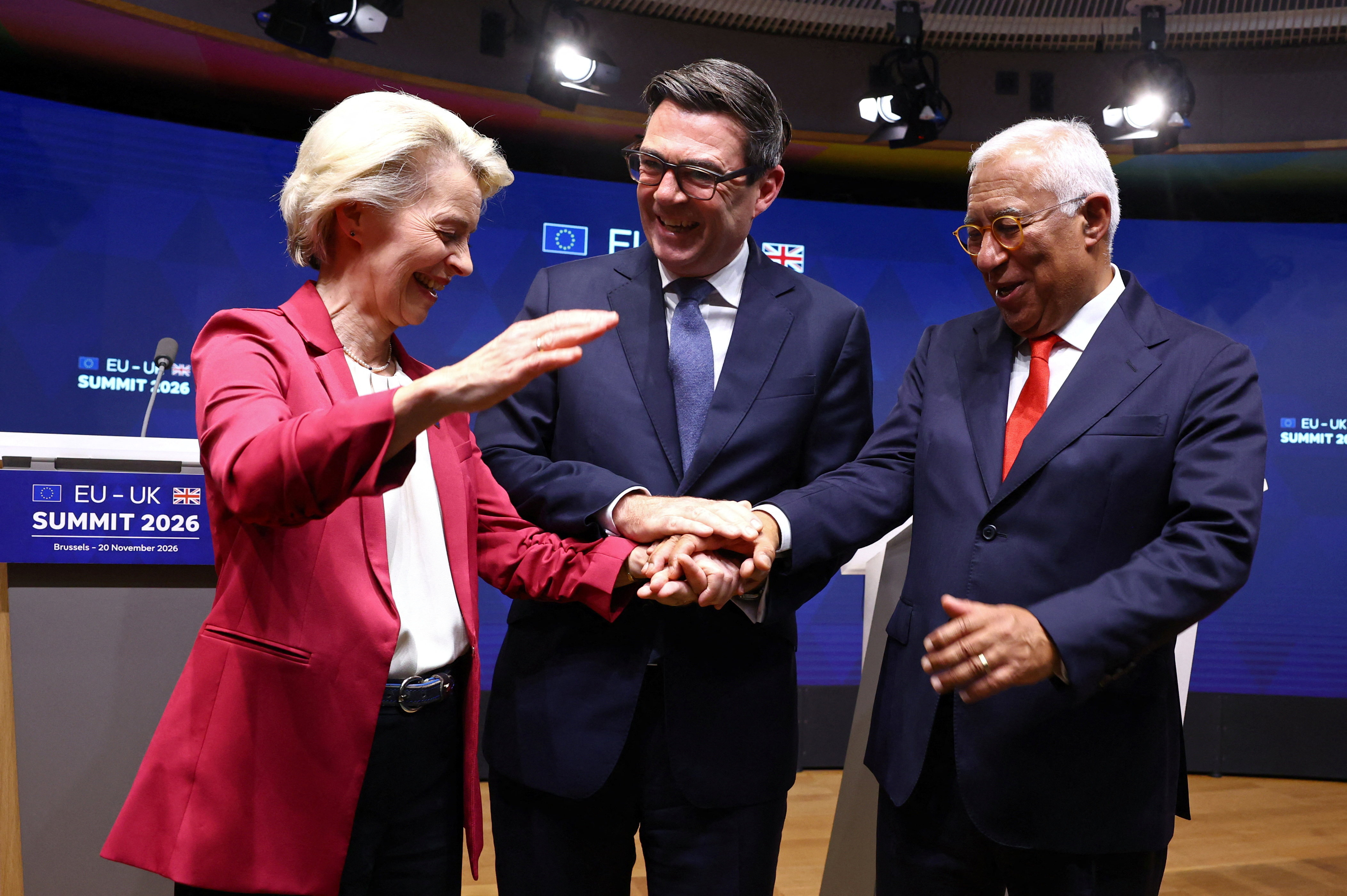
A final agreement on the amount European students will pay in tuition fees to study at universities in the United Kingdom is a necessity for there to be “genuine progress” in relations between the country and the European Union, Cypriot MEP Loucas Fourlas said on Friday, after the conclusion of the day’s EU-UK summit.
“Today’s summit confirms the relationship between the two sides. However, for genuine progress and a comprehensive agreement to be achieved, the issue of reducing tuition fees for European students in Britain cannot remain unresolved,” he said.
European students have paid elevated fees since the UK left the EU in 2020.
At present, British nationals pay a maximum fee of £9,790 (€11,748) per year for undergraduate courses, while non-Brits can pay as much as £35,000 (€41,998) per year for classroom-based degrees, up to £47,000 (€56,398) per year for laboratory-based courses, and sometimes more than £70,000 (€83,997) per year for clinical and medical degrees.
Fourlas on Friday that the issue “represents the most critical point in the negotiations”, and that as such, “we will not accept a comprehensive agreement which fails to substantively address it”.
Looking ahead, he said that “a new cooperative relationship” between the EU and the UK “cannot be built … while thousands of young Europeans continue to face prohibitive financial barriers to studying at British universities”, and that in line with this, “nor can agreements on trade, security and the economy be discussed”.
‘Access to education must not become a privilege for the few’
He said that following the day’s summit, “we are on the verge of a development which, just a few months ago, many considered extremely difficult, if not impossible”.
Given this to be the case, he said, “I will continue to advocate for a comprehensive resolution to this matter”.
“Access to education must not become a privilege for the few, due to financial barriers which exclude young people from the opportunities to which they are entitled,” he said.
He stressed that “we will not celebrate until the agreement is finalised”, but said that instead, “we will continue to press forward until a concrete, substantive, binding resolution is reached regarding tuition fees”.
Friday’s summit was the second of its kind since the UK left the EU in 2020, and saw European Commission President Ursula von der Leyen, European Council President Antonio Costa and British Prime Minister Andy Burnham, as well as members of Burnham’s cabinet and the college of commissioners, come together for what some described as a “reset”.
A joint declaration issued at the end of the summit said that both sides will “work towards [an agreement] on tuition fees”, and that to this end, “the aim is to increase opportunities for students to study in each other’s territories”, with that agreement expected in the coming months.
Negotiations concluded on youth experience scheme
It also confirmed that negotiations have concluded on the planned youth experience scheme, which will allow facilitated travel for 100,000 people aged 31 and younger for up to three years.
“We aim to apply this agreement no later than 2028 and endeavour to ensure that opportunities under the scheme will be available to our young people no later than January 2030,” it said.
Possibly the most notable element of the summit came at its conclusion, however, when Burnham promised to set out options for the future of the UK’s relationship with the EU in an “informal brainstorming process”.
“What we are announcing today is probably the limit of what we can achieve in this parliament, given what needs to be done to implement it, but we want to inform the parliament after this one, so that decisions can be taken about that long-term relationship,” he said.
On this front, he had in September suggested that his country could “go all the way” and rejoin the EU in the coming years, but has since insisted that any substantial change to its relationship with the EU, including joining the single market or the EU as a whole, will require another general election to be held.
UK governments adhere to May’s ‘red lines’ since 2016
This is because since 2016, when Theresa May became British prime minister following a referendum in which 52 per cent of the British electorate voted to leave the EU, successive British governments have stuck to “red lines” she set out – the UK remain outside the single market and customs union and does not allow the freedom of movement of people.
Burnham’s government is currently bound by the manifesto of Sir Keir Starmer, whom he succeeded as prime minister, and who had also adhered to those “red lines”.
Public polling in the UK puts the country’s electorate well in favour of rejoining the EU, with opinion polls regularly giving “rejoin” a 20 per cent polling lead over “stay out”, and this figure much larger among younger voters.
Were the UK to rejoin the single market but not the EU, as Iceland, Liechtenstein, Norway, and Switzerland have, European students would automatically be charged the same fees to attend universities in the UK as British students.




Click here to change your cookie preferences