
A hierarchy of laws in the US can leave treaties up to interpretation
Does international law matter to the US? That is the question in the time of Trump’s America.
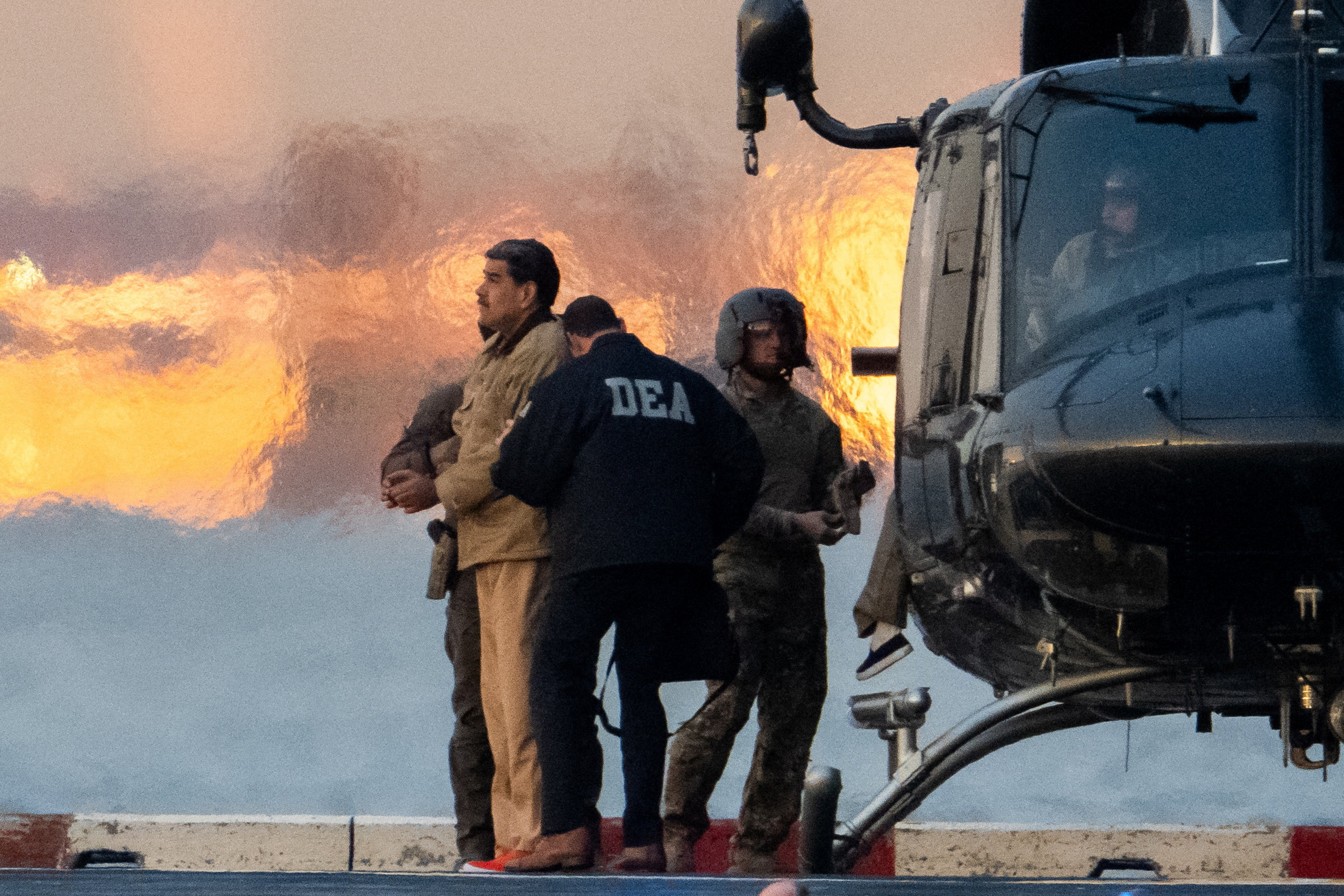
Did the US violate international law by removing the president of Venezuela to the US by force to face criminal drugs charges there? Can the US take over the Danish colony of Greenland lawfully? Was the arrest of a Russian ship by the US coast guard on the high seas lawful?
International law as understood by the international community exists to regulate the relationship between states. Its main characteristic is that it is consensual and relies on the fact that it is consensual for its enforcement.
Customary international law emerges incrementally as the practice of states out of a sense of legal obligation and treaty law is the body of bilateral and multilateral agreements between countries in writing – modern international law is mostly treaty law.
The International Court of Justice (ICJ) also operates by consent. It adjudicates in disputes between countries if the parties to a dispute consent to its jurisdiction by agreement, or treaty obligation or unilateral declaration.
When it has jurisdiction, the ICJ can rule on questions of international law; the interpretation of treaties; and any fact which if established would be a breach of international law.
What was refreshing about the American constitution was that treaties agreed by the US before or after its adoption 1787 were made part of the superior law of the US. The US is a federation and superior laws are laws that bind the judiciary in all states of the US hierarchically.
At the top is the constitution itself, followed by federal laws made by Congress and international treaties made by the president by and with the consent of the Senate. So, you would think that the actions of the US government would normally comply with international treaty law, but in practice the effect of international law in the US is more complicated than appears at first sight.
The ink was barely dry before President George Washington suspended a treaty of alliance with France of 1778 in order to remain neutral in the revolutionary war between Britain and France of 1793. The power of the president to suspend the operation of treaties since then is well established – President Trump signed an executive order last week suspending a number of treaties including the UN Convention on Climate Change.
Apart from the power of the president to suspend international treaties, there are a number of constraints in the interpretation and application of international treaty law by the US arms of government.
Not all treaties entered into by the US government count as superior federal law without implementing legislation. For example in Medellin v Texas (2008) the US Supreme Court ruled that the “undertaking” of countries under the UN Charter to comply with a decision of the ICJ was not sufficiently mandatory to count as law than if the Charter had said countries “shall” comply with a decision of the ICJ.
Also, none of the three arms of government – congress, the president and the judiciary – in US is bound by what international institutions like the UN or the ICJ interpret the law to be. When a US arm of government applies international law, it does so according to its own understanding of the law.
For example, under the UN Charter member states can only use force in self defence in the event of armed attack. As Venezuela did not engage in an armed attack on America the use of force on Venezuela was unlawful. Trump’s understanding, however, seems to be that the incidental use of force to arrest President Maduro for conspiracy to import dangerous drugs into the US is not the type of use of force prohibited by the UN Charter.
Congress for its part passed a procedural resolution last week that any future military operations against Venezuela would require congressional authorisation — presumably because the previous one was too warlike to rank as assisting law enforcement officers to effect an arrest.
Trump next turned his attention to Greenland including the possible use of force to acquire it from Denmark which would certainly be in breach of the UN Charter as well as the Nato treaty. Greenland is an autonomous Danish colony that broke away from membership of the European Community in 1985 —although Greenlanders remained citizens of Denmark and EU citizens by extension.
The wisest way for the US to acquire Greenland would be through the self-determination of its people; if the Greenlanders vote for independence from Denmark and union with the US there could be no complaints from any quarter.
The arrest by the US of a Russian flagged ship the Marinera – formerly Bella I – on the high seas last Wednesday was also unlawful since under the UN Law of the Sea Convention 1982 only Russia had the authority to arrest a Russian ship on the high seas.
Russia has not made too much of the arrest of the Marinera – perhaps because of problems with its registration as a Russian vessel. It began its voyage as the stateless Bella I and acquired Russian nationality and seemingly changed its ownership and it name during its voyage which required a genuine link to Russia and a genuine change of ownership.
Too much law this week for which one thousand apologies. The irony of the American constitution is that it enables President Trump to say with Humpty Dumpty in Alice Through the Looking Glass “when I use a word it means just what I choose it to mean – neither more nor less.”


Click here to change your cookie preferences