
Contradictions and mixed signals have consistently marked the government’s discourse, because the objective is always to win publicity points. The example is set by President Nikos Christodoulides himself and is dutifully followed by his spokesmen and ministers.
In the same speech, the president could state that he would not engage in the blame game over difficulties in the Cyprus peace process, before blaming the Turkish Cypriot side of preventing progress. He declares his unwavering commitment to transparency while insisting that the donors to his wife’s social support body should remain a carefully guarded secret.
When the contradictions are restricted to domestic issues the only harm done might be to the president’s standing or credibility, but when these extend beyond the boundaries of the country, the damage caused hurts the country. The way the government has handled the war waged by Israel and the US against Iran is an example of this tendency for contradiction, which is not in the best interest of the country and the economy.
The government’s effort to convey the message that Cyprus is not the target in the war when a drone hit the runway in Akrotiri last Sunday at midnight, was understandable. It did not want the outside world to think the island was in any way involved in the war, doing everything it could to stress the point that it was the British base of Akrotiri that was hit and that the Cyprus Republic was not a target of Iran as it had no involvement in the war.
Although not a very convincing argument, considering the base is in Cyprus, the government was concerned about tourist bookings, which could take a big hit if the island is seen as a possible target of Iran or Hezbollah in Lebanon. This was why spokesman Konstantinos Letymbiotis expressed the government’s “displeasure” at the British prime minister’s failure to offer “clear and timely assurances” about the role of the bases in Cyprus in his address to the British people.
Keir Starmer, according to Letymbiotis, failed to make it clear that “the British bases in Cyprus would not under any circumstances be used for any reason other than humanitarian.” Cyprus had received assurances about this from communications “at various levels” with London. Whether Iran or its proxy in Lebanon, Hezbollah, would have believed claims about the bases’ “strictly humanitarian role” is another matter.
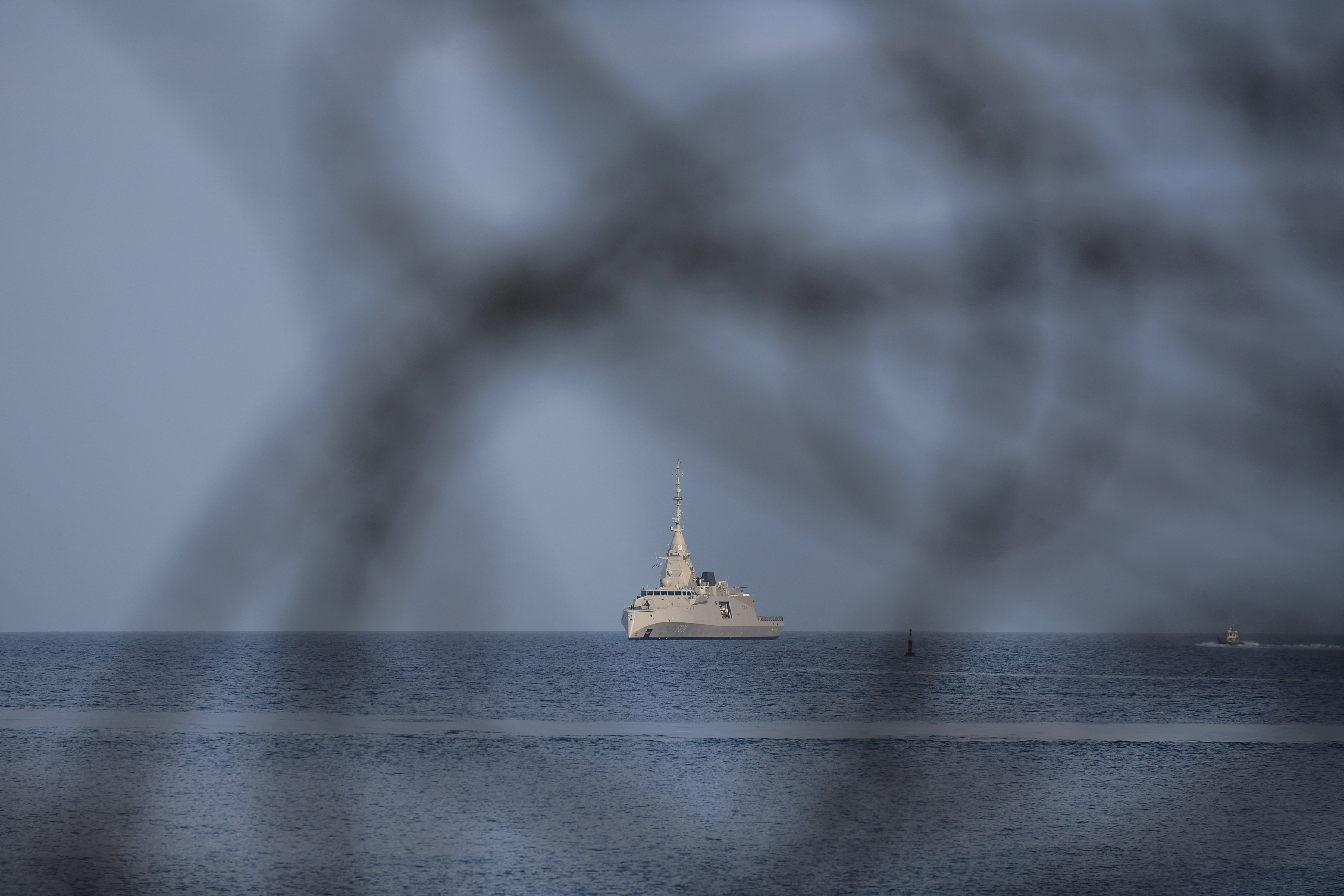
Having made such a fuss about the bases, the government subsequently took decisions that left nobody in any doubt that Cyprus was a target and had to be defended. President Christodoulides contacted Greek Prime Minister Kyriakos Mitsotakis, who sent two frigates and four F-16 fighters to the island to help with its defence. The fighters are stationed at the Andres Papandreou air base. The president also sought assistance from French President Emmanuel Macron, who sent a frigate, while the aircraft carrier Charles de Gaulle is also on its way to the eastern Mediterranean. Italy and Spain have also decided to send frigates to protect Cyprus, while a British destroyer warship is set to sail for the region this week.
On Saturday it was reported that Turkey also wanted to get in on the act of protecting Cyprus, and sent four F-16 fighters to an airport in the occupied area. There appears to be some understanding with Greece on the matter, which is a positive thing. The two countries appear united in their commitment to defending Cyprus. Apart from the eight F-16 jets stationed on the island, Britain has also sent two Wildcat helicopters.
The obvious question, that does not seem to have occurred to the government is, ‘why does Cyprus need such a level of protection if it is not a target?’ Does the arrival of warships from Italy, Spain, France and Greece in the seas surrounding Cyprus not suggest that the island is a target and has to be helped defending itself? These countries did not send their warships to defend the British bases.
Our government, unintentionally, has confirmed, by seeking the military help of all these countries, that contrary to its claims to the contrary, it is a target in this war. Not too many tourists will be booking holiday on an island that has an armada of warships to protect it from missile and drone attacks.
Securing military assistance from all these countries may have boosted the president’s approval rating at home but the high price is the impression that Cyprus is a target, which it is not. Unfortunately it would have gone against the president’s principles to have kept the arrival of the foreign warships a secret, the sensible and responsible thing to do.




Click here to change your cookie preferences