
When they choose diplomacy over spectacle
Events in the Gulf war continue to attract global attention, despite the ongoing preoccupation here in Cyprus with our own Sandy-gate saga.
President Trump has maintained a barrage of announcements, each surpassing the last in incredulity and detachment from reality. Our own key lawyer in the Sandy-gate affair, Nikos Clerides, has attempted to rival Trump with a series of equally perplexing statements, though he lacks the gravitas of a sitting US president.
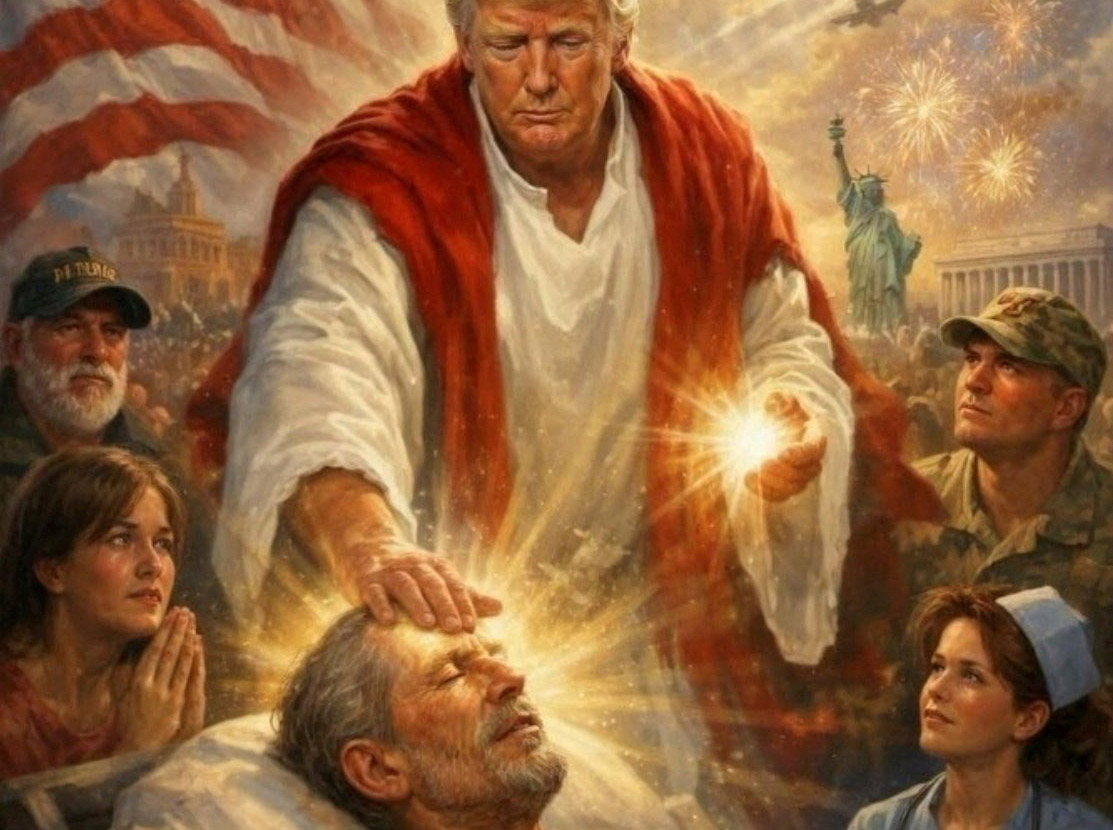
Trump’s rhetoric has ranged from the Christian religious message “OPEN UP THE HORMUZ STRAIT. 48 hours before all Hell will reign down on them. Glory be to GOD!” to the bizarre conversion to Islam “Tuesday will be Power Plant Day, and Bridge Day, all wrapped up in one, in Iran. There will be nothing like it!!! Open the Fuckin’ Strait, you crazy bastards, or you’ll be living in Hell – JUST WATCH! Praise be to Allah.” Most recently, he posted in his Truth Social account an AI generated Jesus-like image of himself healing a sick man – who bore a striking resemblance to Jon Stewart, one of Trump’s main critics among the late-night TV hosts.
The image was later removed following a backlash, including from some of his supporters. Trump, in characteristic fashion, attempted to reframe it, stating: “It’s supposed to be me as a doctor making people better… and I do make people better.” Such statements further reinforce the perception that his words cannot be taken at face value and undermine Trump’s credibility. This, unfortunately for the president, also erodes his otherwise coherent argument that Iran should not possess nuclear weapons – the stated, if not evolving justification for the conflict.
Trump’s self-portrayal as a figure with quasi-divine authority echoes a pattern seen throughout history. Leaders such as Alexander the Great, and earlier the Egyptian pharaohs, cultivated similar images of divine association.
I recently visited the exhibition “Ramses and the Pharaohs’ Gold” in Battersea, London, and was struck by how events from over 3,000 years ago continue to resonate today. Ramses II is arguably one of the greatest of the pharaohs of the New Kingdom period in ancient Egypt. The Pharaohs ruled Egypt from around 3100BC until the death of Cleopatra at about 30BC during the Ptolemaic Kingdom of Egypt. Around 1280 BC, Ramses II, in his mid-twenties, became the third pharaoh of the 19th Dynasty. This formidable warrior, peacemaker, prodigious builder, self-publicist, husband of at least eight wives, and father to over 100 children ruled Egypt for the next 67 years.
Beyond a shared fondness for grandeur – most notably gold – Ramses, also preceded Trump as a master of self-promotion, claiming victories everywhere even if that was not the case, portraying the Battle of Kadesh (c. 1274 BC), as a great victory even though it was most likely a stalemate.
Ramses also liked to inscribe his cartouche across monuments regardless of whether he built them or not. His name appears on more statutes and monuments than that of any other pharaoh – a level of self-branding that invites modern comparisons to the current US president.
Yet the similarities end there. Ramses also demonstrated statesmanship, most notably by concluding the Treaty of Kadesh around 1269 BC with King Hattusili III of the Hittites, an event that cemented his reign. Widely regarded as the earliest surviving peace treaty, it established principles of mutual respect, non-aggression, and cooperation – principles that are at the heart of the current UN charter. It is no coincidence that a replica of this treaty is displayed near the entrance to the United Nations Security Council chamber.
Remarkably, the treaty was negotiated through intermediaries, without the two rulers ever meeting in person. Perhaps that should have been a lesson that the US should have taken to heart before dispatching Vice-President JD Vance to negotiate a permanent truce in the Gulf.
Nobody really expected JD Vance to be able to reach an agreement with Iran. Not only did his peace-making efforts not yield results, but his effort to influence the Hungarian election by visiting incumbent President Victor Orban a few days earlier, also failed spectacularly. Victor Orban comprehensively lost the election, meaning Hungary, after 16 years, will shift towards a more pro-EU stance to the dismay of both Presidents Putin and Trump.
The important geopolitical implications, emanating from the Hungarian election result, cannot be covered adequately in this article. Hopefully, I will be able to tackle them in a future column. Meanwhile, tensions in the Gulf persist, with the US naval blockade raising concerns about global economic stability and exacerbating the suffering of the Iranian population. Already China has indicated that the US blockade is escalating an already fraught situation.
One can only hope that ongoing back-channel diplomacy will succeed where primary efforts have not, leading to a peace agreement reminiscent of Kadesh. For all the talk about bombing Iran back to the stone ages, a durable diplomatic resolution similar to the one in 1269BC would be a far more constructive outcome. History suggests that even the most self-aggrandising rulers can achieve peace – when they choose diplomacy over spectacle.




Click here to change your cookie preferences