
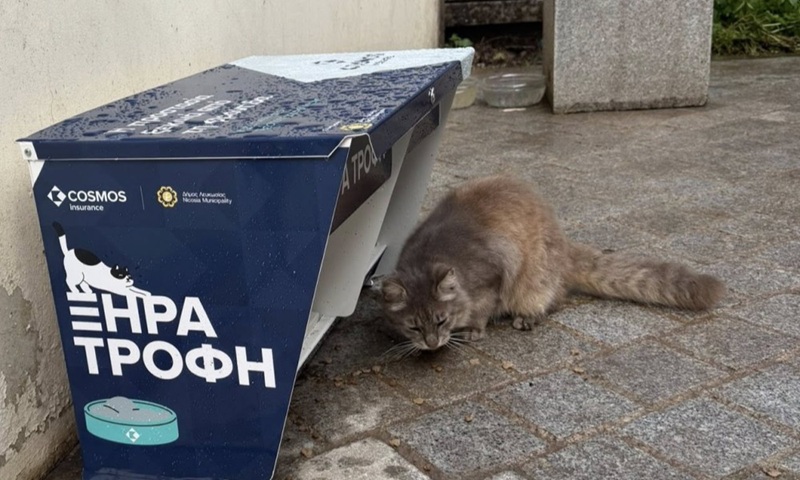
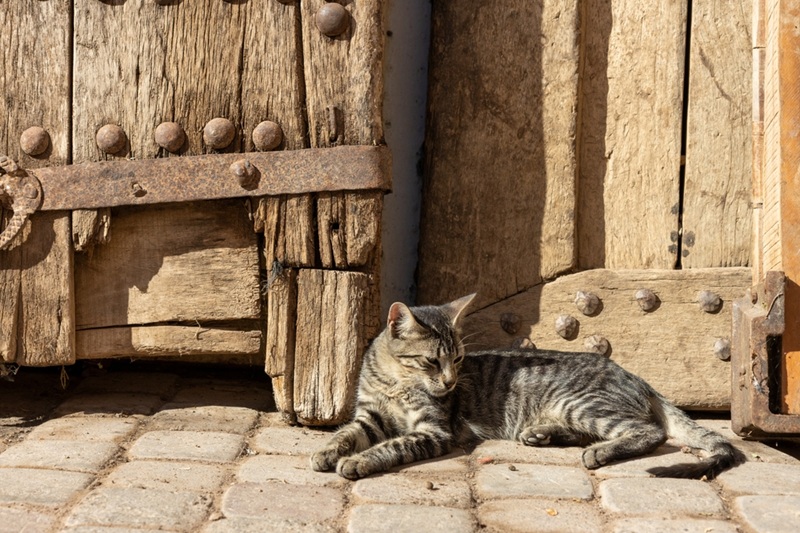
There are many, even though it is difficult to estimate their exact number. Some are friendly, others are hesitant or distant. When it is cold or rainy, they disappear, while on sunny days, you will see them basking in the sun. Often, you will spot them near the table where you are enjoying your meze. Other times, you may pass them hurriedly in the street, while occasionally one might catch your eye, enough to make you stop and take a photo.
One thing is certain: stray cats are always somewhere out there. In fact, we share the same city. But who takes care of them? You may know someone in your neighborhood who feeds them, but is that enough? A more coordinated effort is needed, and the good news is that it is already happening in Nicosia!
New ‘meeting points’ for Nicosia’s stray cats
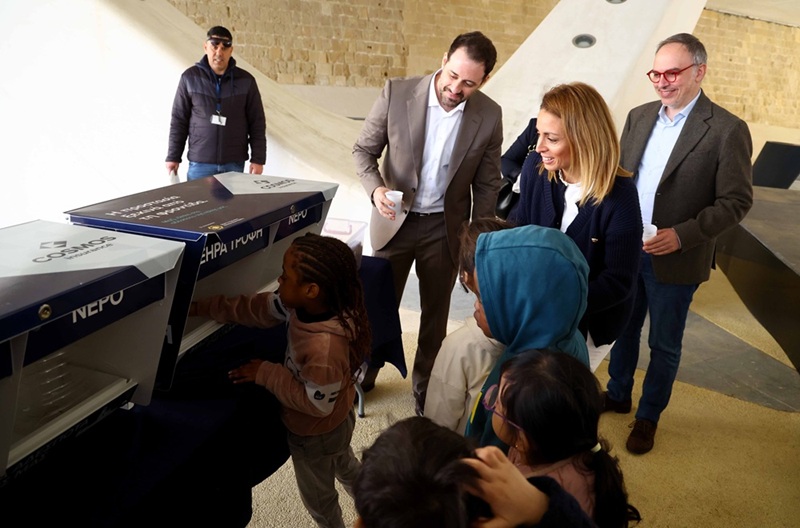
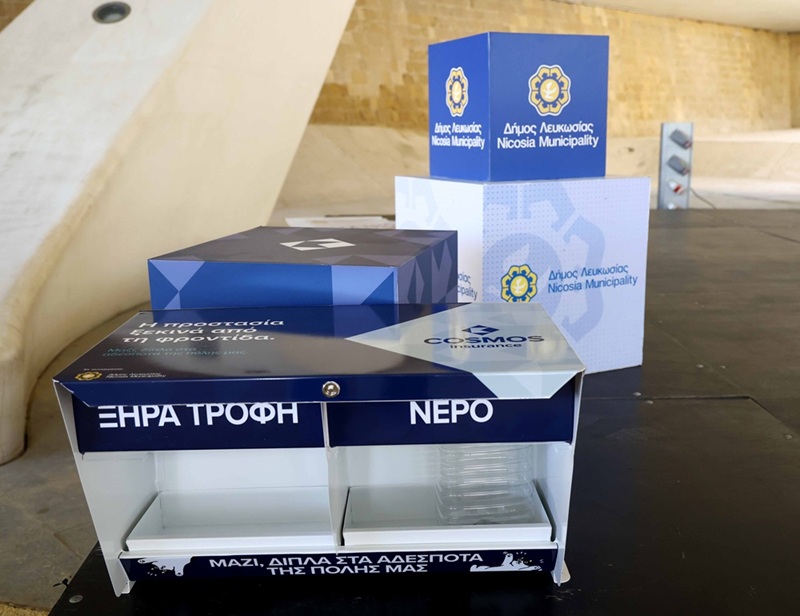
Recognising the need to protect and care for our furry friends, COSMOS Insurance and the Municipality of Nicosia have brought to life an initiative changing the way we coexist with stray cats, with multiple benefits for both humans and felines.
Joining forces, the company and municipality installed 21 feeders across all municipal districts, while two organised feeding areas were also created, at the Pedieos River area and Olympiadas Park. The project’s smooth operation relies on volunteers, whose necessary, highly valued contribution sees them undertake the implementation of a controlled, clean feeding system, designed specifically for this purpose.
How organised feeding of stray cats also benefits us
You may wonder how a well-fed stray cat can make a difference in our lives, but COSMOS Insurance’s and Nicosia Municipality’s initiative goes beyond a simple act of kindness. The creation of organised feeding areas for strays is based on the philosophy of responsible care, which combines food distribution with health supervision, and whose benefits include:
- Population control: organised feeding points allow volunteers to locate the animals easily and ensure sterilisation and reintegration procedures, which are the most effective long-term means of controlling the number of strays.
- Improved animal health and welfare: cats have access to quality food and clean water, so they are less likely to scavenge in garbage, which in turn reduces the spread of disease.
- Reduced aggression: when animals are well-fed, territorial conflicts between them tend to decrease.
- Hygiene and cleanliness: organised feeding areas prevent food waste from being scattered in the environment, thereby reducing the risk of attracting parasites and creating sources of contamination.
- Social acceptance and coexistence: complaints from residents are reduced, as feeding takes place at selected locations that do not cause disturbance, fostering a culture of respect and urban civility.
Responsible care for stray animals: a mark of civilisation
In a country like Cyprus, where the stray cat population is estimated to exceed the number of residents, initiatives like these are not only highly welcome, but also essential. In the words of Kyriakos Tyllis, CEO and Executive Member of the Board of COSMOS Insurance: “our behaviour toward animals is a measure of civilisation”.




Click here to change your cookie preferences