
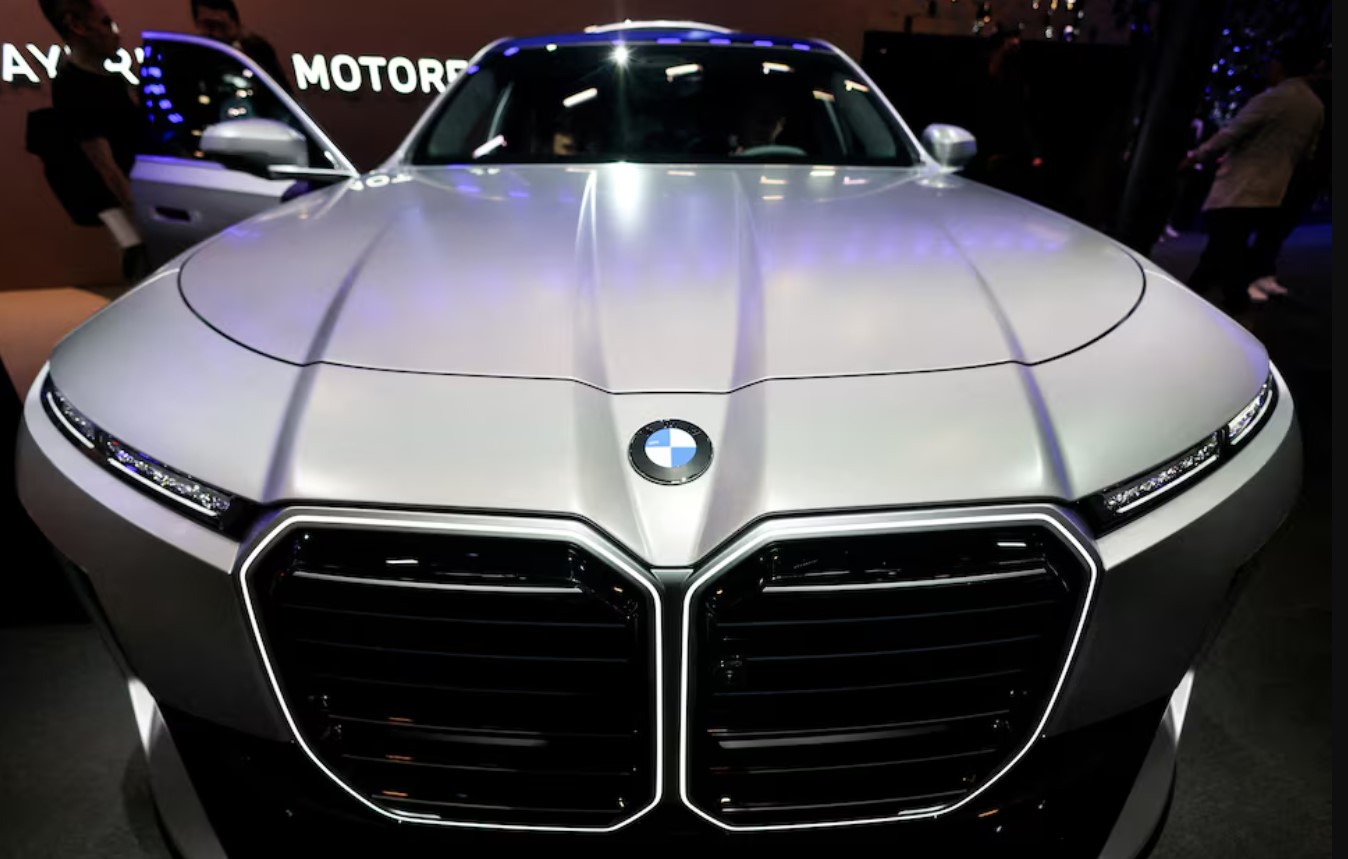
BMW maintained its 2026 financial guidance on Wednesday and signalled it could weather US tariffs and Chinese competition, sending shares up nearly 5 per cent despite first-quarter pretax profit tumbling 25 per cent.
The German premium carmaker beat key profit expectations for the quarter even as a narrowing core margin underscored the pressure on BMW at the start of the year.
This convinced investors it was well-positioned for a volatile global auto market, and shares rose 4.6 per cent in early trading.
CORE MARGIN BEATS FORECAST
The company reported first-quarter pretax earnings at 2.3 billion euros ($2.70 billion), exceeding analyst forecast of 2.2 billion euros in a company-provided consensus.
Group revenue missed expectations, falling 8.1 per cent to 31 billion euros.
The pressures also squeezed rivals Mercedes-Benz (MBGn.DE) and Audi at the start to 2026, as Chinese automakers extended their lead in their home market — the world’s largest — and pushed deeper into Europe, while US tariff threats clouded the outlook further.
Despite the profit slide at BMW, analysts pointed to an above-forecast operating margin in the company’s core automotive business.
BMW’s EBIT margin in its core automotive business stood at 5.0 per cent in the first quarter, down from 6.9 per cent a year earlier but ahead of analysts’ forecast of 4.7 per cent.
“BMW looks well-prepared to deal with continuing volatility,” Jeffries analysts said in a note to investors.
COST CUTS ON COURSE
Like many carmakers, BMW is turning to cost reductions to offset pressures from tariffs and high costs for raw materials in a globally weak automotive market.
Unlike Volkswagen and Mercedes, however, it has so far managed to do so without cutting jobs, focusing on factory efficiencies and reduced investment, having rolled out the Neue Klasse platform to overhaul its product portfolio.
Tariffs, including US levies but also an EU tariff on EVs made in China affecting BMW’s Mini brand, had a 1.25-percentage-point impact on BMW’s car margin in the first quarter.
The company maintained its full-year guidance, forecasting a moderate decline in its group result. BMW’s core operating margin is seen in a range of 4 per cent to 6 per cent after 5.3 per cent in 2025.
The outlook does not incorporate a potential increase in US auto tariffs, which President Donald Trump threatened on Friday to raise to 25 per cent from 15 per cent currently. It also assumes the Middle East conflict “will not be enduring,” the company said.
CEO Oliver Zipse downplayed Trump’s announcement as merely a threat to push the EU to act on its trade deal with Washington.



Click here to change your cookie preferences