
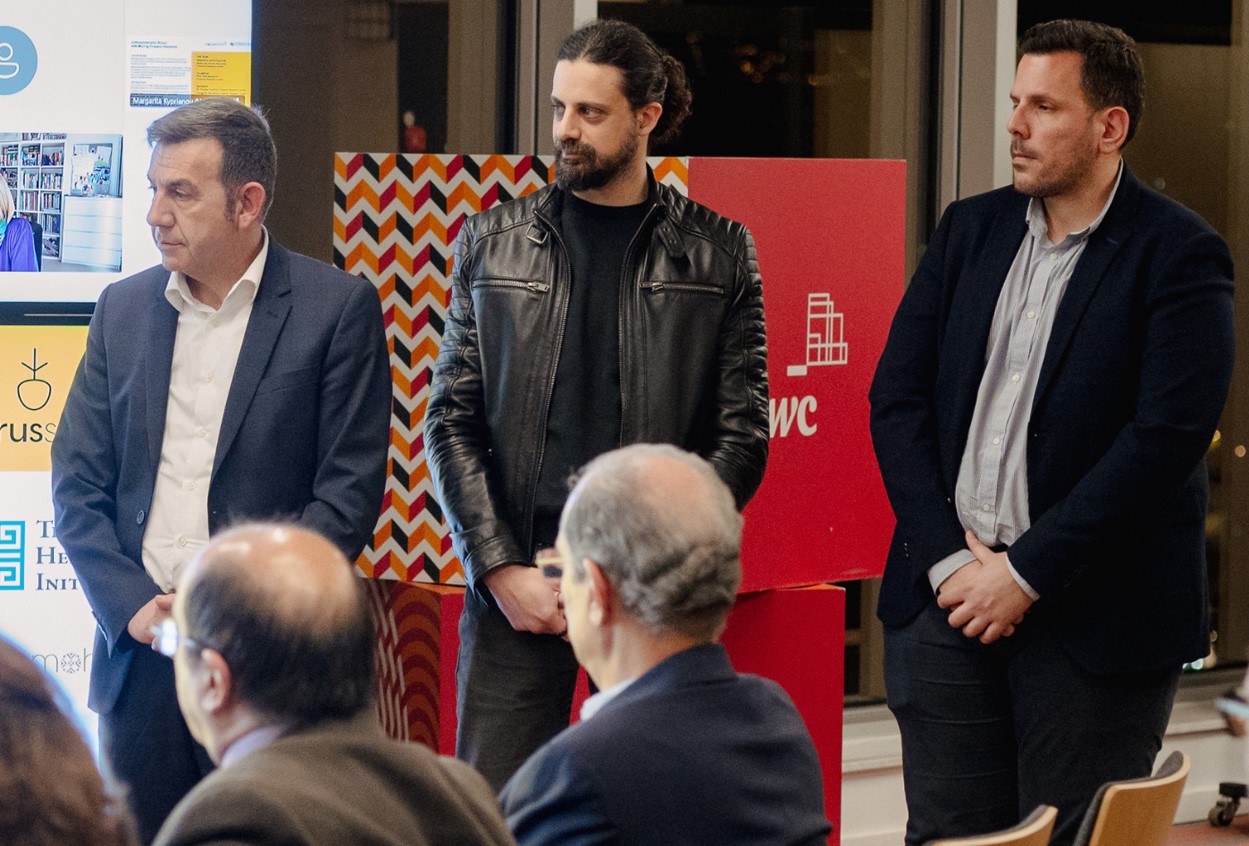
A Cyprus-based research-to-market team developing an advanced medical imaging system has outlined its progress and commercial ambitions in an exclusive interview with the Cyprus Mail.
The project, known as the M³Phantom or Modular Motion Medical Phantom, is led by a multidisciplinary team combining expertise in medical imaging, engineering, intellectual property, operations and commercialisation strategy.
Supported by non-profit organisation Cyprus Seeds, the team is headed by professor Yiannis Parpottas, chief executive officer, who has coordinated all major development work on the system.
Technical leadership is provided by Dr George Charitou, chief technology officer, who supports system upgrades and oversees operations in major hospitals in Cyprus.
Commercialisation and intellectual property strategy is led by Panagiotis Mousikos, chief commercialisation and IP officer, while Dr Athanasia Tzortzi, chief operations officer, focuses on communication and marketing strategy.
The engineering dimension is strengthened by professor Antonis Lontos, who contributes expertise in manufacturing engineering.
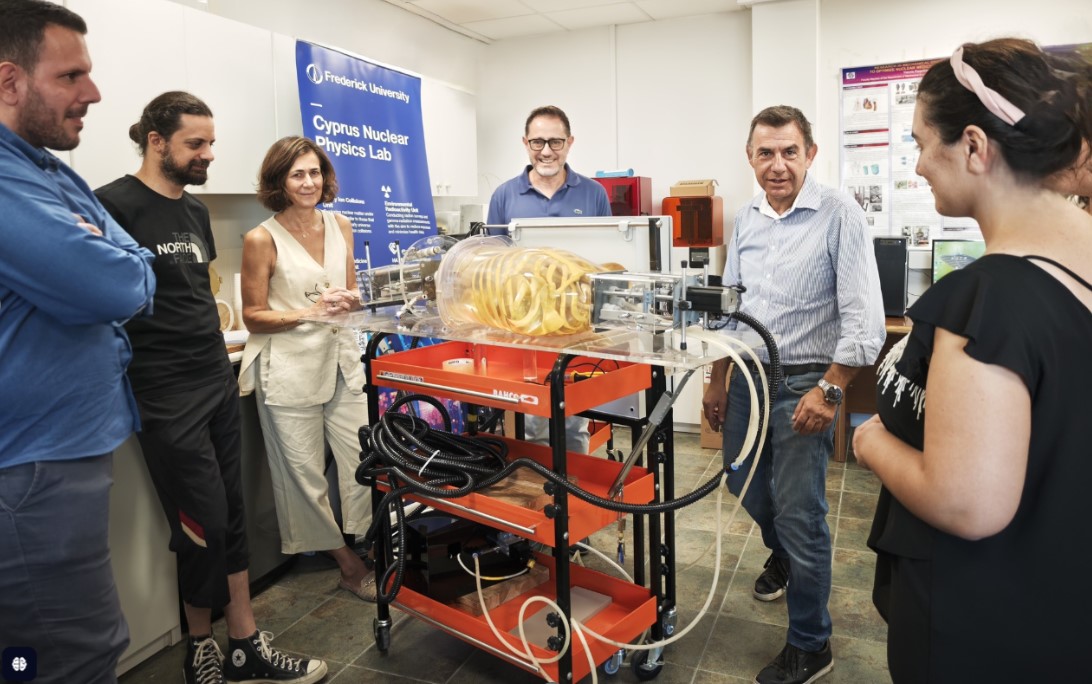
The M³Phantom system is described as a next generation medical imaging phantom designed to simulate real patient movement and disease conditions.
By replicating realistic physiological motion, the system aims to improve diagnostic accuracy and clinical decision confidence in medical imaging.
The team said its solution enhances imaging quality by enabling more realistic testing environments for radiology and nuclear medicine systems.
Over the past 12 months, the project has achieved three major milestones across commercial, technical and validation domains.
The first milestone involved working with international business and intellectual property mentors to define a structured commercialisation and protection strategy.
The second milestone includes validation through interviews and testimonials from internationally recognised nuclear medicine and radiology professionals.
The third milestone relates to significant technical upgrades of the M³Phantom system, improving its functionality and readiness for market transition.
Looking ahead, the team’s most important objective over the next 12 months is to secure a licensing agreement with medical imaging manufacturers.
To achieve this, the project requires completion of final technical upgrades beyond technology readiness level seven, alongside further development of the system.
The team also highlighted the need for intellectual property protection through provisional patent filing and full patent drafting, as well as structured engagement with potential licensees.
Current support comes from the Cyprus Seeds programme, the Frederick Research Centre and a proposed intellectual property voucher under the national knowledge transfer framework.
The target market for M³Phantom is the global medical imaging phantom industry, with a licensing model aimed at established manufacturers and major imaging companies.
These companies serve nuclear medicine and radiology departments, medical and biomedical schools and research laboratories worldwide.
The broader application environment includes approximately 155,000 hospitals globally and more than 194,000 imaging systems including SPECT/CT, PET/CT and CT technologies.
The team also highlighted that over 400 million imaging examinations are performed annually, alongside more than 5,000 medical and biomedical schools worldwide.
At this scale, the team said even small improvements in motion aware imaging could significantly enhance diagnostic confidence, training quality and imaging protocols.
The global medical imaging phantom market is estimated at around $250 million annually, which the team believes can be expanded through improved simulation technology.
M³Phantom is positioned as a potential reference standard for realistic thoracic motion and disease simulation in imaging systems.
Even under conservative scenarios, the team estimates a multi-billion euro cumulative revenue opportunity within less than a decade after market entry.
With broader adoption across manufacturers and institutions, the long term commercial upside could exceed this baseline projection significantly.
Beyond funding, the team said the most valuable support from Cyprus Seeds has been intensive mentorship and commercialisation guidance.
“Cyprus Seeds helped us move from a purely research driven mindset to a market oriented approach where customer needs, impact, scalability and intellectual property protection are central to every decision,” the team said.
The team added that this shift in approach has fundamentally changed how they design and prioritise technical development.
They also said the programme provided training in pitching, marketing, communication and intellectual property strategy, helping them build a clearer market pathway.
This guidance has been essential in shaping a go to market strategy and aligning technical development with commercial requirements.
The project is currently transitioning from late prototype stage at technology readiness level seven towards full market readiness and licensing.
Over the next 12 to 24 months, the funding strategy focuses on accelerating upgrades, strengthening intellectual property protection and supporting engagement with potential industrial partners.
The team said additional support would help shorten time to market, strengthen negotiations with manufacturers and improve technology transfer into production lines.
In terms of external collaboration, the team highlighted the importance of industry product mentors during the technology readiness level eight phase.
These mentors are expected to ensure that final design decisions align with customer expectations, manufacturability and market adoption requirements, supporting the transition from research innovation to commercial medical imaging product.




Click here to change your cookie preferences