
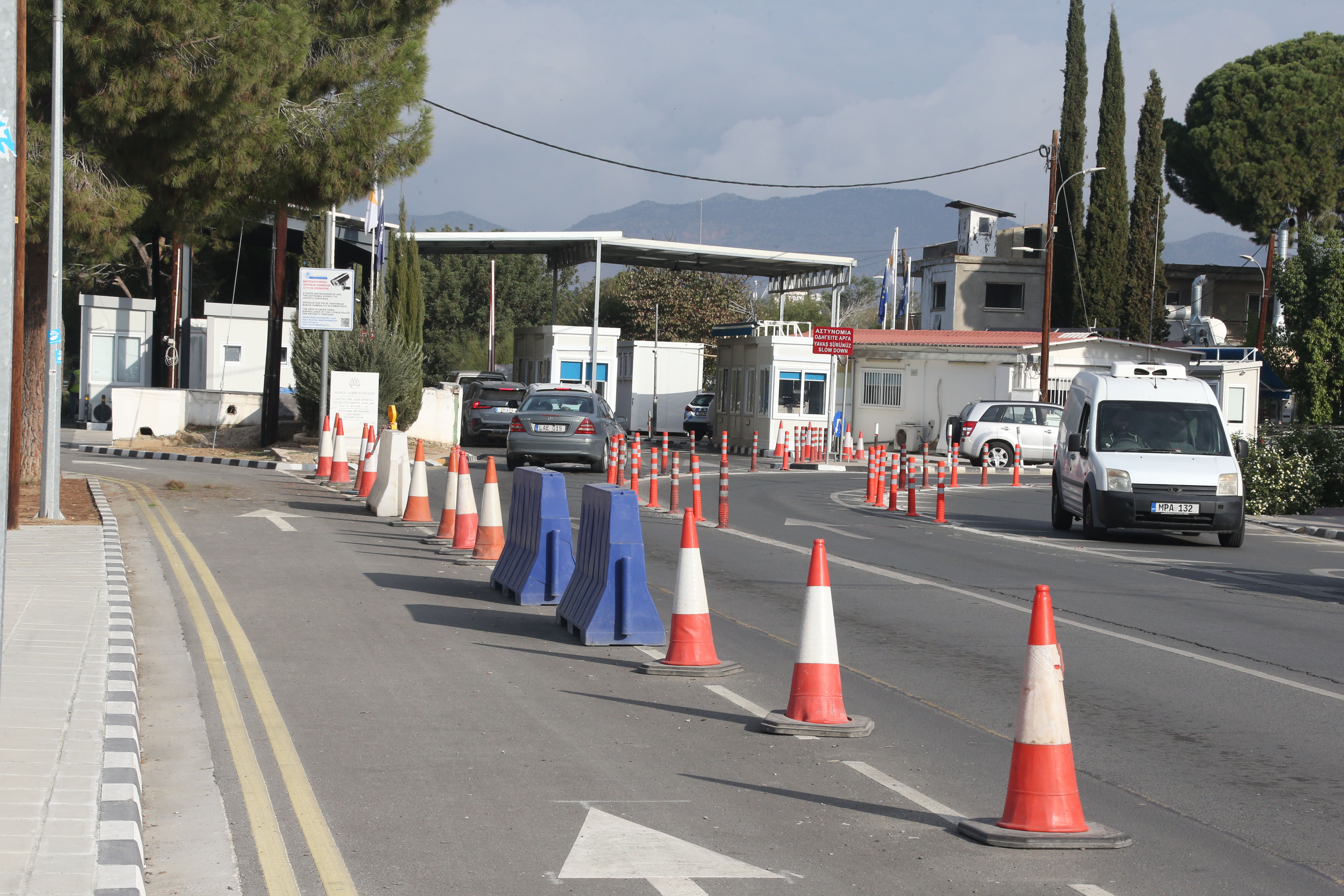
Customs officials reported that around 300 smuggling and illicit trade violations occur each month at crossing points between the government-controlled areas and the north.
The figures were outlined on Friday by the customs department spokesperson George Constantinou speaking to Sigma TV, who said the crossings have remained a focal point for enforcement since their opening in 2003.
He described the situation as part of a continuing effort to address illegal trade flows linked to the area.
“The customs department has been designated by the European Commission as the guardian of the implementation of the Green Line regulation,” he said.
“Approximately 200 to 300 violations are recorded each month at the crossing points.”
He added that most cases involve small quantities of goods carried by individuals, with tobacco products being the most frequently seized, followed by fuel and animal produce, the latter subject to checks due to ongoing concerns over livestock disease risks.
Authorities also raised concerns about unauthorised crossing points along the buffer zone, which Constantinou said present a more serious enforcement challenge due to larger volumes of goods being moved outside official controls.
“These are the most worrying points, as the quantities transported through them are many times greater than those detected daily at the roadblocks,” he said.
The department said organised networks are involved in the trafficking of tobacco products, including cigarettes, rolling tobacco and narghile molasses, moving goods from the north into the government-controlled areas and onwards to third countries.
Constantinou also referred to a secondary route targeting high-tax markets, particularly the United Kingdom, where intercepted consignments of tobacco products have been found in luggage at airports.
“The occupied territories are not a main source of drugs,” he said, adding that most drug seizures involve small quantities intended for personal use.
He said larger trafficking routes are more commonly linked to airports, postal services, courier networks and container shipments.
He also cited recent enforcement operations involving multiple drug packages intercepted through coordinated customs activity.
Customs authorities said inspections have been intensified in response to concerns over animal disease transmission, including stricter checks on vehicles and pedestrians at crossing points, while calling for increased monitoring of unauthorised routes through the buffer zone.





Click here to change your cookie preferences