
By Gavin Jones
Demagogues have a tendency to appear, thrive and seduce the public with their populist messages which tend to focus at most on two or three major topics. Add into the mix electoral despair and frustration and a perfect storm of irrationality and illogicality can take hold. These individuals are like shooting stars and instead of delivering on their messages tend to crash and burn, all too often taking their countrymen down with them.
The following are my personal thoughts on this subject and I’ve taken the liberty to refer to what can transpire as a result of this ‘seduction’. Doubtless readers will formulate their own viewpoint on this emotive subject.
In Britain the Reform ‘phenomenon’ has historical precedents which illustrate how people react when they express deep dissatisfaction with their political system. A foremost example which springs to mind is the mercurial rise of the National Socialist German Workers’ Party, more commonly referred to as the Nazi Party or NSDAP for short. I have to make it clear that in no way do I compare Reform with the Nazis although there are many who feel that the former are a more benign version of the latter, albeit employing similar tactics.
The results of the German federal elections in 1928, 1930 and 1932 saw the Nazis winning 12, 107 and 230 seats respectively in the Reichstag. (The 1932 election saw the Nazis becoming the largest party but with no overall majority). In other words, like Reform they came from nowhere to be a major force and spell doom for the Weimar Republic. After the failed Beer Hall Putsch of 1923 in Munich, Hitler vowed that he and his party would in future obtain power through the ballot box. After he was appointed chancellor in January 1933 by the ailing President Hindenburg, he wasted no time destroying democracy and made himself dictator, an aspiration which he’d laid out unequivocally in his biography ‘Mein Kampf’.
But I digress. The phenomenal rise to power of the Nazis was as a result of three principal factors: the Wall Street Crash of 1929, the Depression which created six million unemployed Germans and the bankruptcies of businesses and banks and the draconian terms imposed on Germany contained in the Treaty of Versailles. The Nazis trumpeted that they would ‘Make Germany Great Again’ so the German electorate looked to them as their potential ‘saviour’ and the rest is history.
We now have the British electorate vociferously expressing their own principal gripes with a passion: immigration, the perceived threat to ‘British values’ (whatever they are) and lack of prestige in the world. They feel that the Labour and Conservative Parties have failed to address their demands and aspirations and as a result have turned decisively to Reform. Sound familiar?
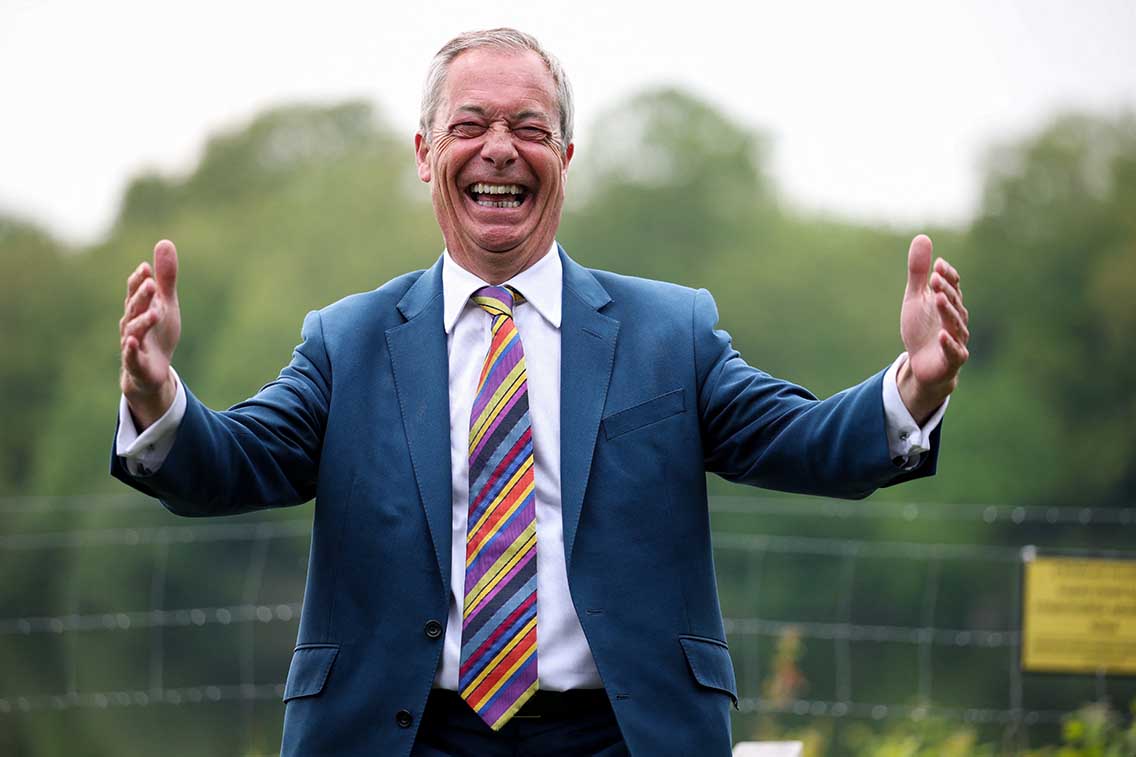
In conclusion, one can only hope that if and when Reform’s rise is converted to success at the next General Election and Nigel Farage becomes Prime Minister, we won’t witness wayward decisions, and especially in the field of foreign policy (such as facilitating/joining America in the bombing of Iran), which ape those being conducted by the current incumbent of the American presidential throne. On that score, it’s to be noted that Farage has a particular affinity with Trump. It would be hoped that public opinion, and Parliament itself, would curb any excesses should they arise. Time will tell.





Click here to change your cookie preferences