
The mirage of absolute security: in a more multipolar Middle East, Cyprus may have to accommodate Turkey
For more than three decades following the collapse of the Soviet Union, American foreign policy was defined by the doctrine of liberal hegemony – the conviction that the unchecked projection of American power and commerce could permanently suspend the foundational laws of international politics.
Within this framework, successive administrations in Washington treated the Middle East as an open laboratory for armed social engineering. American policymakers operated under the persistent assumption that an Israeli-American axis, reinforced by bilateral trade deals and unquestioned military dominance, could permanently suppress the regional balance of power.
From the regime-change campaigns of the 2000s to the Abraham Accords, Washington and Jerusalem acted as though trade and paper pacts could substitute for hard geopolitical security. But in an anarchic international system, the pursuit of absolute security by a dominant power or its regional partner is a dangerous illusion. When a state seeks total invulnerability through unilateral force, it inevitably triggers the security dilemma. And so, adjacent actors and non-state entities, perceiving their own survival to be threatened, adopt asymmetric counterbalancing as a rational response to existential pressure. Rather than producing lasting stability, the drive for total dominance exhausts arms stockpiles, invalidates post-Cold War liberal illusions. This dynamic ultimately forces the region to settle into a fragmented, self-contained, and rivalrous multipolar equilibrium.
The security dilemma
A state that demands absolute security, as Israel does, inevitably imposes absolute insecurity upon all adjacent actors within its geopolitical horizon which generates resistance. To insulate its core territory, Israel has consistently carved out buffer corridors. Tactical drives into southern Lebanon, forward military deployments across southwestern Syria, and the indefinite military retention of the West Bank and Gaza exemplify this flawed logic.
Historical precedent vividly illustrates the hard limits of conventional military power when confronted by local nationalism. Today’s buffer expansions merely provoke low-cost, asymmetric strike vectors. And so, securing frontier corridors demands an endless drain of capital and munitions. Because nationalism endures as the world’s most potent political force, an occupying power attempting to police a hostile population guarantees permanent resistance.
This dynamic exposes the profound operational limits of Western and Israeli decapitation doctrines and air power. Strategic planners have long harboured the illusion that targeted assassinations, aerial bombardment and precision strikes could decisively terminate conflicts by causing adversary command architectures to collapse from within. In networked adversary formations, however, systematic assassinations fail to break resistance; instead, authority decentralises into hardened operational tiers.
The collapse of the Greater Israel project and the limits of conquest
The external overextension of conventional military force is further compounded by the collapse of Israel’s maximalist territorial ambitions known as the ‘Greater Israel’ project. Israel is an ethnoreligious state and cannot indefinitely govern the territory between the Jordan river and the Mediterranean Sea while simultaneously preserving its ethnic majority and democratic legitimacy.
Enfranchising the five million occupied Palestinians residing within these boundaries would irrevocably erase the Jewish majority that defines the state’s political identity. Conversely, attempting mass expulsion would trigger immediate regional war and result in permanent international isolation. Consequently, Israel remains trapped in an unsustainable status quo defined by permanent, coercive disenfranchisement.
This demographic reality has unravelled Israel’s regional grand strategy. For years, American and Israeli strategists believed that the Abraham Accords could permanently bypass the Palestinian issue by anchoring Israel into the economic architecture of the Gulf monarchies while maintaining indefinite control over occupied territories. Instead, the pursuit of maximalist frontiers has rendered formal normalisation politically toxic for Arab regimes, which must manage deeply restive domestic populations. Far from securing regional hegemony, aggressive unilateralism has activated classic balance-of-power dynamics across the Middle East. Regional powers such as Turkey, Egypt and Saudi Arabia increasingly coordinate their policies to check Israeli power.
The exhaustion of the offshore patron
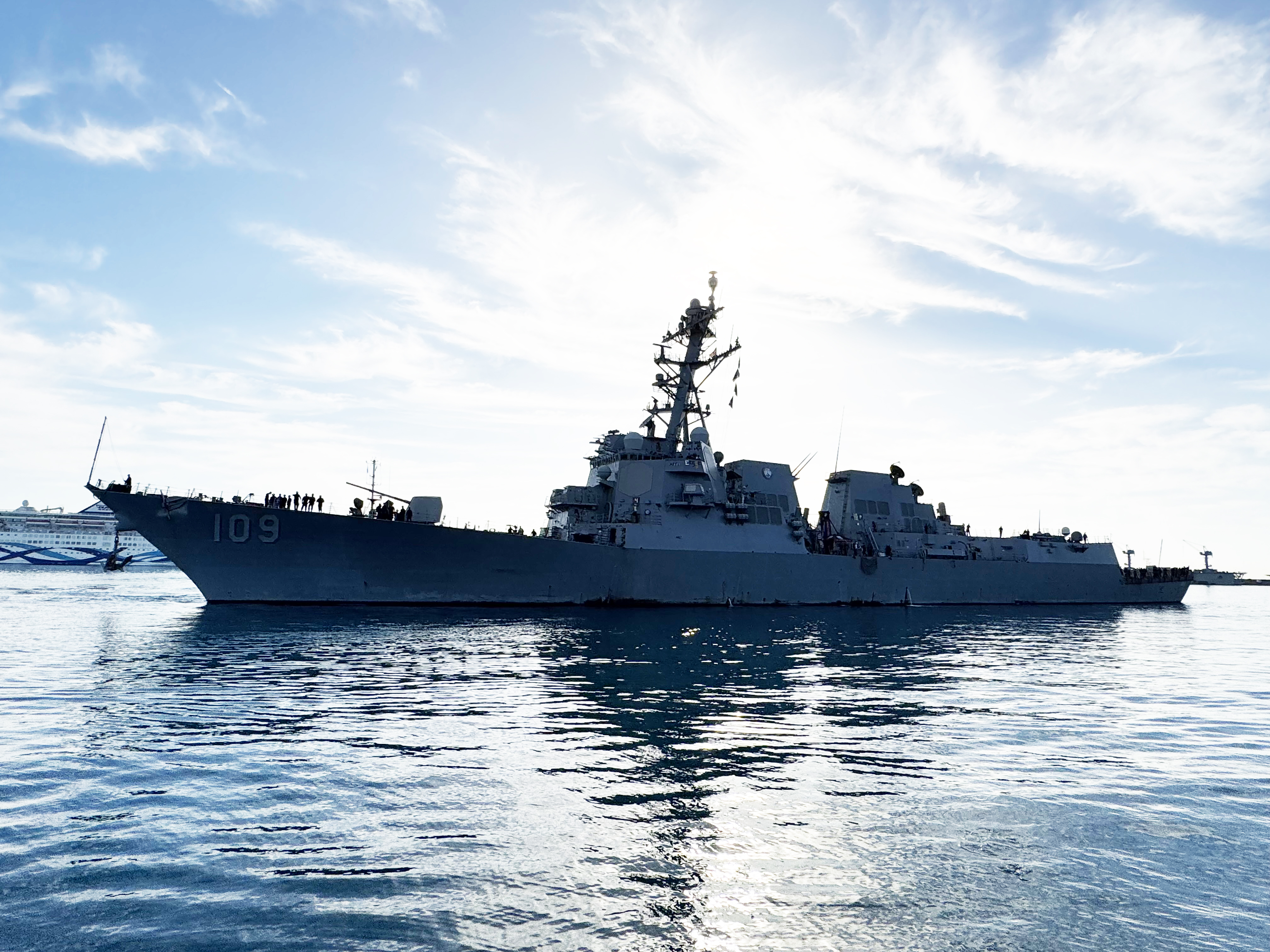
This entire forward military posture rests on a single external foundation: the power of the United States. However, Washington’s capacity to underwrite open-ended security guarantees in the Middle East has reached rigid industrial, logistical and strategic ceilings. Under persistent threat from land-based anti-ship cruise missiles and unmanned strike vectors, American carrier strike groups are forced to operate at extended standoff ranges. These operational distances severely strain maritime supply lines anchored to isolated logistics hubs like Diego Garcia.
More critically, the American defence-industrial base is exhausted. Washington cannot simultaneously replenish its stockpiles of precision-guided munitions and high-tier air defence interceptors while supplying allies in Eastern Europe and preparing for potential high-intensity conflict in the Western Pacific. Compelling an adversary like Iran, dug into rugged, mountainous terrain through a credible land campaign would demand a significant expeditionary force.
But no state in the modern Middle East possesses the demographic weight, industrial capacity, or conventional land forces required to establish regional hegemony. Iran cannot cross the Persian Gulf to conquer and occupy the Arabian Peninsula; the Gulf monarchies cannot subjugate Iran; and Israel lacks the army to capture and police the Arab littoral. Once an offshore superpower stops distorting local dynamics, regional balances naturally reassert themselves.
The 2035 multipolar equilibrium
So, what would the Middle east look like ten years from now? By 2035, the Levant will not conform to the rules-based, integrated order once envisioned by liberal internationalists. Instead, the region will settle into a rigid, self-balancing multipolar order defined by American retrenchment and localised autarky.
To safeguard its vital national interests, the United States will inevitably dismantle its forward military footprint in the Levant and transition to a strategy of offshore balancing. Washington must reprioritise East Asia as the decisive theatre of grand strategy, to contain China which alone possesses the economic scale and population required to challenge the United States as a true structural peer competitor. Under offshore balancing, the United States will withdraw standing ground forces from the Levant, terminate onshore garrisons, and allow regional actors to counterbalance one another directly.
In this emerging equilibrium, Cyprus cannot balance against Turkey. When external guarantors depart, small states located in the shadow of major regional powers have only one rational alternative which is strategic accommodation so as to preserve its sovereign survival and avoid converting a divided island into an operational flashpoint.
This article was based on works by professors John Mearsheimer, Joshua Landis and Hamidreza Azizi




Click here to change your cookie preferences