
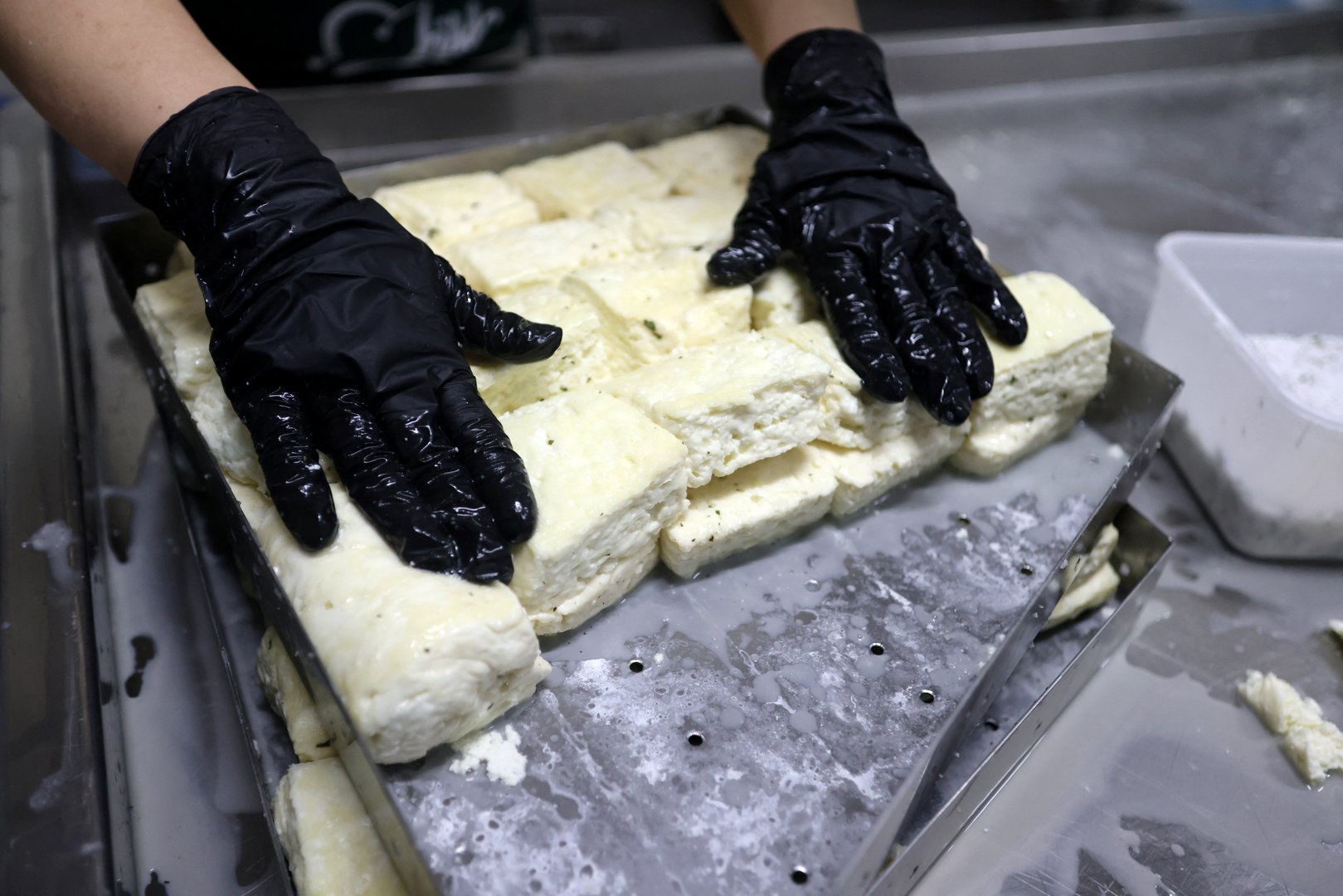
Cyprus’s halloumi exports will continue without disruption after the United Kingdom, Canada and Australia confirmed on Tuesday that they will not impose restrictions on the flagship national cheese, despite an ongoing foot-and-mouth disease outbreak affecting livestock.
The assurances followed direct consultations between the veterinary services director, Christodoulos Pipis, and his counterparts in the three countries.
Pipis assured that official confirmation had been received, and halloumi would remain exempt from any import bans, even as broader precautionary measures are applied to live animals and untreated animal products.
According to the veterinary services, the decision is grounded in scientific assessment of the cheese’s production process.
“The inherent characteristics of halloumi, and in particular the high temperatures reached during its production, render it practically sterile from the virus,” the service affirmed, stressing that the product is considered safe for international trade.
While the three countries have removed Cyprus from their lists of foot-and-mouth-free nations, they have explicitly exempted halloumi and other animal products subjected to heat treatment of at least 70 degrees Celsius for 30 minutes.
The exemption mirrors EU guidance, where similar heat-treated dairy products are permitted to circulate despite the outbreak.
The reassurance comes amid concern following confirmation of outbreaks in livestock units in the Larnaca district.
A European Commission spokesman said Cyprus has implemented all measures required under EU legislation, including epidemiological investigations, laboratory testing, and the culling of animals on affected farms.
The Commission confirmed it is dispatching a team of experts to Cyprus till Firday to provide scientific support and assist with contingency planning.
In parallel, 529,000 doses of foot-and-mouth disease vaccines are expected to arrive on the island in the coming days and some 13,000 animals are to be culled following protocol.
Cyprus’s foot-and-mouth disease-free status has been suspended by the World organisation for animal health, exports of live susceptible animals and unprocessed animal products to third countries have been temporarily halted.
The Commission clarified, however, that derogations remain possible for milk and dairy products that have undergone sufficient heat treatment, including halloumi, which may continue to be placed on the EU market.
In the United Kingdom, precautionary measures entered into force on Tuesday under an official veterinary notice dated February 23.
These include a suspension of imports of cattle, pigs, sheep and goats, a ban on fresh meat and untreated meat products, and restrictions on hay and straw originating from Cyprus.
Halloumi, however, is explicitly excluded from the measures.
The outbreak has nonetheless triggered anxiety among farmers and cheesemakers, who warn that losses of livestock could disrupt production and exports if the disease spreads further.
Cheesemakers have echoed those concerns, describing the situation as “very serious” while reassuring consumers that halloumi poses no risk to public health.
“Foot-and-mouth disease does not affect humans and is not transmitted through food,” the association assured, adding that its members have strengthened biosecurity measures at production facilities and are complying fully with official instructions.
European authorities have urged strict adherence to containment measures, including disinfection, movement controls and intensive surveillance within containment zones.





Click here to change your cookie preferences