
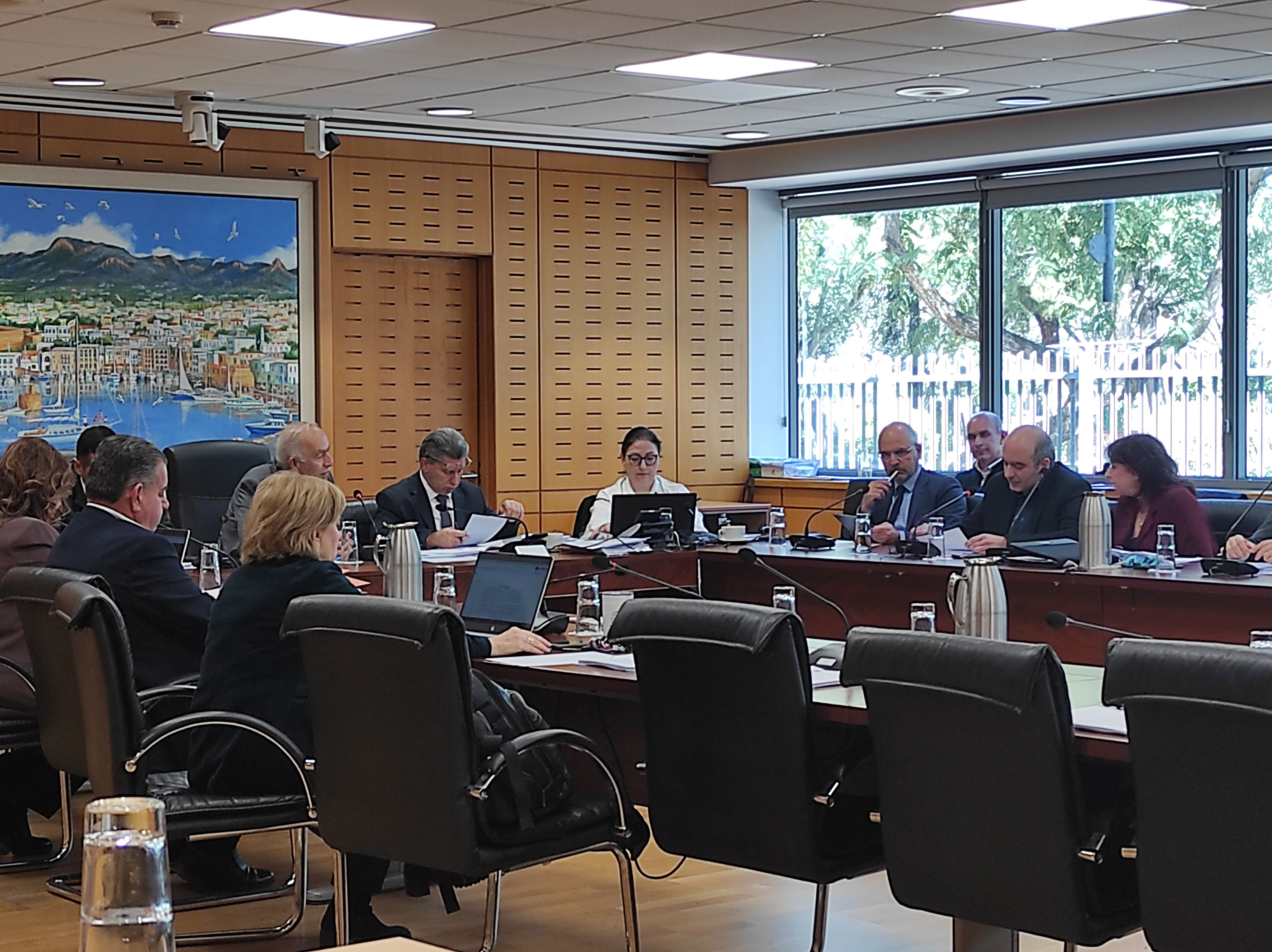
MPs on Thursday demanded an accounting for the bevy of renewables permits issued in the past, after it emerged that about two-thirds of the permits did not materialise into solar parks, with the bearers holding onto them and then selling them at vastly inflated prices.
Parliamentarians were revisiting a report on the Electricity Authority (EAC) issued by the Audit Office. One of the key findings was that roughly two-thirds of capacity from renewables in the private sector is concentrated in the hands of just five companies, while despite a flurry of permits for RES, consumers continue absorbing rising costs.
EAC chairman Giorgos Petrou spoke of errors made in the past which in his view allowed “a small group of private interests” to hoard RES permits.
He said many of these licenses did not translate into actual facilities; their holders kept them and then traded them at several times their initial cost.
At the time they were secured, the permits cost the private businesses around €4,000 per megawatt of capacity. Later, said Petrou, these businesses approached the EAC, offering to sell them for anywhere between €250,000 to €300,000 per megawatt.
The EAC boss said that of the some 1,500 megawatts of capacity approved in commercial permits, in the end only 420 megawatts materialised into solar parks.
And of the 420 megawatts from commercial RES in operation, the EAC holds only 20.
This was later confirmed to the Cyprus Mail by auditor-general Andreas Papaconstantinou.
“Essentially businesspeople snapped up the permits, with a view to trading them like commodities…almost like gambling. A few savvy individuals made a killing.”
Apparently, the trading was not regulated, simply following rules of supply and demand.
This ‘party’ has been going on for at least five years, Papaconstantinou told us.
The energy regulator, Cera, did not step in to regulate the matter.
In parliament, Cera officials said they have no jurisdiction over this trading, and even pleaded ignorance as to the permits’ going rate.
It also emerged that out of the total installed capacity from commercial renewables, 94.6 per cent belongs to the private sector, the rest to the EAC.
MPs asked the auditor-general to take a closer look at the permits situation, and identify which departments and which officials were signing off on them.
Meantime a group of MPs have drafted a bill to regulate the use and trading of RES permits for commercial purposes.
The proposal aims to restrict the renewal of these permits to five years.
In addition, in order for a permit to be kept ‘live’, businesses must affirm they have the necessary capital for the investment, and that they have applied for a license to connect to the grid.
At the House audit committee, the discussion next turned to the high cost of electricity in Cyprus.
An agriculture ministry official stated that fuel costs and greenhouse gas emissions allowances account for as much as 70 per cent of the EAC’s operating costs.
In 2024 alone, the EAC spent €211 million on emissions allowances. And from 2020 through to 2024, the state-run power utility spent a whopping €955 million.
These expenditures are rolled over onto consumers’ bills.
Chiming in, Papaconstatinou mentioned the fact that the EAC purchased turbines running only on natural gas for the flagship power plant in Vasiliko.
Because natural gas has yet to be used for generation, those turbines are idle. In turn, this means that the outdated and inefficient diesel-run turbines at Dhekelia have to keep operating.





Click here to change your cookie preferences