
‘We can’t be everything to everyone without burning out’
Motherhood is often described as joyful, transformative and fulfilling. What is often overlooked are the feelings of isolation, even for women who are fortunate enough to be surrounded by family and support. Many new mothers in Cyprus report that the emotional shift after birth is harder than they anticipated, and there are not many organised spaces to talk honestly about it.
That gap is what drove mother of two Daniella Georgiou to establish Mum Support Groups, a community-led initiative aimed at supporting women through pregnancy and early motherhood.
Launched in September 2024, the programme brings together expectant and new mothers for weekly meetings centered around emotional wellbeing, shared experiences and practical discussions. Since it launched, more than 160 women in Cyprus have benefitted from its activities.
“The message was very clear,” Georgiou says. “Mums need a space to talk, to gather, and to hear real, honest advice.”
Her decision to launch the initiative grew from her own journey into motherhood and conversations with other women who spoke of similar feelings of isolation, doubt and emotional pressure. “Where I see the biggest gap is in connection between mums. There is very little structured support that addresses the loneliness and overwhelm so many women feel in the first months after birth. You can receive good medical care and still feel completely alone at home,” she says.
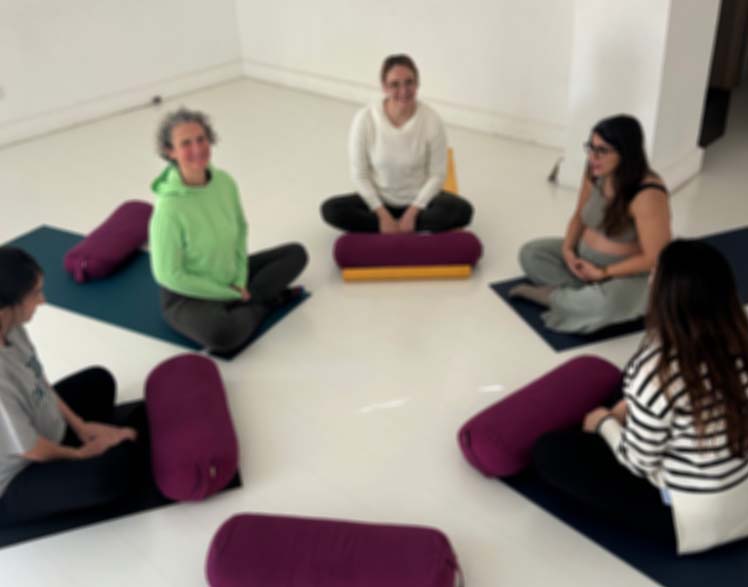
The groups are organised as structured five-week cycles, where the same small group of mothers meet once a week. Sessions are held both online and in person, giving women the flexibility to participate in ways that best suit their schedules and circumstances.
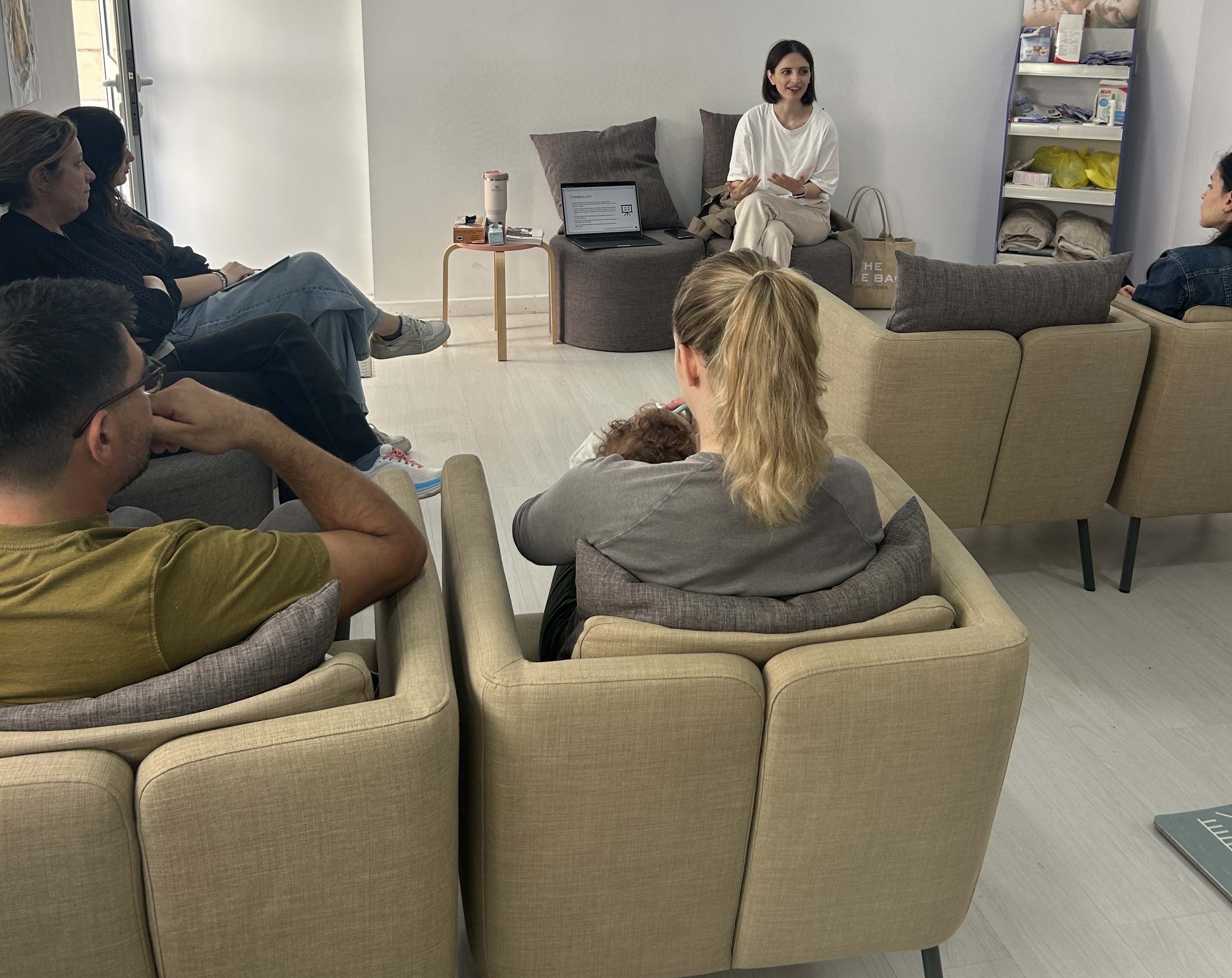
Each meeting focuses on a different aspect of motherhood, exploring themes such as emotional health, personal identity, feeding, relationships and the transition back to work. The meetings are set up as guided conversations, encouraging mothers to share their experiences and support each other.
“It’s not a lecture,” Georgiou says. “Mums can also choose to join individual sessions that feel most relevant to them.”
More than 55 health professionals, including midwives, pediatricians, psychologists and lactation consultants, also participate in the programme, offering advice and answering questions in a less formal way.
For many women, Georgiou says, simply being able to connect with other mothers has been one of the most valuable parts of the programme.
“The words we hear most often are that mums feel less alone, more understood and more confident,” she says.
According to Georgiou, the issues that come to light through the experiences shared in the groups reflect wider challenges that mothers in Cyprus are currently facing. Although the quality of medical care during and after childbirth is accomplished, Georgiou feels that support outside of the medical environment is still limited.
“Once the six-week clinic check is done, many mums find themselves at home alone, often still looking for support and connection and not always knowing where to turn. That’s where community support becomes so important,” she says.
Pressure at work is one of the most common issues mothers have brought up at the groups. Georgiou says that many women feel the transition back to work happens too quickly and there is insufficient time to adjust physically and emotionally to their new role.
“Getting used to being a new mum is hard enough, and then having to go back to work, often with short maternity leave, while juggling everything at home is a huge challenge. Many women feel like they’re expected to just pick up where they left off.”
While there has been some progress, such as legislation mandating the provision of lactation rooms in larger workplaces, Georgiou believes more needs to be done, specifically in terms of making childcare more accessible and affordable.
She also cites the changing nature of family dynamics as another reason why mothers may feel isolated. Women are having children later in life than ever before, and grandparents, who have traditionally played a crucial role in childcare, may still be working themselves or unable to offer daily support.
At the same time, Cyprus’ growing international community means many mothers are raising children without extended family nearby. “When you don’t have that immediate support network, it can feel even more isolating,” she says. “Even local mums often say they feel alone”
She adds that flexible working conditions can make a significant difference, allowing mothers to better balance professional and family responsibilities.
Beyond practical challenges, Georgiou says many mothers also face the pressure to meet unrealistic expectations. “One of the biggest misconceptions is that mums are supposed to balance it all,” she says. “the truth is, we can’t. Life moves in seasons. Sometimes work takes centre stage, sometimes our children do, and hopefully we’re learning that sometimes we need to take centre stage too. We can’t be everything to everyone without burning out.”
She adds that many women hesitate to ask for help, thinking they should handle everything themselves. Social media, she adds, has played a role in creating an idealised image of motherhood that doesn’t show the complete picture. “The idea of the ‘perfect mum’ who is calm, productive, present and put together all the time puts a lot of pressure on women. Motherhood was never meant to be done alone, and when we try to do everything ourselves, it comes at a cost to our wellbeing.”
Looking ahead, Georgiou hopes the initiative will continue to grow and become more integrated into maternal support in Cyprus. It will work alongside clinics, organisations and workplaces to help mothers feel more supported throughout their journey.
As part of this expansion, Mum Support Groups will start hosting Mum & Baby Coffee Meet-ups from March, starting off in Nicosia and Limassol, followed by Paphos and Larnaca. These meet ups aim to give mothers a chance to connect in a relaxed, social setting. “Finding your village when transitioning to motherhood is so important, whether it’s family, friends or support groups you need to seek out people who surround you with the care”.
For more information
https://docs.google.com/forms/d/e/1FAIpQLSep_MRSFsGpsHjai0StOcx3YzCCaRG_6C5VcWKMseJZADgEVw/viewform Instagram: @mum_support_groups, LinkedIn – Mum Support Groups



Click here to change your cookie preferences