
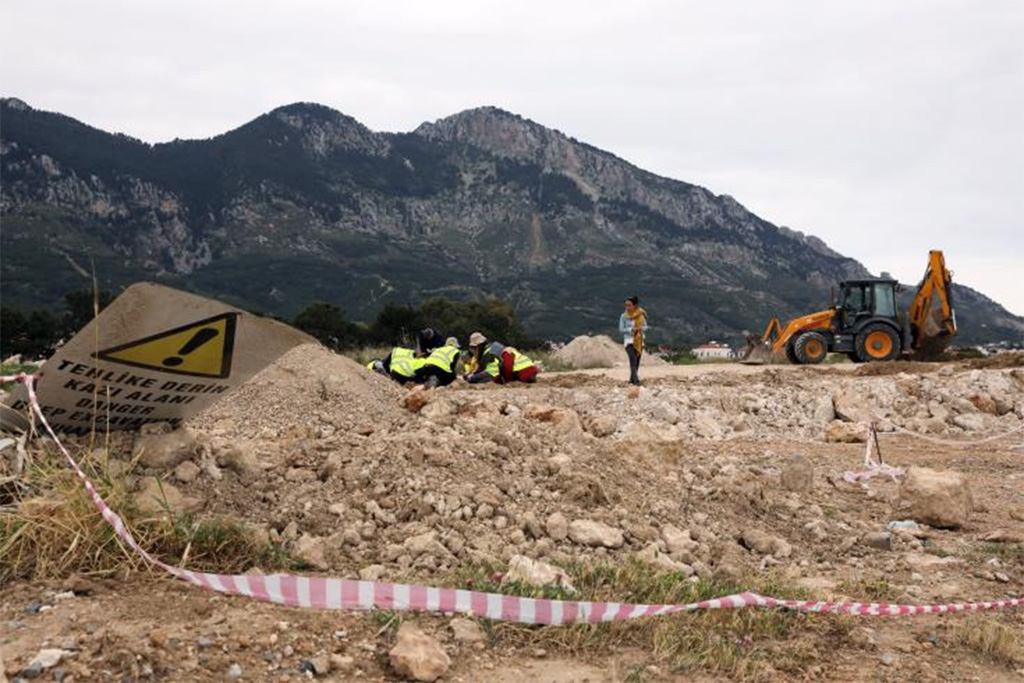
The committee of ministers of the Council of Europe on Wednesday called on Turkey to grant unhindered access to all areas where the remains of missing persons from Cyprus may be located and to provide all relevant information to support ongoing investigations.
The decision was adopted as part of the committee’s supervision of Turkey’s compliance with judgments of the European human rights court relating to missing persons following the island’s division.
In its decision, the committee urged Turkey to allow full access to locations where remains may be buried and to share information required for the work of the committee on missing persons (CMP), the bicommunal body responsible for locating, exhuming and identifying victims of past conflict.
According to a statement from the foreign ministry, the committee also referred to Ankara’s recent announcement that restrictions affecting investigations in military areas would be eased.
“As the republic, we expect to see the implementation of this announcement, as well as the complete lifting of the restrictions requested by the commission,” the ministry said.
The committee further called on Turkey to provide updates on new developments, including additional investigative efforts concerning unresolved cases linked to the Varnava judgment.
Deputies also adopted an interim resolution condemning Turkey’s refusal to pay court-ordered compensation, stating that compliance with such rulings represents an “unconditional contractual obligation”.
The case will remain under supervision, with the committee expected to review Turkey’s progress again in March 2027.
The committee on missing persons was established in 1981 but only began systematic excavation work in 2006 after years of political deadlock.
Since then, bicommunal teams of archaeologists and scientists have conducted more than 1,700 excavations across the island, exhuming over 1,700 sets of remains.
Using forensic and DNA analysis, more than 1,050 individuals from the official list of missing persons have been identified and returned to their families for burial.
The programme addresses cases dating from intercommunal violence in the 1960s and the Turkish invasion of 1974.
Out of a total of 2,002 recorded missing persons from both communities, around 800 remain unaccounted for.


Click here to change your cookie preferences