
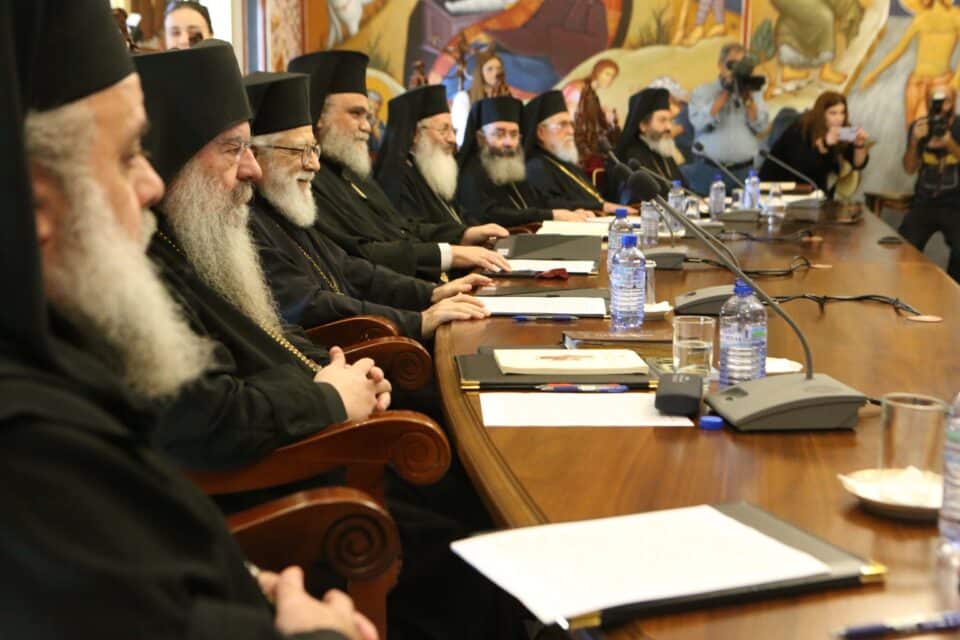
The synod has begun examining proposed changes to the Church charter as part of a three-day session that will determine procedural reforms linked to the forthcoming election for next bishop of Paphos, with discussions also expected over the handling of suspended former bishop Tychikos.
Meeting in Nicosia on Monday, members are reviewing amendments circulated in advance by the archdiocese, which officials say aim to simplify procedures and resolve conflicting provisions within existing statutes.
Speaking to news outlet Reporter, archdiocese spokesman Christakis Efstathiou said the revisions go beyond electoral arrangements, stating that “all of these will be addressed and the work that will be done will be complete, it will not only concern the changes for the elections”.
A central proposal concerns the method of filling vacant metropolitan sees.
Under the draft charter changes, elections would be conducted directly by the synod itself without recourse to a wider popular vote.
Efstathiou said approval of the changes requires a simple majority rather than a two thirds threshold.
If adopted, the revised charter could allow the process for the election of a new Paphos bishop to move forward rapidly, with church officials indicating a target of completing procedures before the end of May.
Attention is also expected to turn to the case of suspended former bishop Tychikos, whose removal from the bishopric last year followed internal disputes within the synod.
His suspension has since been challenged through legal and ecclesiastical channels.
Efstathiou said the archbishop does not intend to initiate discussion on the matter, but confirmed that “anyone can raise a matter during the meeting and there is no time frame in which someone could potentially raise the issue of Tychikos”.
He added that if the issue is raised, “time will be found and once the process is complete, it will be examined”.
The spokesman clarified that under church law the suspension prevents Tychikos from exercising priestly duties unless a further decision is taken, stating that the duration of the measure “remains open until a different decision is made by the competent body”.
He also reiterated that all procedures must follow ecclesiastical law and said the aim of the reforms is to reduce internal friction.
“Conflicts and tensions within the church are not an acceptable situation, as unity is a fundamental principle of ecclesiastical life,” he said.





Click here to change your cookie preferences