
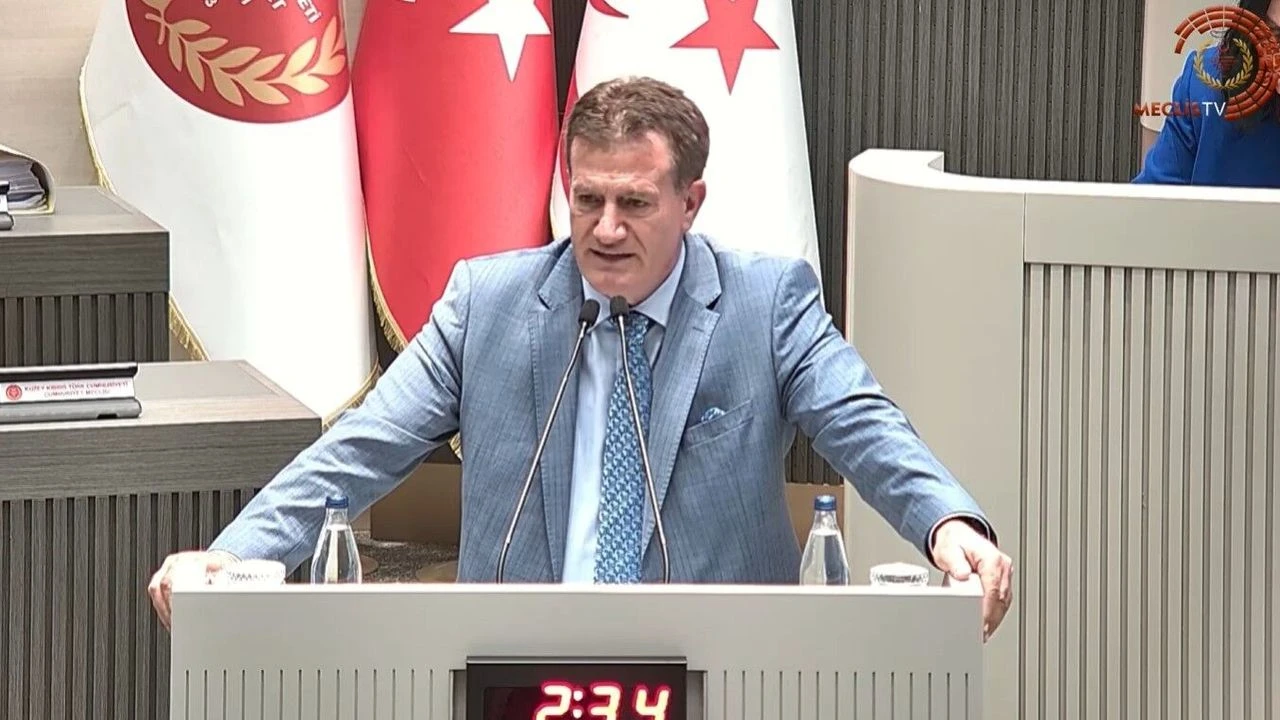
The planned natural gas pipeline linking Turkey and northern Cyprus will be operational in 2028, the north’s ‘public works minister’ Erhan Arikli told the Turkish Cypriot legislature on Tuesday.
“This project will be implemented through around 97 kilometres worth of pipelines, starting in Alanya and reaching either the Teknecik power station or another area in the TRNC,” he said. Alanya is a city on Turkey’s southern coast, while the Teknecik power station is located east of Kyrenia.
Alanya itself is currently not connected to a natural gas pipeline, but work is underway to connect it to Mersin, which is supplied by natural gas flowing from Azerbaijan via Georgia, and from Turkmenistan via Iran.
Arikli on Tuesday said that engineering studies will be completed by the end of this year, and that the project’s feasibility study “has already reached a certain point”.
“It will be operational in 2028. The project will cost approximately $700 million,” he said, around €601m.
He added that once the cable is complete, “the possibility of transporting gas which may be found in the eastern Mediterranean to Europe via Turkey through a second pipeline will emerge”.
“The natural gas project can be a bridge of peace,” he said.
Additionally, he spoke about plans to connect Turkey and the north with an electricity cable, saying that “no official response” has been received from the European network of transmission system operators for electricity (Entso-E) on the matter.
Entso-E itself had rejected suggestions that it may include plans for the cable into its continent-wide ten-year development plan, saying that the Great Sea Interconnector, which, if completed, will connect the electricity grids of Cyprus, Greece and Israel, “is the only interconnector project connecting the Republic of Cyprus” in its plans.
Arikli also said that the north is “not making sufficient use of its solar energy potential”, and that “the main reason for this is the deficiencies in the energy transmission infrastructure”.
This, he said, would require between $30m (€26m) and $50m (€43m) to rectify.
He then went on to say that the reasoning behind efforts to build a cable and a natural gas pipeline is that “the fossil fuels currently used in electricity production are both costly and environmentally problematic”.
He said that the “special fuel” which has a relatively low sulphur content the north’s electricity authority Kib-Tek currently imports to power Teknecik is expensive, and pointed out that the European Union has set a horizon of 2030 for the phasing out of that specific type of fuel, saying that “fossil fuel has no future”.
This assertion did raise eyebrows among some in the opposition, with the CTP’s Salahi Sahiner pointing out that “natural gas is a fossil fuel, not a renewable energy source” after ‘prime minister’ Unal Ustel had himself addressed the legislature about the matter.
“What angers me is that the prime minister learned about the arrival of natural gas from the media,” Sahiner said, in reference to the fact that Turkish Energy Minister Alparslan Bayraktar had in May announced the plans, ostensibly without consulting anyone in Cyprus.



Click here to change your cookie preferences