
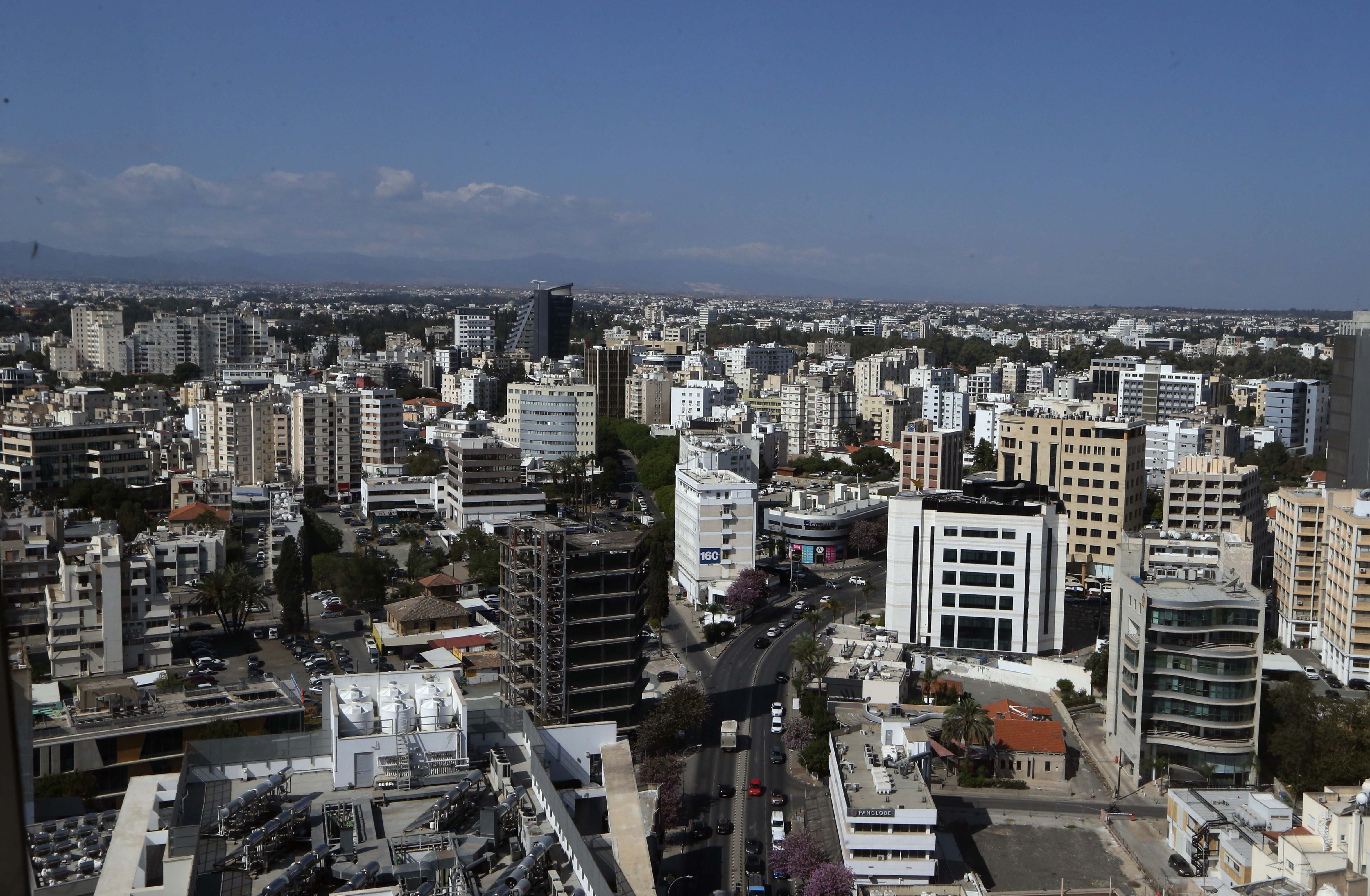
The property market in Cyprus continues to evolve in 2026, shaped by rising demand, steady foreign investment and limited housing supply in key urban areas. For both residents and newcomers, the question remains: is it better to buy or rent?
What property taxes still exist in Cyprus?
Cyprus abolished its nationwide immovable property tax in 2017, a move that boosted the market’s attractiveness. However, several transaction and local taxes remain.
Transfer fees (3%-8%) are payable when purchasing resale property, calculated on a sliding scale. Stamp duty (0.15% – 0.20%) is also required on the sale agreement.
While the old immovable property tax no longer applies, municipality taxes continue. These are modest annual charges based on the 2013 property valuation and vary by local authority.
Costs of buying property
Buying property in Cyprus involves several upfront and ongoing costs. Legal fees typically range from 1 to 2 per cent of the purchase price, covering due diligence and contract preparation.
Stamp duty in Cyprus is based on a sliding scale (0.15%-0.20%) as is that of transfer fees (3%-8%).
VAT at 19 per cent applies to new properties, although a reduced rate of 5 per cent may be available for primary residences under certain conditions while real estate agents charge between 3%-5% of the slaes price.
Ongoing costs include municipality taxes, maintenance, insurance and, where applicable, communal charges. Buyers should also factor in potential mortgage interest and long-term upkeep.
Costs of renting property
Renting offers greater flexibility but comes with its own expenses. Tenants usually pay a deposit equivalent to one or two months’ rent, which is refundable.
Agency fees may apply, particularly in high-demand areas, although these are sometimes covered by landlords. In apartment complexes, tenants may also contribute to communal fees, depending on the rental agreement.
While renting avoids large upfront costs, long-term tenants face exposure to rising rents, particularly in cities such as Nicosia, Limassol and Larnaca.
However this does not apply to all properties.
Properties built before 1999 fall under the Rent Control Law (enikiostasio) and rent increases are strictly regulated and allowed every two years.
For the period April 22, 2025 till April 21, 2027 the maximum increase is 6 per cent.
However a landlord can increase the rent over and beyond 6 per cent if he can prove to the Rent Control Court that the rent is exceptionally low compared to the market rate (less than 90% of the average rent in the area).
While renting avoids large upfront costs, long-term tenants face exposure to rising rents, particularly in cities such as Nicosia, Limassol and Larnaca.
Buying vs renting: which makes sense in 2026?
For short-term residents, renting remains the most practical option, offering flexibility without the financial commitment of ownership.
Expats planning to stay longer may find buying more attractive, especially given the absence of annual property tax and relatively stable transaction costs.
For investors, Cyprus continues to offer opportunities through rental yields and capital appreciation, although returns vary by location and property type.
Permanent residents are increasingly leaning towards ownership, particularly as mortgage costs stabilise and rents continue to climb.
The bottom line
In 2026, the decision to buy or rent in Cyprus depends largely on time horizon and financial goals. While buying involves higher upfront costs, it can offer long-term value and stability. Renting, by contrast, provides flexibility but may prove more expensive over time.
Disclaimer: This article is for general informational purposes only and does not constitute financial, legal, or real estate advice. Property laws, taxes, and market conditions in Cyprus may change, and individual circumstances vary. Readers are advised to consult qualified professionals before making any property or investment decisions.




Click here to change your cookie preferences